
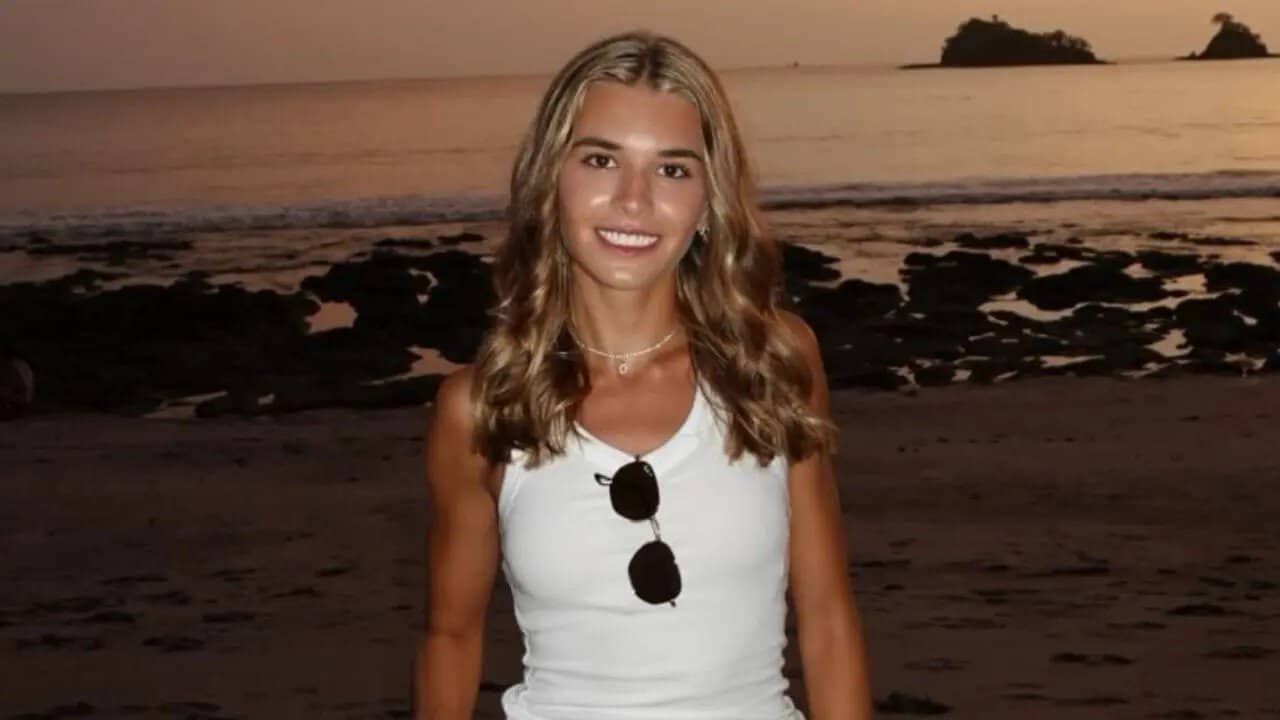
A travel vlog posted last week by Kai Trump, the eldest granddaughter of U.S. President Donald Trump, has put a small stretch of Guanacaste coastline in front of one of the largest young American audiences any Costa Rican destination has reached this year.
The 19-year-old published the video to her YouTube channel on July 25, where it went out to more than 1.5 million subscribers. She framed the trip as a send-off with high school friends before the group scatters to university, with Trump herself starting at the University of Miami this fall.
The footage moves through the familiar sequence of a Guanacaste beach holiday — mornings at the hotel pool, a climb to a ridgeline lookout, boogie boarding in the surf, ice cream, long outdoor dinners, card games, and a sunset she describes as spectacular. At one point she tells the camera she never wants to leave and would move to Costa Rica.
According to records from the Dirección General de Migración y Extranjería, Trump was here from June 11 to June 14 and stayed at a hotel in Playa Las Catalinas, in the area of Santa Cruz, Guanacaste. That places the visit roughly six weeks before the video reached the public, a gap that is standard practice for creators who edit and stage travel content for release when it will draw the most attention.
Las Catalinas is an unusual setting for this kind of exposure. Founded in 2006 on a previously undeveloped stretch of Pacific coast, the planned town covers about 485 hectares (1,200 acres) and was laid out on car-free, fully walkable principles, with plazas arranged around Playa Danta and a network of trails climbing into the dry forest behind it.
It sits roughly an hour by road from Daniel Oduber Quirós International Airport in Liberia, which is what allows a four-day trip of this kind to work at all. The development has spent close to two decades positioning itself toward exactly the high-spending, design-conscious North American traveler the vlog’s audience will grow into.
The video did not travel cleanly. Within days of release, U.S. and British outlets seized on the contrast between the trip and domestic economic sentiment, citing polling that found the overwhelming majority of Americans surveyed believe Costa Rica is in an affordability crisis. Commenters on the video and on aggregated coverage split between praise for the destination and criticism of the timing. Trump has faced similar reaction before, including over a grocery-shopping video posted in March, and has said publicly that the criticism does not affect her.
None of that argument is about Costa Rica, and the destination itself came through the coverage largely untouched. Costa Rica has become a recurring stop for the family — Trump’s aunt, Ivanka Trump, spent Passover and Easter week here in 2025 with her husband and children, drawing a similar mix of enthusiasm and criticism at the time. Trump has said on her own channels that Costa Rica ranks among her favorite places to travel, and she has a long-standing friendship with a Costa Rican classmate that predates the trip.
What the episode illustrates is how little control a destination has over the terms on which it gets seen. Guanacaste’s tourism spends heavily to reach American travelers in their twenties and thirties, a demographic that increasingly makes destination decisions from short-form video rather than from advertising. A four-day trip in June, edited and released in late July by someone with a national profile, delivered that reach in a single upload — bundled together with a political argument Costa Rica had no part in and no ability to steer.