

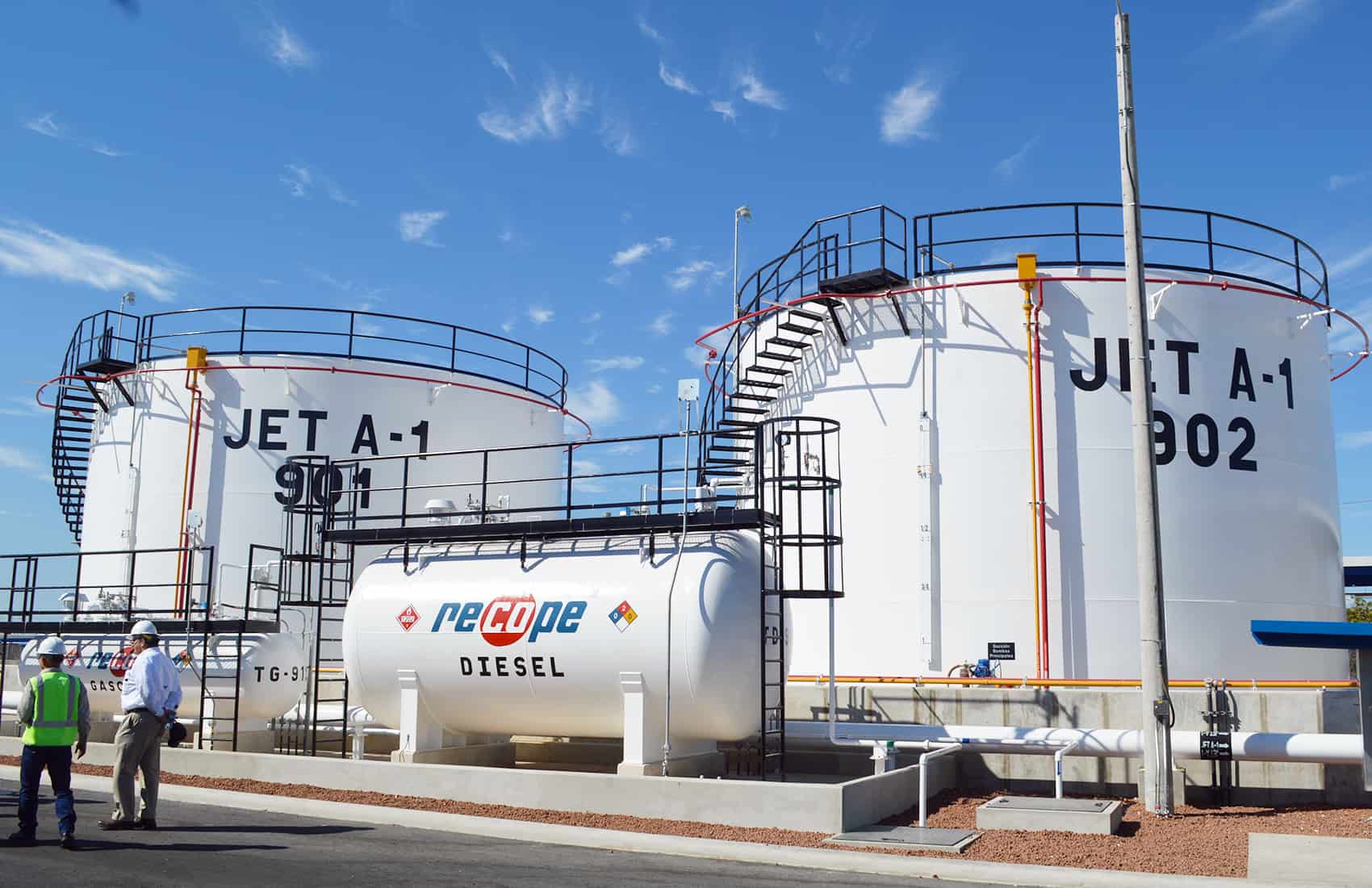
Costa Rica’s Legislative Assembly has approved a reform that frees the state fuel company to work with energy sources other than oil for the first time, though drivers should not expect any immediate change in what they pay at the pump. Lawmakers gave final approval on July 16, to the Law to Promote the Energy Transition in the Fuel Sector, passing it in second debate with 54 votes in favor, none against and three legislators absent.
The bill had cleared its first debate two days earlier, capping an effort that had stalled repeatedly in the Assembly over more than a decade. It now goes to the executive branch for the president’s signature and publication before it can take effect. The reform rewrites the 1981 law governing the Refinadora Costarricense de Petróleo, or Recope, which until now was limited by statute to refining, transporting and selling petroleum and its derivatives.
Under the new framework, Recope keeps every one of those responsibilities but gains authority to research, acquire, import, export, process, store, transport and sell wholesale fuels derived from sources other than oil, with biofuels and green hydrogen named specifically. The law also brings natural gas within the company’s reach and broadens the mandate of the public services regulator, the Autoridad Reguladora de los Servicios Públicos, to cover the supply of gas, green hydrogen, biofuels, asphalts and naphthas.
Officials have stressed the limits of what the vote accomplishes. The measure works as a legal foundation rather than a finished project, and before Recope can enter any of these new markets it must present the Ministry of Environment and Energy, which sets national energy policy, with technical and operational studies showing that each step is warranted and consistent with that policy.
In the short term the law changes neither fuel prices nor the products available at service stations, and it does not mean green hydrogen or biofuels will go on sale anytime soon. To keep the reform from becoming a backdoor for fossil fuels, the text specifies that any Recope involvement in natural gas cannot be used to delay, replace or scale back investment in renewable energy.
Supporters frame the change as a matter of both economics and energy security. Costa Rica imports nearly all of the oil it burns, which leaves household budgets, business costs and public finances exposed to global price swings the country cannot control. That vulnerability stands in sharp contrast to the electricity sector, which drew 98.6 percent of its power from renewable sources in 2025, according to the Instituto Costarricense de Electricidad, after a two-year dip caused by drought. Even so, roughly 70 percent of the total energy the country consumes, transport fuel included, still comes from imported oil and gas, and that is the gap the reform is meant to begin closing.
The near-term consequence for drivers is a separate initiative that the new law reinforces but does not itself enact: the introduction of ethanol-blended gasoline. That plan, developed by the Ministry of Environment and Energy together with Recope, the services regulator and the University of Costa Rica, centers on an E10 blend, 10 percent ethanol mixed with 90 percent conventional fuel, the same standard sold across much of the United States. The blend would go first into premium gasoline, whose typically newer engines are designed to handle it, and Recope has already run pilot testing in the Pacific region to gauge both performance and public acceptance.
The timeline, however, has slipped. Authorities once aimed to have the blend reaching consumers by 2027, but the Ministry of Environment and Energy acknowledged in late June that the date is no longer assured. Recope must first make a series of purchases to produce the mixture, including sourcing the ethanol itself through an international tender that officials estimate will take about a year, and no firm calendar yet exists. Once the project’s implementing decrees are published, the company is expected to draw up a road map with clearer dates.





