

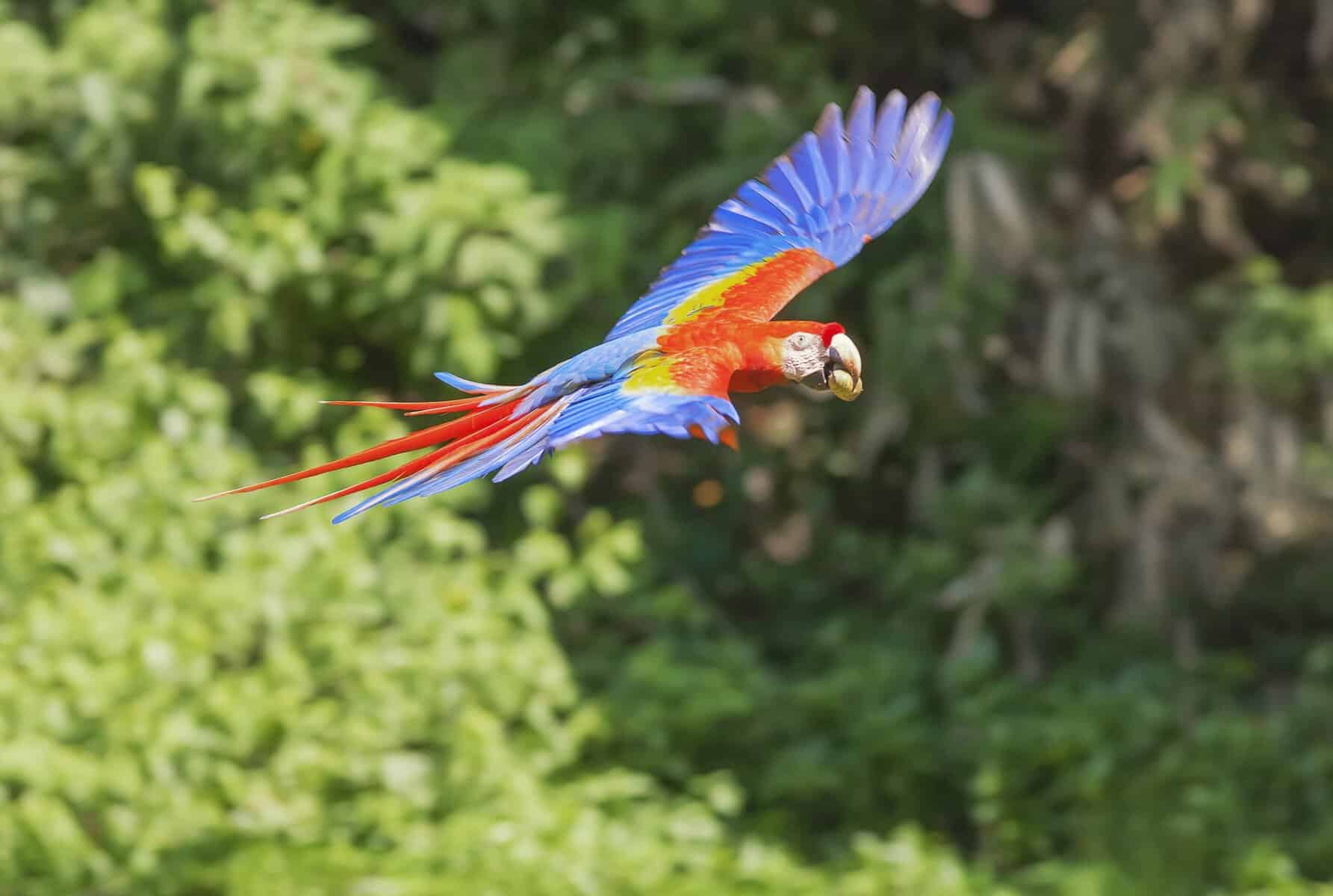
Costa Rica has started a new campaign warning travelers not to remove wildlife, plants or other natural specimens after officials confiscated 4,366 animal and plant specimens at airports and border crossings in 2024 and 2025.The campaign, called #WhatYouCarry, urges tourists and residents to leave Costa Rica’s wildlife where it belongs, in the wild, rather than taking animals, plants or pieces of nature home as souvenirs.
The campaign is a joint initiative of Humane World for Animals, Costa Rica’s Judicial Branch and airport operator AERIS. It is part of a broader project titled Mejora de la Capacidad de Costa Rica para Combatir el Tráfico de Vida Silvestre, funded by the United States Bureau of International Narcotics and Law Enforcement Affairs and administered by Humane World for Animals in coordination with Costa Rica’s Comisión Nacional de Seguridad Ambiental.
John Vargas, head of the Forensic Biology Section at the Judicial Investigation Organization’s Department of Forensic Sciences, said the rising number of seizures points to an ongoing problem that requires both scientific research and greater public awareness. Vargas also pushed back on a common misconception about what wildlife trafficking actually looks like.
The problem, he said, extends well beyond the smuggling of live animals. Items commonly confiscated include reptiles such as boas, amphibians, feline claws and bones, insects, mollusks and corals, plants including orchids, and the eggs of parrots and other birds.
Andrea Borel, executive director of Humane World for Animals, framed the campaign’s central message simply. Protecting wildlife, she said, is not solely the responsibility of authorities. Everyday choices by travelers and residents play a role in conservation and in ensuring wildlife can continue to be enjoyed responsibly for years to come.
The campaign’s core appeal asks visitors to take home experiences, photographs and memories instead of physical pieces of the biodiversity. Officials emphasize that even seemingly minor souvenirs, a piece of coral, a dried starfish, an orchid pulled from the forest, carry real ecological cost. Vargas noted that what a traveler carries away also leaves a void behind, a gap in the ecosystem that the removed specimen once filled.
The campaign lands at a moment when Costa Rica’s reputation as a global biodiversity destination continues to be one of its strongest tourism pluses, and also one of its most exploited. Wildlife trafficking remains a persistent challenge across the international airports, land borders and coastal areas, feeding both international demand for exotic pets and plants and a domestic market for animal parts and curiosities sold to unsuspecting visitors.
By reframing the issue as a shared responsibility rather than strictly a law enforcement matter, organizers hope to shift traveler behavior before it happens, discouraging the buying or collection of wildlife specimens in the first place rather than relying solely on detection at ports of exit. Whether the campaign meaningfully reduces the confiscation numbers will likely become clearer as authorities track seizures in the coming year, but for now, the message to visitors is Costa Rica’s wildlife is not a souvenir.





