

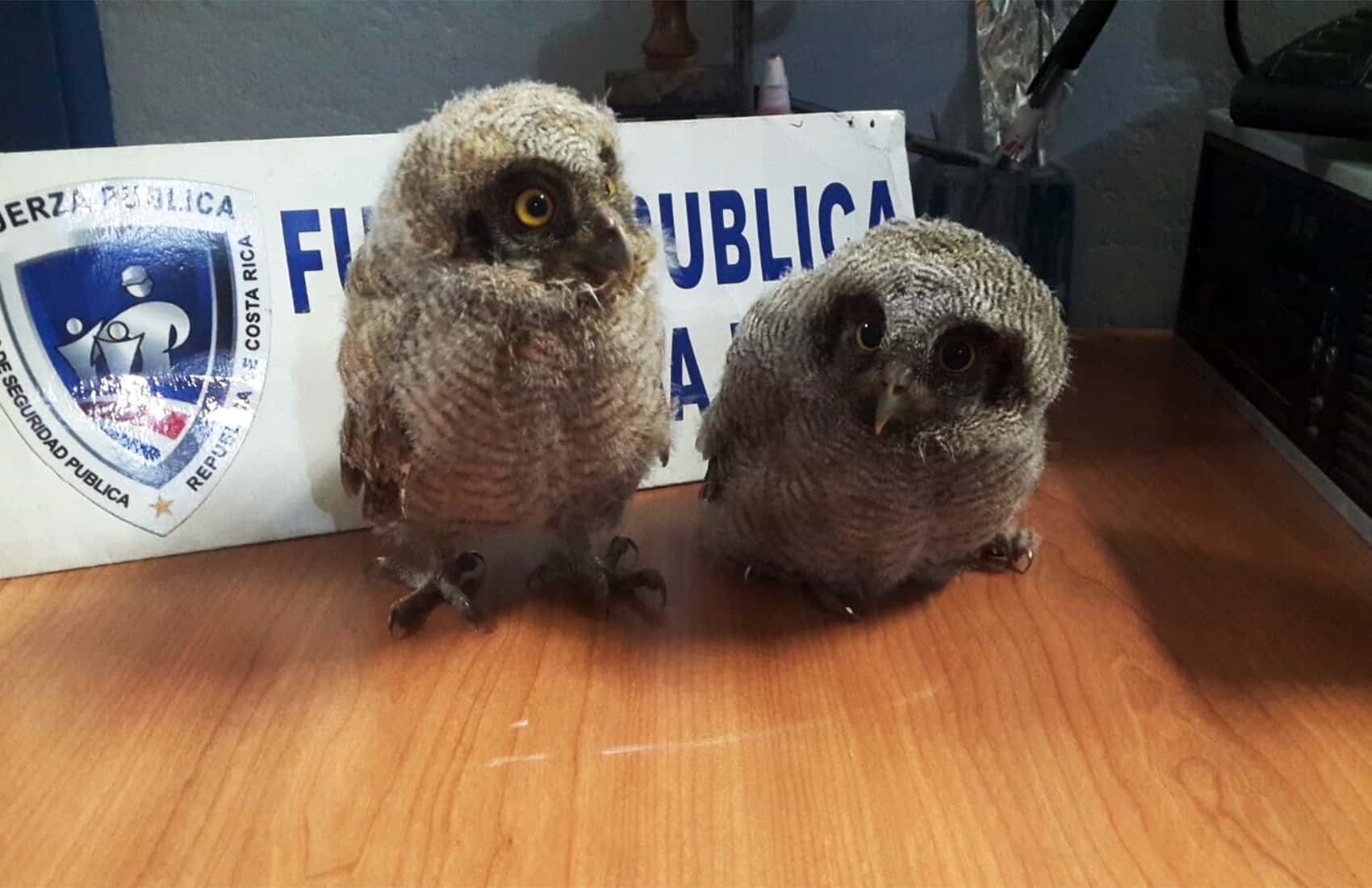
Currently unknown numbers of wild animals are illegally pulled from Costa Rica’s forests, rivers and coastlines every year, according to the Attorney General’s Office, and the pipeline moving them has increasingly shifted from backwoods trappers to Facebook sellers and encrypted marketplaces.
Complaints tracked by the Judicial Investigation Police, known as the OIJ, tell the story on their own. Cases rose from 61 in 2020 to 157 in 2021, then climbed past 250 the following year and hit 198 formal complaints by the close of 2024 alone. Wildlife trafficking is now Costa Rica’s third most common environmental crime, representing just over 10 percent of roughly 2,345 environmental complaints the Judicial Branch received last year.
Prosecutors describe Costa Rica as having become what environmental fiscal Luis Diego Hernandez calls a species bank, a reputation for biodiversity that ironically makes Costa Rican wildlife more valuable abroad. Investigators have identified buyer markets in at least 17 countries, including Germany, the Czech Republic, Spain, Russia, the United States and Canada. Titi monkeys, found only in Costa Rica and Panama, draw particular demand from North America as well as Nicaragua and Honduras, since nowhere else in the region has a wild population left to poach.
Much of the retail action now happens in plain sight on social media. Sellers post frogs, snakes, iguanas, parrots, beetles and even crocodiles, live or taxidermied, often through the same platforms used for ordinary buying and selling. OIJ runs constant cyber patrols to trace these listings back to individual sellers and, when possible, organized networks.
A December 2024 case in Escazu showed how it plays out. A confidential tip led agents to a Facebook seller who turned out to be holding 17 reptiles, including a Sri Lankan snake and a Malayan monitor lizard, animals with no business being anywhere near Costa Rica. The more sophisticated networks have gone further still, hiring programmers and hackers to anonymize transactions and using cryptocurrency to make the money harder to trace. Some operations have reportedly moved onto the dark web entirely.
San Jose’s Juan Santamaria International Airport remains the documented biggest exit point. Airport and judicial officials counted 4,366 animal and plant specimens seized at Costa Rica’s airports and border posts between 2024 and 2025 alone, a figure that pushed airport management to launch a public awareness campaign this past August aimed at tourists who treat turtle shell bracelets, coral or live animals as harmless souvenirs. Concealment methods range from careless to professional. Some travelers simply pack shells and coral in their luggage.
Some go further, sewing hummingbirds into clothing or crating live coatis. Security at the airport has intercepted travelers carrying well over a hundred frogs, snakes and lizards at once, packed using the same body concealment techniques associated with drug smuggling. Land routes matter too. Border police say most smuggling attempts still try to cross on foot or by vehicle, with the heaviest concentration of cases at the Nicaragua border where wildlife trafficking laws are almost never enforced.
Whatever the route, conditions in transit are frequently brutal, since traffickers pack for volume rather than survival. Academic estimates put mortality rates for trafficked birds as high as 90 percent. A shipment of 17 titi monkeys seized after arriving from Panama had already lost several animals to dehydration and untreated ulcers by the time authorities intervened.
The overlap with narcotics trafficking is not just financial. Investigators have documented cases where the same smuggling logistics move both product types on the same run, including one seizure of dehydrated capybaras that arrived in Costa Rica alongside a shipment of crack cocaine. Yet penalties remain light relative to the profits involved.
Costa Rican law currently caps sentences for trafficking endangered species at three years in prison plus fines of up to 40 base salaries, a ceiling officials themselves describe as offering close to impunity given how lucrative the trade has become and how thin enforcement resources remain against its growing volume.





