

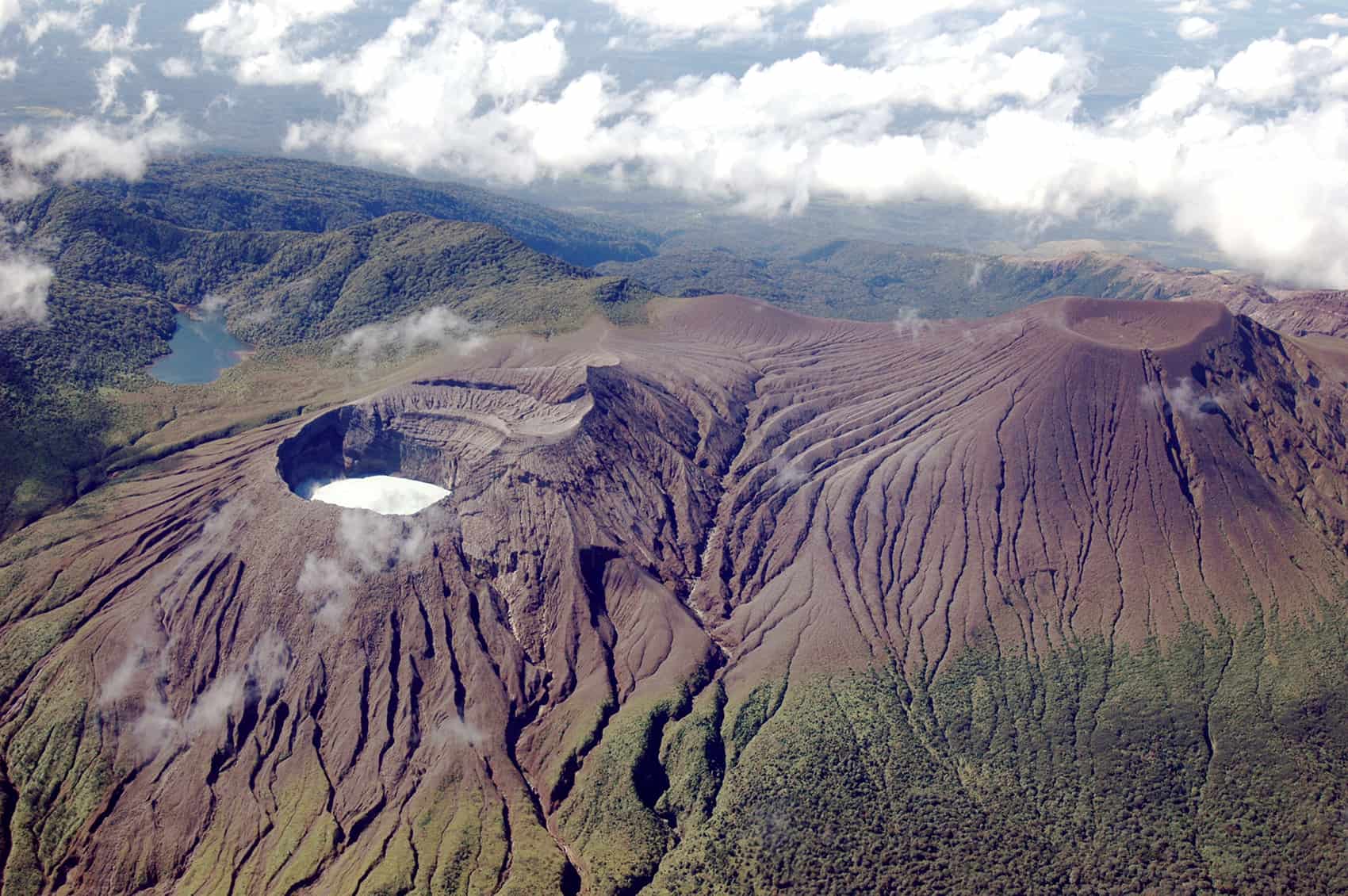
Costa Rica has placed five areas near Rincón de la Vieja Volcano under a preventive green alert after more than 100 eruptions were recorded during July and August, including the volcano’s most impressive eruption so far this year. The National Emergency Commission (CNE) issued the alert today for Dos Ríos and Aguas Claras in Upala, along with Mayorga, Cañas Dulces and Curubandé in Liberia. The move comes after a particularly active stretch at the volcano, with around 20 eruptions recorded over the past weekend alone.
The green alert is precautionary and it puts local emergency officials and communities on heightened watch but does not mean residents are being evacuated. The latest action follows the strong eruption at 4:37 p.m. Monday that we reported earlier this week. Scientists initially observed a large steam plume and volcanic material moving into the Pénjamo River channel. Authorities have since described that event as the most energetic eruption recorded at Rincón de la Vieja during 2026.
The eruption also produced hot lahars, which are fast-moving mixtures of water, mud, rocks and volcanic debris. These flows can travel down rivers and streams originating on the volcano, making waterways one of the main concerns when Rincón de la Vieja becomes particularly active.
Geoffroy Avard, a volcanologist with Costa Rica’s Volcanological and Seismological Observatory (OVSICORI) said eight of roughly 20 recent eruptions were strong enough to potentially produce lahars. The Monday eruption generated a plume estimated at around 2,000 meters, or 6,560 feet, and lahars were confirmed by residents along the Pénjamo River.
That is why the CNE is asking anyone living in or traveling through the affected areas to stay away from rivers that could carry volcanic material. Authorities also advised residents not to allow livestock or other animals to drink from those waterways because the water could pose a health risk.
Ash is another possibility authorities are preparing for. If ash begins falling in nearby communities, the CNE recommends limiting unnecessary outdoor exposure, wearing a mask when going outside and seeking medical attention if respiratory or other health problems develop.
The new alert marks an escalation in the official response to activity that has been building for weeks. OVSICORI recorded 48 eruptions at Rincón de la Vieja during July, and activity continued through August. The volcano remains at Activity Level 3, or precaution, under the scientific monitoring system used by OVSICORI.
For those in the area, it’s important to note that today’s green alert applies to the surrounding communities and does not by itself represent an evacuation order or an announcement that the entire Rincón de la Vieja National Park has closed. Visitors should nevertheless check the latest information from the National System of Conservation Areas (SINAC), before heading to the park.
SINAC can temporarily restrict access when volcanic activity, lahars, weather or other conditions present a safety risk. Rincón de la Vieja is one of Costa Rica’s most active volcanoes and a major tourism destination in Guanacaste. The active crater itself is not open to visitors, while other areas of the national park normally provide access to hiking trails, waterfalls, geothermal features and forest.
For now, scientists are continuing to watch the volcano closely, including its eruptions, seismic activity and gas output. Authorities said additional changes to the alert will be announced if conditions warrant them.





