

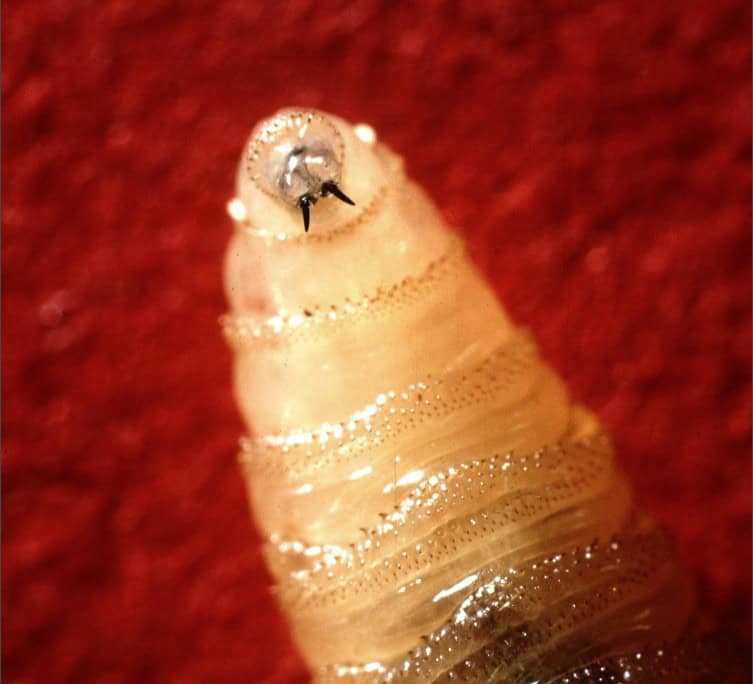
Costa Rica registered 31,324 positive cases of New World screwworm between February 2024 and February 2026, a two-year outbreak that forced one of the country’s largest recent animal-health responses.
The parasite, known locally as gusano barrenador del ganado, is caused by the larvae of the Cochliomyia hominivorax fly. The fly lays eggs in open wounds, and the larvae feed on living tissue, causing painful injuries that can become severe if they are not treated quickly.
Costa Rica declared an animal-health emergency over the parasite in February 2024, after cases began spreading through farms and rural areas. The response included wider field surveillance, controls on animal movement, public training, farm inspections, and faster treatment of suspected cases.
The outbreak has hit the livestock sector hardest, but the parasite is not limited to cattle. It can affect warm-blooded animals, including horses, pigs, dogs, wildlife and, in rare cases, people. That has made early reporting and wound care central parts of the national response.
Inspection posts were placed at key transport points, including Tuba Creek in Limón, Sabanillas de Coto Brus, Kilómetro 35 in Golfito, Santa Cecilia de La Cruz, and Cañas in Guanacaste. Over the two-year period, teams inspected 7,231 trucks and 41,035 animals. They detected 47 active infestations during those checks, treated the animals immediately, and sent them back to their farms of origin to reduce the risk of further spread.
The response also included an education campaign aimed at farmers, transporters and rural communities. Officials held 450 technical talks, distributed more than 51,000 informational materials, and reached more than 11,000 people with guidance on prevention, early detection and proper wound care.
Costa Rica also took part in a regional sterile-fly strategy, a method that releases sterile male flies to reduce reproduction in the wild population. The technique has been used internationally for decades and remains one of the main tools for controlling New World screwworm outbreaks.
For farmers, the warning signs remain straightforward: animals with open wounds, unusual irritation, bad odor, visible larvae, or injuries that do not heal should be checked quickly. Delays can allow the parasite to spread and make treatment harder.
The 31,324-case figure shows how far the outbreak reached, but also how much the country’s animal-health system had to mobilize. Costa Rica now has expanded field protocols, trained inspection teams, and a more active reporting network for one of the region’s most damaging livestock parasites.





