

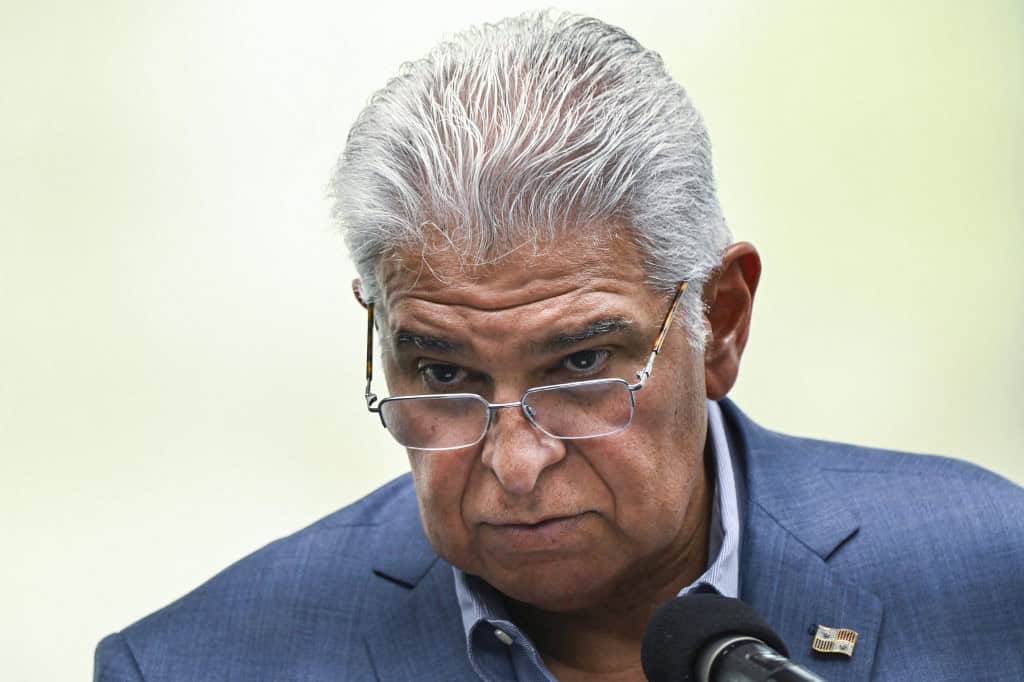
Panamanian President José Raúl Mulino announced plans to build a new maximum-security prison for gang leaders, placing Panama more firmly inside a regional shift toward hardline prison policies modeled in part on El Salvador’s anti-gang crackdown. Mulino unveiled the plan Wednesday during a speech before Panama’s National Assembly, a month after a mass escape from La Joyita prison near Panama City and amid public anger over a hitman attack that killed a 10-year-old girl.
The government has not yet provided a location, construction timeline, budget or capacity for the new prison. “We are going to build a maximum-security prison and tighten penitentiary rules for those who commit crimes from inside prisons,” Mulino said. He said Panama would impose a “force majeure plan” aimed at completely isolating gang leaders, arguing that criminal groups continue to direct extortion, killings, robberies and drug trafficking from behind bars.
“I would rather be accused of overcrowding prisons than allow gang members to keep extorting, killing, robbing and moving drugs through the streets of our country,” Mulino said. The announcement follows one of the most serious prison security failures in Panama in recent years. Nearly 200 inmates escaped from La Joyita in June after unrest inside the prison. Most were later recaptured, but the incident exposed deep weaknesses in the country’s overcrowded prison system.
Panama has about 24,000 inmates in a system built for roughly 14,700 people. The pressure is especially acute in large prison complexes such as La Joyita, where overcrowding, gang control and weak internal security have long been concerns.
Mulino did not mention El Salvador President Nayib Bukele by name, but the comparison is hard to avoid. Bukele’s government has made mass arrests, strict prison controls and the Terrorism Confinement Center, known as CECOT, central pieces of its war on gangs. About 92,000 people have been jailed in El Salvador since the state of exception began in 2022.
The Salvadoran model has won support from many Latin American leaders facing public pressure over crime. It has also drawn sharp criticism from human rights groups, which say the policy has led to arbitrary arrests, prison abuse, deaths in custody and weakened due process.
Costa Rica and Ecuador have also moved toward maximum-security prison projects influenced by El Salvador’s model. Costa Rica’s high-containment prison project has been framed as a response to organized crime leaders who continue operating from inside the prison system.
Panama’s security problem is different from El Salvador’s. The country does not have the same presence of Barrio 18 and Mara Salvatrucha gangs that shaped the security crisis in northern Central America. Instead, authorities say Panama has more than 150 criminal gangs, concentrated mainly in Colón and the metropolitan area around the capital.
Those groups are tied to drug trafficking routes, extortion and contract killings. Official figures through the first half of 2026 put Panama’s homicide rate at about six per 100,000 inhabitants, with higher rates in Colón and the capital region.
Mulino said the new prison strategy would be part of a broader security push that includes more police on the streets, body cameras, drones, stronger port controls and regional cooperation against drug trafficking.
He also said Panama’s prison system needs to distinguish between inmates who may be eligible for rehabilitation and those who continue to direct criminal activity while incarcerated. “Prisoners will not be guests in jails that look more like resorts than centers where they are serving sentences for very serious harm caused to society,” Mulino said.
“I support human rights policy,” he added, “but for me the rights of victims will always come first.”





