Latin America’s Wimbledon picture has narrowed quickly, leaving Brazil’s João Fonseca as the region’s clearest singles contender and El Salvador’s Marcelo Arévalo as Central America’s strongest remaining title threat.
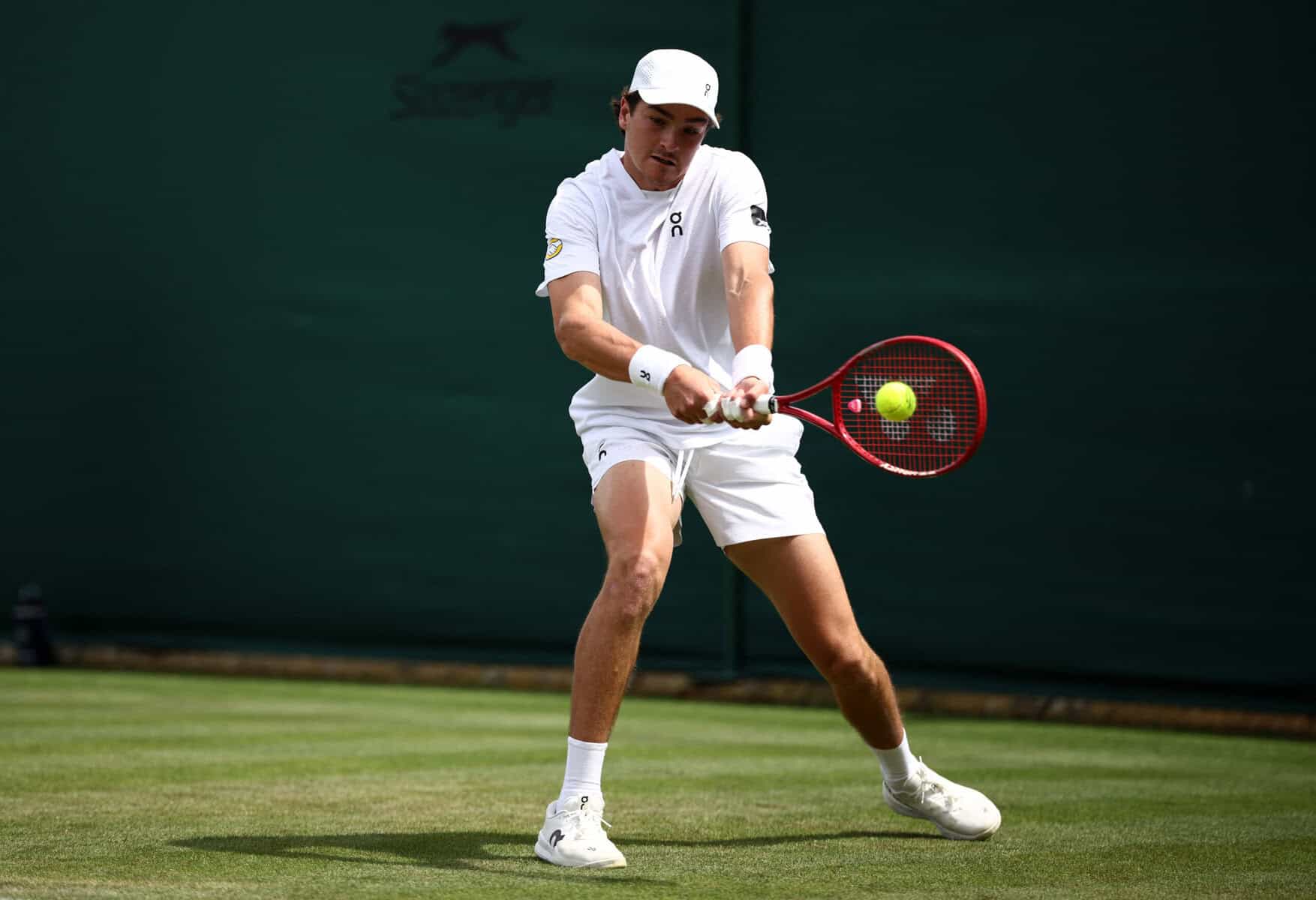
Fonseca, the No. 24 seed, moved into the third round after beating Roberto Bautista Agut in his opener and Jesper de Jong in straight sets. He now faces Roman Safiullin, a grass-court test that could determine whether the Brazilian teenager becomes one of the tournament’s breakout second-week stories.
After opening Wimbledon as one of Latin America’s top names, Fonseca has now become the region’s leading men’s singles survivor. That gives this run a different weight from a normal early-round result. Latin American tennis often builds its biggest Grand Slam hopes on clay, but Fonseca’s power, serve and calm under pressure have translated well to grass.
For us here in Costa Rica and across Central America, the strongest regional connection remains Arévalo. The Salvadoran doubles standout and Croatian partner Mate Pavić, seeded sixth, beat Alexander Bublik and Nick Kyrgios 6-3, 6-4 in the first round of men’s doubles.
That win keeps a Central American player alive at one of the sport’s biggest events. Arévalo has already built one of the most successful careers ever by a player from this region, and his presence gives Wimbledon a local thread even without a Costa Rican player in the main singles draw. The broader Latin American singles field has taken hits.
Peru’s Ignacio Buse won his opening match before falling to Jenson Brooksby in the second round. Colombia’s Nicolás Mejía also won once, beating Paraguay’s Adolfo Daniel Vallejo before losing to Michael Zheng. Chile’s Alejandro Tabilo went out in the first round against Kamil Majchrzak, while Argentina’s Francisco Cerúndolo, one of the region’s higher-seeded men, lost his opener to Jaume Munar.
Argentina still had one of the most dramatic moments of the early rounds through Solana Sierra, who pushed Coco Gauff deep into a deciding tiebreak before losing in three sets. Sierra led late in the breaker before Gauff won the final stretch, turning a possible upset into a narrow escape for one of the tournament’s biggest names.
On the women’s side, Colombia’s Camila Osorio gave Latin America another early win, beating Simona Waltert 6-2, 6-1. Her next challenge was a much tougher one against No. 9 seed Linda Noskova. Other regional names had shorter stays, including Brazil’s Beatriz Haddad Maia, Mexico’s Renata Zarazúa and Argentina’s Nadia Podoroska.
The pattern is familiar. Wimbledon gives Latin American players less time to settle than clay or hard courts. Grass rewards quick points, low movement, first serves and clean returns. Players who build through longer rallies often have to adjust fast or leave early.
That is why Fonseca and Arévalo matter this week. One gives Latin America a young singles star still moving forward. The other gives Central America a proven doubles contender with a real path to another deep Grand Slam run.
For now, Latin America’s Wimbledon story is smaller than it was at the start of the tournament. But it is still alive, and it has two clear names carrying it forward: João Fonseca and Marcelo Arévalo.