

Costa Rica increased its response to Venezuela’s earthquake disaster yesterday, dispatching a second contingent of 48 search-and-rescue specialists to a country where the death toll has continued to climb past 1,400, according to preliminary figures from Venezuelan authorities. The new team, drawn from the Urban Search and Rescue (USAR) group of the Cuerpo de Bomberos de Costa Rica, joins a first wave of Costa Rican responders already working amid the rubble in the hardest-hit areas.
The deployment was coordinated by the National Commission for Risk Prevention and Emergency Response (CNE) on the instruction of President Laura Fernández Delgado, and it reflects a notably large commitment for a country of Costa Rica’s size. The Saturday delegation is made up of firefighters trained for complex collapse scenarios, including medical personnel, paramedics, and specialists in cutting, extraction, and the life-detection technology used to find people trapped in confined spaces. The group also carries its own communications systems to coordinate operations on the ground, along with several tons of specialized equipment.
“We trained for years, we prepared for this,” said Roberto Solís, a rescuer and the mission’s chief, who acknowledged that conditions in the disaster zone are severe. Solís described the challenges his teams expect to face — unstable collapsed structures where a single wrong move can trigger further danger, compounded by high temperatures that complicate the work. The mission is racing against the clock: the window for finding survivors narrows sharply after the first 72 hours, a threshold the response had already passed by the weekend.
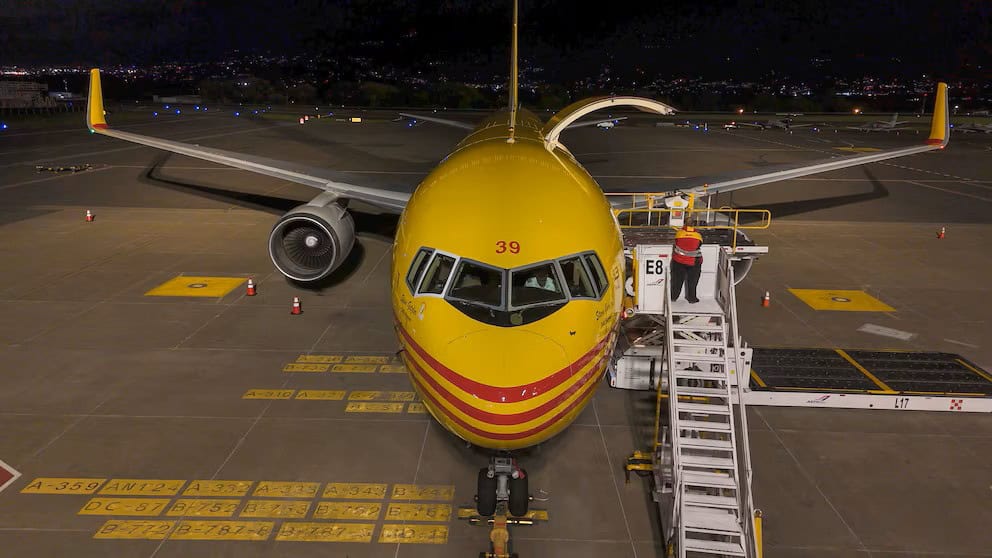
Saturday’s contingent builds on a first group that reached Venezuela on Friday, June 26. That initial deployment carried 3.5 tonnes of non-perishable food aid and 17 rescuers, 16 of them volunteers from the Costa Rican Red Cross, who have been helping locate and extract trapped people, treat the injured, and support temporary shelters. The combined Costa Rican effort has leaned on a public-private logistics chain: the courier company DHL provided transport support for supplies, while the Grand Duchy of Luxembourg financed the charter flights needed to move the brigades and their equipment to the emergency zone.
The catastrophe unfolded when two powerful earthquakes struck north-central Venezuela roughly 39 seconds apart, with magnitudes reported at 7.2 and 7.5 by the United States Geological Survey. The epicenters were located in Yaracuy state, but the destruction spread across Caracas and the coastal state of La Guaira, which has borne the worst of the damage.
Beyond the more than 1,400 deaths reported as of Saturday, Venezuelan authorities have described thousands of people injured and tens of thousands unaccounted for, while international teams reported pulling more than 200 people out alive in the days after the quakes. All of those figures remain preliminary and have shifted repeatedly as rescue crews reach more sites.
Costa Rica’s contribution is one piece of a broad international mobilization. Rescue teams and aid have flowed in from across the region and beyond, including Brazil, Ecuador, Chile, El Salvador, the Dominican Republic, the United Kingdom, Switzerland, and others, many of them bringing search dogs and tonnes of equipment of their own. For a country of our size, Costa Rica’s response draws on a long-standing civil-protection and humanitarian tradition that has seen its rescuers and Red Cross volunteers deployed to disasters elsewhere in Latin America.
The emergency has also resonated at home. Donation drives have sprung up in Costa Rica, including a campaign by concert promoters to match contributions destined for Venezuela, and residents looking to help are best served by giving through established channels such as the Costa Rican Red Cross and CNE-coordinated efforts rather than informal appeals. Organizers and aid groups have urged donors to verify any campaign before contributing.
The deployment shows how Costa Rica positions itself in moments of regional crisis — a small country without an army leaning on its emergency services and its self-image as a peaceful, outward-looking neighbor at a time when the need next door is dire. The Costa Rican teams are expected to remain in Venezuela as long as the search-and-rescue phase continues.





