
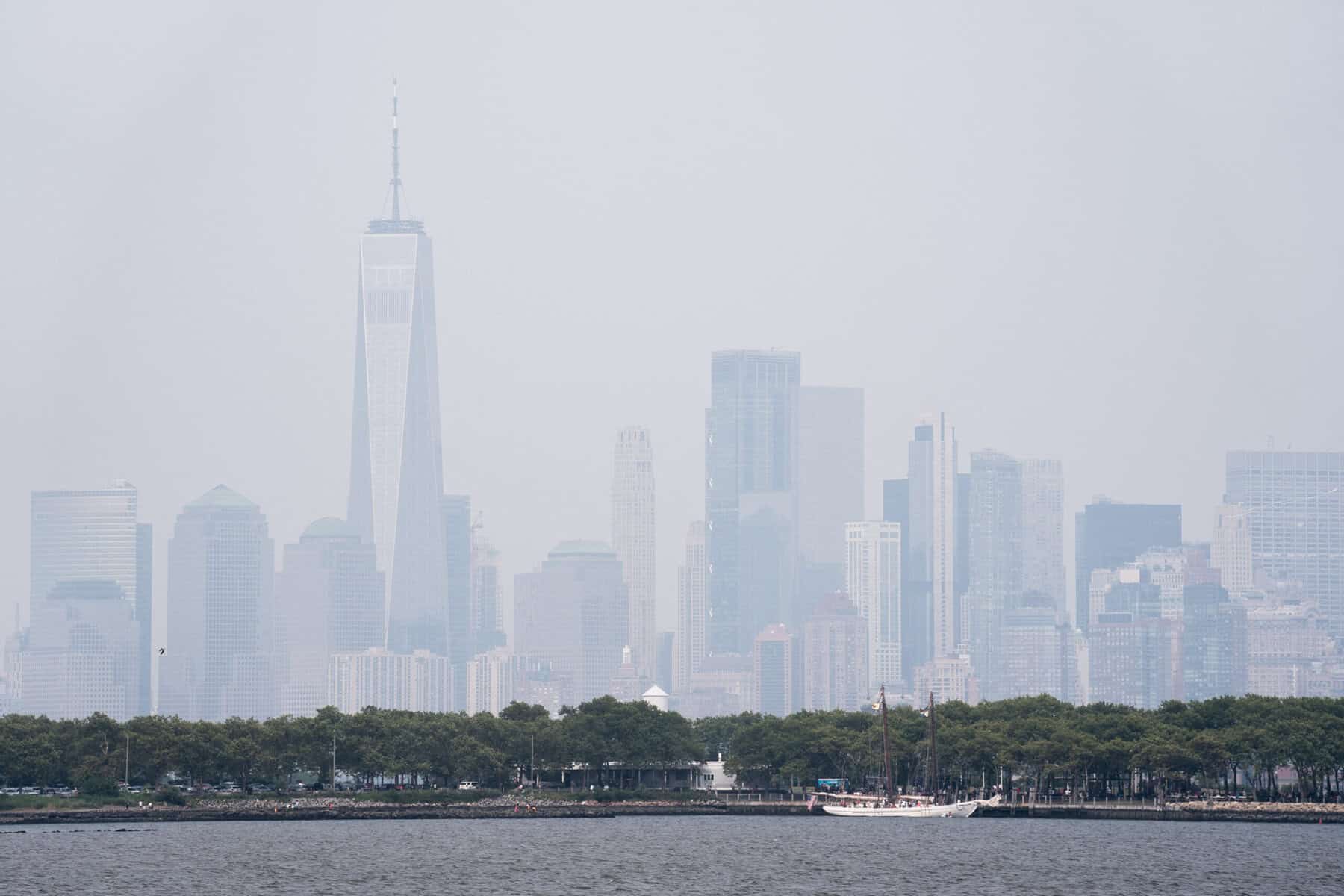
Smoke from hundreds of Canadian wildfires has added an unexpected health and weather concern to Sunday’s World Cup final between Argentina and Spain, although improving forecasts suggest the match should go ahead without major disruption.The haze spread across the northeastern United States during the week, pushing air quality into unhealthy ranges in parts of New York and New Jersey.
More than 80,000 spectators are expected at MetLife Stadium, known during the tournament as New York New Jersey Stadium, for the 3 p.m. kickoff on July 19.The open-air venue has no roof or enclosed climate-controlled environment to protect players and fans from smoke, heat or direct sunlight.
Conditions around the stadium remained unsettled Saturday. Heavy thunderstorms, damaging winds and flash flooding moved through the area, forcing Spain to cancel its final outdoor training session. Argentina’s practice was delayed by about 45 minutes before the defending champions were able to take the field.
The storms caused immediate disruption but were also expected to help clear the thickest wildfire smoke before the final. Forecasters said the weather system should push much of the pollution away from northern New Jersey, leaving only light haze or a lingering smell of smoke by Sunday afternoon.
Air quality in East Rutherford is expected to improve from levels considered unhealthy for sensitive groups on Saturday to the moderate range Sunday. That would mean little risk for most spectators, although people with asthma or existing heart and lung conditions could still experience symptoms. Sunday’s forecast calls for mostly sunny skies, lower humidity and a high near 83 degrees Fahrenheit (28 Celsius).
The smoke has already affected professional sports elsewhere in North America.A Major League Soccer match between the Chicago Fire and Vancouver Whitecaps was postponed because of poor air quality, while a Canadian Premier League match in Hamilton, Ontario, was also called off.
Toronto canceled an official World Cup fan festival and public screening of the Argentina-England semifinal after an air-quality warning was issued. A National Women’s Soccer League match between Gotham FC and the Washington Spirit went ahead at Citi Field in New York, but officials introduced hydration breaks roughly every 15 minutes.
United States midfielder Trinity Rodman later described the conditions as difficult and questioned whether the match should have been played under circumstances requiring so many stoppages. The risk is greater for players than for most fans because intense exercise increases breathing rates and the amount of fine particulate matter drawn deep into the lungs.
A World Cup final could require more than two hours of outdoor exertion when warmups, halftime and possible extra time are included. Wildfire smoke can cause sore throats, coughing, headaches, irritated eyes and fatigue even among healthy adults. Prolonged exposure can also create greater problems for people with cardiovascular and respiratory conditions.
Health officials generally recommend reducing strenuous outdoor activity when smoke is present. People who need additional protection should use a properly fitted N95 respirator rather than a cloth mask. Air-quality monitors at the stadium have been recording conditions at 10-minute intervals, and tournament organizers remain in contact with local authorities.
No delay, relocation or change to the scheduled kickoff has been announced. The outlook is considerably better than it appeared earlier in the week. Forecasters now expect the most dangerous smoke to move away before Argentina and Spain take the field, though sensitive spectators have been advised to check local air-quality readings Sunday morning.
After a tournament repeatedly interrupted by heat and thunderstorms, the final now faces one last environmental concern. Barring another sudden shift in the winds, however, the smoke is expected to remain a troubling backdrop rather than an obstacle to crowning the 2026 world champion.