

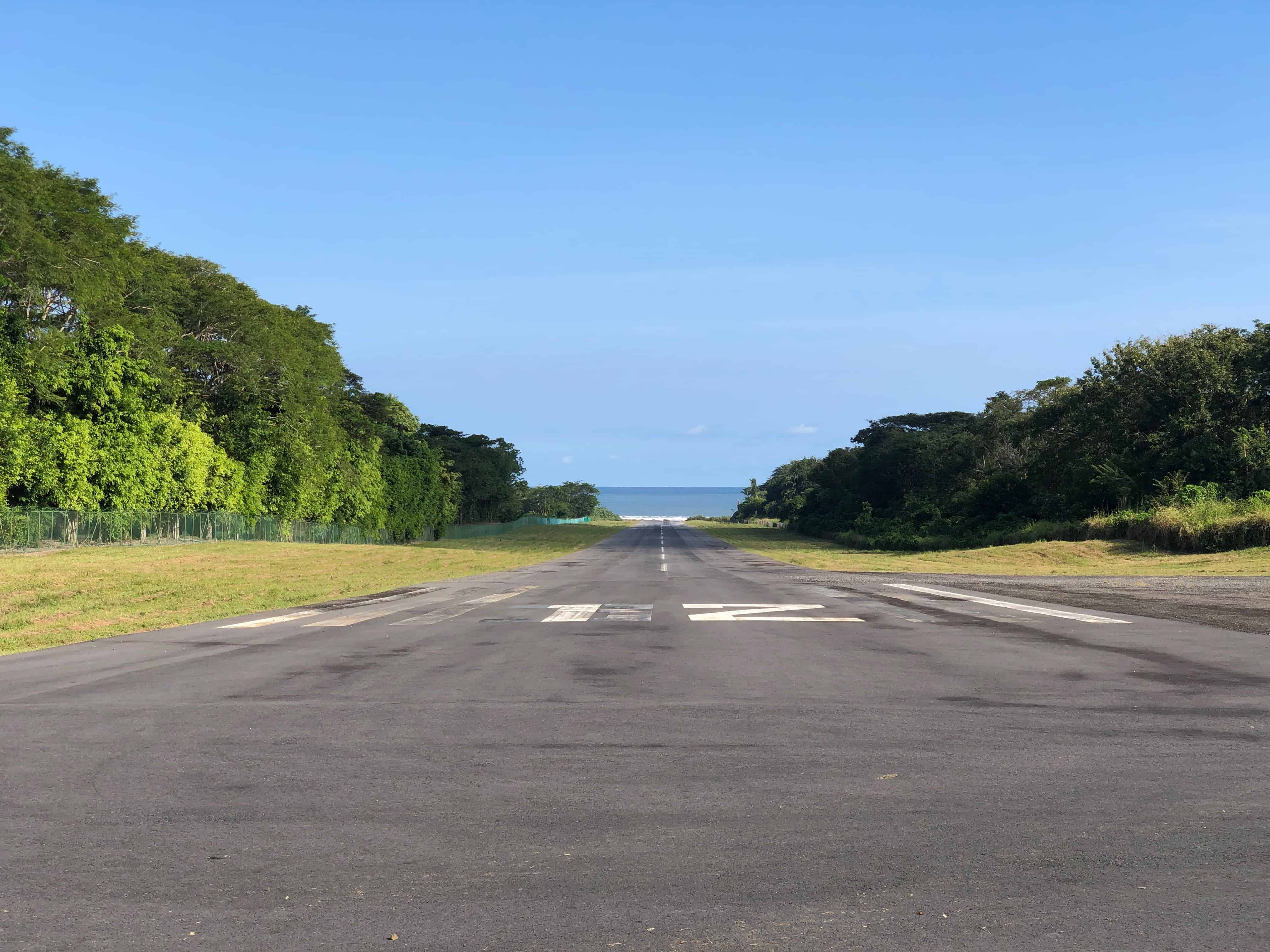
Costa Rica has approved a national protocol governing nighttime air ambulance flights, closing out roughly ten months of uncertainty that began when Civil Aviation barred the practice at most of the airfields last October. Under the framework, night medical flights are permitted at six locations: the airfields at Limón, Palmar Sur and Coto 47 near Ciudad Neily, along with Tobías Bolaños in Pavas, Daniel Oduber in Liberia and Juan Santamaría in Alajuela.
Juan Santamaría must now serve as the arrival point for every nighttime medical flight in the country. The selection came down largely to which fields have runway lighting and a permanent police presence, both treated as prerequisites for safe operations after dark. Coto 47 has both, including a base of the Air Vigilance Service, and Palmar Sur received substantial state investment in lighting and security in recent years.
Left off the approved list are several airfields serving high-traffic tourist areas, among them Tamarindo, Quepos and Puerto Jiménez. Pilots had also identified Cóbano and Nicoya as essential for reaching patients in coastal and peninsular communities far from major hospitals.
The protocol restricts these flights to patients in critical condition whose lives are at immediate risk and who cannot safely wait for daylight. It sets out an eleven-step process that begins when the Costa Rican Social Security Fund identifies an emergency case, moves through coordination with the Air Vigilance Service and Civil Aviation, and ends with a private operator carrying out the flight once conditions and authorization align.
Officials say exceptions outside the formal protocol will still be permitted when a patient’s life is at stake. The rules were drafted jointly by the Ministry of Health, Civil Aviation, the Social Security Fund and the Air Vigilance Service, and are to be reviewed annually.
The finalized protocol ends a dispute that began with a directive issued on October 9 of last year, which prohibited takeoffs and landings between sunset and sunrise at uncontrolled airfields nationwide. Civil Aviation argued the flights had operated for decades without a formal regulatory framework and that medical operations must meet the same technical and legal standards as any other flight.
Transportation Minister Efraím Zeledón Leiva and Social Security Fund president Mónica Taylor defended the restriction at a press conference in February, characterizing the volume of genuinely urgent flights as minimal. Taylor said many transfers went to private hospitals and involved minor complaints. Zeledón referred to irregular commercial arrangements around the flights at Tobías Bolaños, and maintained that extreme emergencies were still being authorized.
That position drew immediate pushback from pilots, ambulance operators and physicians inside the Social Security system. The Fund’s own emergency and disaster center warned the restriction was delaying transfers of patients who needed higher-capacity hospitals, and the hospital in Ciudad Neily fell back on ground transfers with police escorts to speed the run into the Central Valley.
Ricardo Hernández, a paramedic and operations manager at the air and ground transport company SAAT, said roughly 700 people a year need urgent air transport in Costa Rica for medical reasons, and that close to half of all transfers happen at night. Operators separately reported hundreds of night ambulance flights annually before the restriction took effect, and said the country had recorded no accidents in night operations at uncontrolled airfields in eighteen years.
An analysis presented by pilots counted 3,130 nighttime ambulance flights over the previous decade, an average of about 285 a year, without a serious incident. Pilots also noted that the October directive landed at the start of high tourist season, when visitors are more likely to be injured in remote or coastal areas.
For anyone traveling to the more remote parts of the country, including popular surf and beach towns that are not on the approved list, the practical effect is unchanged. A serious nighttime medical emergency in those areas will still mean a lengthy ground transfer rather than an air evacuation, because every flight must now either originate or terminate at one of the six designated locations.
Civil Aviation issued temporary technical standards for qualifying airfields earlier this year while the permanent framework was being finalized. Those interim rules are now replaced. Whether additional airfields can be brought onto the list will depend on lighting, perimeter security and staffing upgrades that have not yet been funded or scheduled.





