

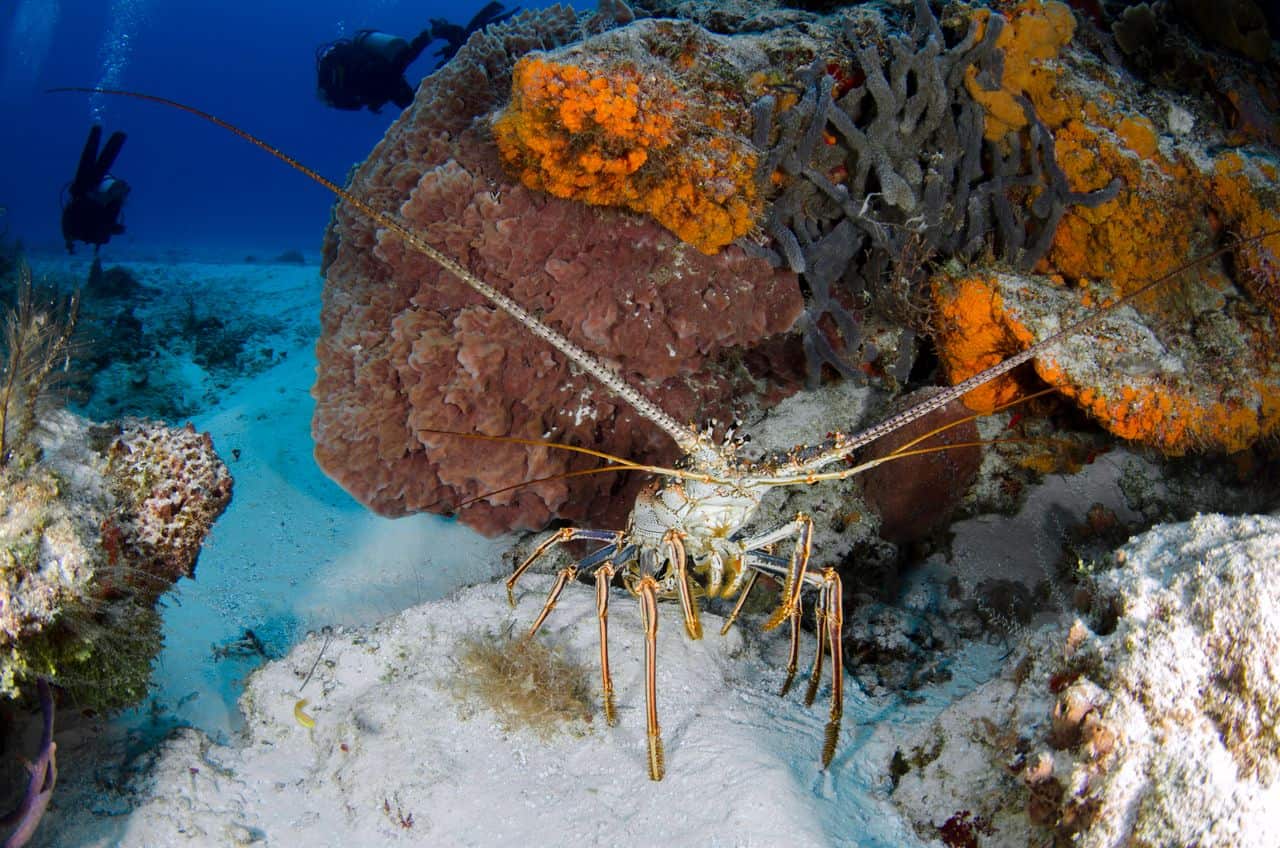
Divers and fishermen have long called spiny lobsters “bugs,” a nod to their long antennae and armored, insect like build. For more than four decades, one particular population of red spiny lobster has been showing up in small scale fishery catches along Costa Rica’s North Pacific coast under exactly that kind of casual, unofficial radar, present in landings, never separately counted, and never built into a single conservation plan of its own.
A new scientific study is changing that. Researchers examining small scale fisheries along the Guanacaste coast identified specimens of Panulirus penicillatus carrying a genetic lineage distinct enough to qualify the population as effectively endemic, found only in a narrow slice of the Eastern Tropical Pacific that includes Clipperton, the Galápagos, Malpelo, Costa Rica and Mexico. In plain terms, this isn’t simply a regional pocket of an otherwise common lobster. It’s a genetically distinct group that’s been quietly fished for generations without anyone formally recognizing it as its own thing.
That gap helps explain a pattern researcher are increasingly running into elsewhere in Costa Rican fisheries: species turning up in landing records that, officially, were never known to be there in the first place. Because the lobster was lumped into broader catch categories rather than tracked on its own, no harvest controls were ever put in place to manage how much pressure the population could sustainably handle. Decades of catch happened essentially unmonitored, with no mechanism to adjust fishing intensity as the population’s true status came into focus.
The deeper problem the study points to isn’t really about one lobster. It’s about how Costa Rica’s conservation and fisheries systems talk to each other, or don’t. Researchers describe this case as one where ecological importance and commercial value collide directly, and managing it properly will require blending scientific evaluation with sustainable use policy and marine conservation, rather than treating the two as separate tracks. That’s a real challenge for the status quo in Costa Rica, where conservation initiatives and fisheries management have often operated as fragmented, sometimes even contradictory, efforts rather than one coordinated system.
There’s also a sharper, almost uncomfortable observation buried in the findings. Unlike sea turtles, sharks or other so called flagship species that draw global attention, donor funding and public activism almost automatically, a lobster doesn’t generate that kind of marketing pull. It’s not charismatic.
Nobody organizes a beach cleanup or a fundraising campaign around a crustacean most people only think about on a dinner plate. That makes this exact kind of case, ecologically significant, commercially fished, and genetically distinct, one of the easiest for a conservation system to simply overlook, even once scientists have the data showing it shouldn’t be.
For now, the lobster’s endemic status is freshly documented rather than formally protected. What happens next, whether Costa Rica builds dedicated harvest controls and monitoring specifically for this population, will be the real test of whether a species without an obvious public face can still get the same kind of policy attention that better known wildlife always seems to receive first.





