The second Grand Slam of the tennis season begins Sunday in Paris, and for Latin American fans the 2026 Roland Garros is shaping up as one of the most wide-open editions in years. With two-time defending champion Carlos Alcaraz ruled out by a right wrist injury, the men’s draw has cracked open in a way it has not since the Rafael Nadal era — and a deep contingent of Argentine, Brazilian, Chilean, Bolivian, Colombian and Mexican players will be looking to capitalize.
The tournament runs from May 18 to June 7 at Stade Roland-Garros in Paris, with qualifying from May 18 to 23 and the main singles draws beginning Sunday, May 25 with 128 players each. The women’s final is set for Saturday, June 6, the men’s final for Sunday, June 7.
The men’s race without Alcaraz
The Spaniard’s absence reshapes everything. Alcaraz announced he would skip both Rome and Roland Garros after tests on a wrist injury sustained earlier this month, ending his 2026 clay season. Italian world No. 1 Jannik Sinner now arrives in Paris as the overwhelming favorite — undefeated on clay in 2026 with five consecutive Masters 1000 titles, including Monte Carlo and Madrid. Roland Garros is the only major missing from his collection.
That clears space for the chasing pack — and Latin America is well represented in it.
Argentina leads the Latin charge
Argentina remains the strongest Latin American tennis nation, and three of its players are in the men’s main draw by direct entry.
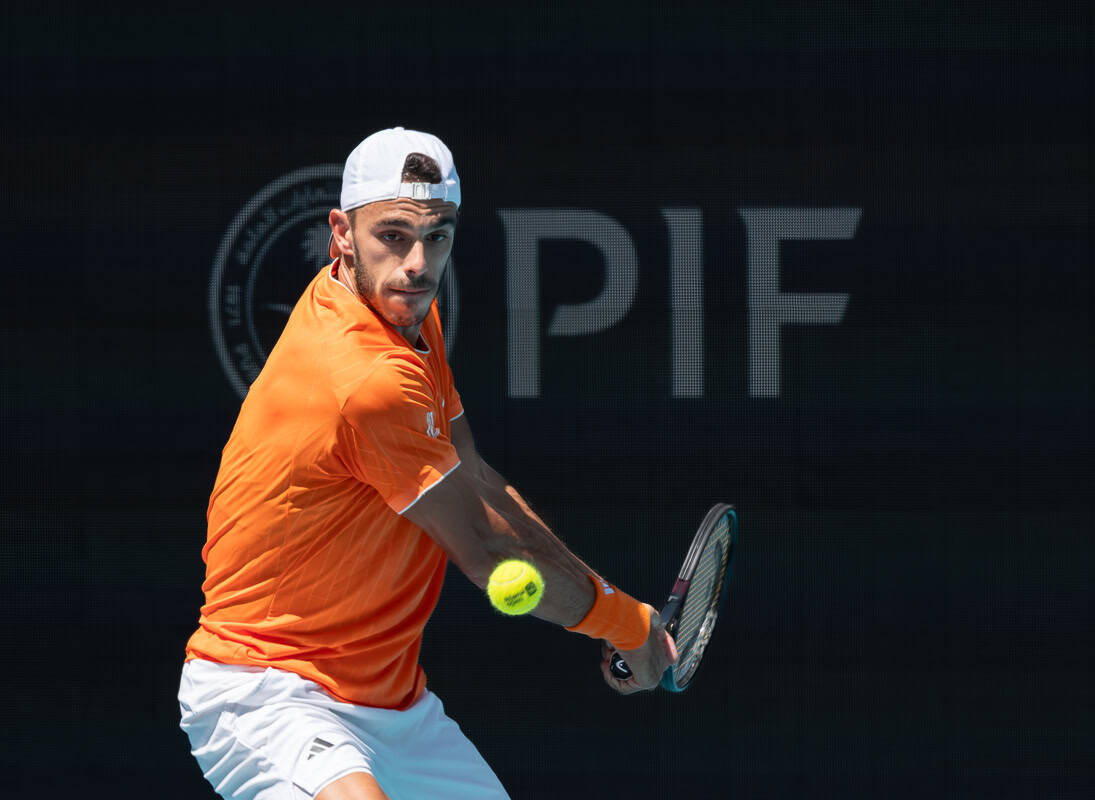
Francisco Cerúndolo is the top-ranked Latin American man, seeded inside the top 20. The Argentine won Buenos Aires in 2026 and reached the fourth round at Roland Garros in 2024 — a pure clay-courter with a punishing baseline game, the kind of player who can grind through five sets under the Parisian sun. With Alcaraz gone from his quarter of the draw historically, Cerúndolo has a realistic chance to better his career-best result.
Sebastián Báez, the Buenos Aires-born former Latin American No. 1, enters as another seeded contender. He reached back-to-back Rio Open finals in 2024 and 2025 and remains one of the tour’s most reliable dirtballers.
Tomás Etcheverry rounds out Argentina’s direct entries in the top 30 of the men’s list. The 2023 Roland Garros quarterfinalist is capable of damage on a good day.
A fourth Argentine to watch is Solana Sierra, who is on the women’s entry list — a name to file away as the next generation pushes through.
The Italian-Argentine wildcard
Luciano Darderi has dual Argentine-Italian citizenship and represents Italy, but his identity remains tied to Latin America. Darderi has accumulated 48 clay-court wins since the start of 2024 — one of the highest totals on tour — won Santiago this year, and his career-high ranking of No. 18 reflects his consistency on the dirt. A dangerous floater in any draw.
Brazil: Haddad Maia in tough form
The Brazilian flag bearer remains Beatriz Haddad Maia, who made history in 2023 as the first Brazilian woman to reach the Roland-Garros semi-finals in the Open era. But her 2026 has been brutal — as we covered last month, she entered Madrid with a 2-10 singles record on the year and a ranking that has slipped to No. 69 and went out in the opening round there. Paris is where she has historically found her best level, but expectations should be tempered.
On the men’s side, Brazil’s hopes rest with Henrique Rocha in qualifying, alongside other South Americans fighting for main-draw spots.
Chile and Bolivia
Bolivia’s Hugo Dellien is in the men’s qualifying draw, looking to grind his way into the main bracket — always a long shot, but the veteran knows clay as well as anyone. Chile’s Tomás Barrios Vera is also in qualifying, while clay specialists Alejandro Tabilo and Cristian Garín, both former top-20 mainstays, will be tested by the draw if they make it through.
Colombia and Mexico in the women’s draw
The women’s entry list includes Camila Osorio of Colombia and her countrywoman Emiliana Arango, plus Mexico’s Renata Zarazúa — the Mexican veteran who has built a reputation for upsets at majors. Argentina’s Solana Sierra is also entered.
What to expect
The men’s tournament will revolve around whether anyone can stop Sinner, and the smart money says no one will. But with Alcaraz out and Jack Draper also withdrawn through knee injury, the draw beneath the top two has more chaos potential than at any point in recent memory — and that benefits Latin American clay specialists like Cerúndolo, Báez and Darderi, who can win three or four matches when the bracket breaks their way.
The women’s draw remains anchored by defending champion Coco Gauff, world No. 1 Aryna Sabalenka, four-time champion Iga Świątek, and Australian Open champion Elena Rybakina. Day sessions on Philippe-Chatrier, Suzanne-Lenglen, and Simonne-Mathieu begin at 11:00 AM CET — that’s 3:00 AM Costa Rica time. Night sessions on Chatrier start at 8:15 PM CET (12:15 PM CR time), which means the most marquee match each day will play in Costa Rica’s lunchtime window — convenient viewing for expats who want a daily Roland Garros fix.