

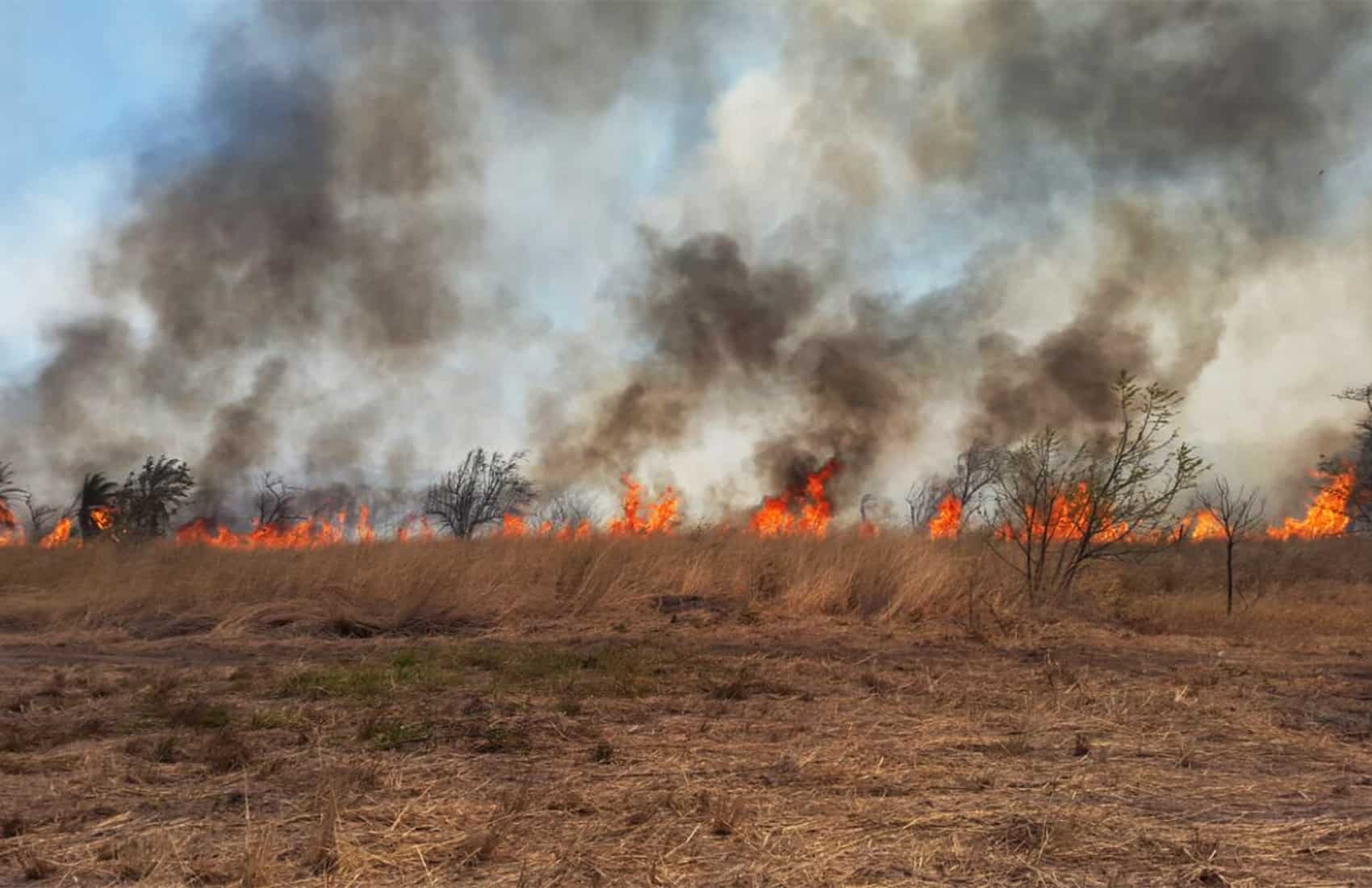
Guanacaste is facing one of the most severe forest fire seasons Costa Rica has ever recorded, with the province alone now reporting more fires in 2026 than the entire country registered during 2024, the previous record year for this type of emergency.
The area has recorded 144 forest fires so far this year, while Costa Rica closed 2024 with roughly 141 to 142 fires nationwide, depending on the official count used in public reports. The comparison underscores the scale of the crisis in the country’s driest province, where strong winds, high temperatures, dry vegetation and human activity have combined to keep emergency crews working well into May.
Across Costa Rica, firefighters have responded to 227 forest fires in 2026, with more than 30,184 hectares affected. Active fires were still reported this week in Liberia, Bagaces and parts of La Cruz, even though forest fire activity normally begins to ease by this point in the year.
The situation is especially concerning because May usually marks the transition away from the most dangerous part of the dry season. Fire officials said parts of Guanacaste are still seeing moderate to extreme conditions for fire spread, raising concern that the season has not fully closed.
Guanacaste has been the center of the emergency for months. By early April, Costa Rica had already reached 146 forest fires nationwide, with Guanacaste accounting for 102 of them, or more than 69% of the national total at that point.
The area’s geography makes the problem harder to control. Fires have affected areas ranging from the Tempisque Conservation Area to the edges of Santa Rosa National Park, as well as grasslands near Liberia and Santa Cruz. In many cases, crews face rough terrain, steep hills, thick vegetation and limited access routes, which can slow response times even when firefighters are nearby.
Authorities continue to point to human activity as the main driver. Data cited by La Voz de Guanacaste indicates that 98% of wildfires in Guanacaste are caused by people, with illegal agricultural burns among the main causes. Other reported causes include burning trash, clearing lots or farms with fire, domestic burning and fires linked to illegal hunting.
The impact goes beyond the burned land. Forest fires can affect air quality, wildlife, rural communities, farms and road access. For residents and travelers moving through northern Guanacaste, smoke and changing fire conditions can affect visibility and travel plans, especially in rural areas and on routes near dry forest, cattle land and beach communities.
The 2024 season had already placed heavy pressure on Costa Rica’s emergency system. The Fire Department’s annual report said 2024 saw a sharp increase in forest fire incidents, with Guanacaste-Península and Guanacaste Altura among the zones with the highest number of responses. The report also noted impacts on biodiversity, air quality and nearby communities.
This year has moved beyond that benchmark. Firefighters have had days with more than 120 personnel deployed at the same time and maintained an operational camp for 63 days to support responses across affected areas. Officials are again urging the public to report fires or suspicious activity through 9-1-1 as one small fire can move quickly when wind, heat and dry vegetation line up.





