

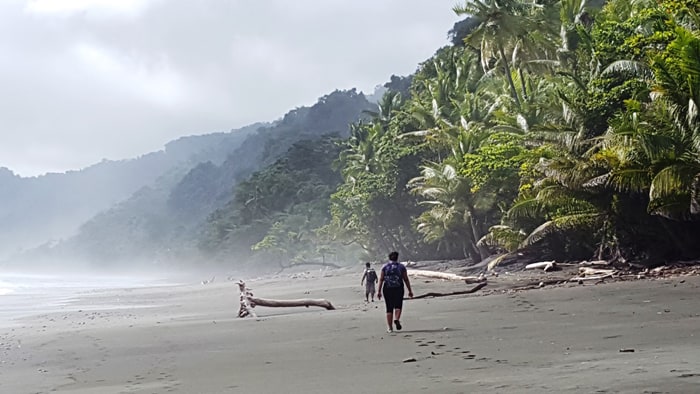
Costa Rica’s green season, which runs from May through November, often gets an unfair reputation. Some travelers picture all-day rain and canceled excursions, but residents know this period can be one of the best times to explore the country. Mornings are often bright and clear, with showers arriving later in the afternoon or evening. Waterfalls run stronger, forests look richer, wildlife becomes more active, crowds thin out, and hotel and tour prices are often lower than during the dry season.
This is not a complete list. Costa Rica has enough green-season tour options to fill a book. But these are some of the best choices for travelers, families, and residents looking for memorable outdoor experiences during the rainy months.
Tortuguero Canal Boat Tours
Few experiences in Costa Rica compare to gliding through the canals of Tortuguero during the rainy season. Often compared to the Amazon, this remote stretch of the Caribbean coast is made up of waterways lined with mangroves, rainforest, and wildlife. The park itself covers more than 75,000 hectares of protected land and sea, and the only ways in are by boat or a small commuter plane from San José to the village airstrip — there are no roads.
From July through October, green sea turtles come ashore at night to nest in huge numbers, making guided beach walks one of the area’s top experiences. Smaller numbers of hawksbill and loggerhead turtles also nest at Tortuguero during these months, though greens are by far the most commonly seen.
Tortuguero protects the largest green turtle nesting beach in the Western Hemisphere, and the modern sea turtle conservation movement traces its roots here, to biologist Archie Carr and what is now the Sea Turtle Conservancy, which began monitoring nesting populations in the 1950s. Night tours are tightly regulated by park rangers: no cameras, no phone screens, no flashlights, and small groups led by certified local guides who track the turtles by radio before bringing visitors close.
By day, boat tours through the canals can reveal river otters, caimans, howler monkeys, spider monkeys, white-faced capuchins, sloths, and a wide range of tropical birds — including the endangered great green macaw, for which Tortuguero is one of the country’s last strongholds. Smaller side channels like Caño Chiquero and Caño Mora, open only to non-motorized boats, tend to offer the quietest wildlife viewing. Most travelers base themselves at one of the eco-lodges along the canals or in Tortuguero village, where the local Afro-Caribbean community still speaks a distinctive English-based patois alongside Spanish.
Monteverde Cloud Forest Night Tours
Monteverde’s cloud forests take on a different character during the green season. Mist hangs in the trees, the trails are quieter, and wildlife can be easier to spot with the help of a guide. The town sits at roughly 1,400 meters along the Continental Divide, where Pacific and Caribbean weather systems collide to feed an ecosystem that covers less than 0.26% of the planet’s land surface.
What surprises many first-time visitors is that more than 80% of Monteverde’s wildlife is nocturnal. The region is home to over 100 mammal species, 400 bird species, and 120 reptiles and amphibians, but most of them only emerge after dark. That is why daytime hikers sometimes leave the reserves wondering where all the animals went, while night-tour participants come back with long lists of sightings.
Quetzals, toucans, and glass frogs are among the animals visitors may see. A guided night tour — typically two to two and a half hours along a one-to-two-kilometer trail — offers a closer look at creatures that are usually hidden during the day, including red-eyed tree frogs, sleeping toucans and motmots, side-striped pit vipers, tarantulas, kinkajous, olingos, armadillos, and the occasional sloth moving through the canopy.
The rainy season is also peak breeding season for frogs, so amphibian sightings tend to spike between May and November. Tours run out of several private reserves around Santa Elena — including the Monteverde Cloud Forest Preserve, the Wildlife Refuge, and the Children’s Eternal Rainforest at Bajos del Tigre — most departing around 5:30 or 6:00 p.m., when the equatorial sun sets. Bring a rain jacket, long pants, and closed-toe shoes; mountain nights at this elevation get cool and damp.
Arenal Volcano, Rafting, and Hot Springs
The Arenal Volcano area is one of Costa Rica’s best green-season destinations for adventure. Seasonal rains raise river levels, making whitewater rafting on the Sarapiquí and Toro rivers especially popular. The Sarapiquí offers a Class III–IV run with roughly 20 to 30 continuous rapids over 9 to 11 kilometers, while the Balsa River is the gentler, family-friendly Class II–III option closer to La Fortuna. Operators run trips year-round, but green-season flows make for the most exciting descents.
After a morning on the rapids, travelers can zip-line through the forest, visit the hanging bridges at Mistico Park, or hike the trails inside Arenal Volcano National Park, where the 1968 lava field is still visible. La Fortuna Waterfall, fed by a tributary of the Arenal River, is at its most powerful during the rainy months, when its 70-meter drop runs strongest.
In the evening, the area’s hot springs offer one of Costa Rica’s classic rainy-season experiences: soaking in warm geothermal pools while rain falls through the trees. The thermal waters here are heated naturally by Arenal Volcano and run rich in minerals. Tabacón is the best known, with a free-flowing thermal river that ranges from about 22 to 38°C (72 to 100°F), but Eco Termales, Baldí, Paradise, and the free public springs along the Tabacón river are popular alternatives at different price points. A combined rafting-and-hot-springs day trip is one of the most common packages booked locally.
Corcovado National Park Wildlife Hikes
For travelers willing to go deeper into Costa Rica’s wild side, the Osa Peninsula is hard to beat. Corcovado National Park has been called the most biologically intense place on Earth by National Geographic, holding roughly 2.5% of the planet’s biodiversity in an area smaller than greater San José. It is home to all four of Costa Rica’s monkey species — howler, spider, white-faced capuchin, and squirrel monkey — along with tapirs, scarlet macaws, jaguars, pumas, ocelots, and four species of sea turtle.
During the green season, rivers fill and animals are often more active. Visitor numbers are also lower, which can make guided hikes feel more personal and immersive. The park caps daily entry at roughly 100 visitors at the Sirena sector, and an ICT-certified guide is mandatory — both rules that have helped Corcovado retain its reputation among serious wildlife watchers. Most travelers access the park by boat from Drake Bay or by boat and 4×4 from Puerto Jiménez. Day tours to Sirena Biological Station typically start before dawn, and rangers and guides report that the tapir — known locally as the danta — is most often spotted near the Río Sirena in the early morning hours.
Those planning a green-season visit should be aware of seasonal closures. The San Pedrillo area closes from May 1 to December 1 every year due to heavy rains and flooded trails, and the Sirena sector closes for the entire month of October for maintenance and safety. La Leona, Los Patos, El Tigre, and Los Planes remain open during green season, but check current conditions with SINAC or a local outfitter before locking in dates. Travelers hoping to stay overnight at the Sirena station should book months in advance during peak wildlife months.
Whale Watching on the Pacific Coast
From July through November, humpback whales migrate to Costa Rica’s Pacific waters to breed and give birth. This makes the green season one of the best times of year for whale watching. What makes Costa Rica unusual is that two distinct humpback populations visit its Pacific coast: the southern group, which travels more than 8,000 kilometers from waters off Antarctica and Chile (July to October), and a northern group that arrives from Oregon, Washington, and British Columbia (December to March). That overlap gives Costa Rica one of the longest humpback-watching seasons on the planet.
Morning catamaran tours along the Pacific coast often combine whale watching with snorkeling, coastal views, and lunch stops in protected coves. The best-known areas for whale watching include the South Pacific coast near Uvita, Drake Bay, and the Golfo Dulce, though tours are also available from parts of Guanacaste.
Marino Ballena National Park, just off Uvita, is ranked by National Geographic among the top 10 whale-watching destinations in the world and is home to the famous Whale’s Tail (Cola de Ballena) — a natural sandbar shaped exactly like a humpback fluke that emerges at low tide. The town of Uvita hosts the annual Festival de Ballenas y Delfines in September, when local tour operators offer discounted boat trips and educational programs.
Captains are required to keep a respectful distance of around 100 meters, and the best operators are certified by the Costa Rican tourism board (ICT) and the local chamber of commerce.
Green Season Travel Tips
Plan outdoor activities for the morning, when skies are usually clearer. Bring a lightweight rain jacket, quick-dry clothing, and waterproof protection for phones and cameras.
Travelers should also build some flexibility into their plans. Afternoon rain is part of the season, but it rarely ruins the day. In many cases, it is exactly what makes Costa Rica’s green season so rewarding.





