

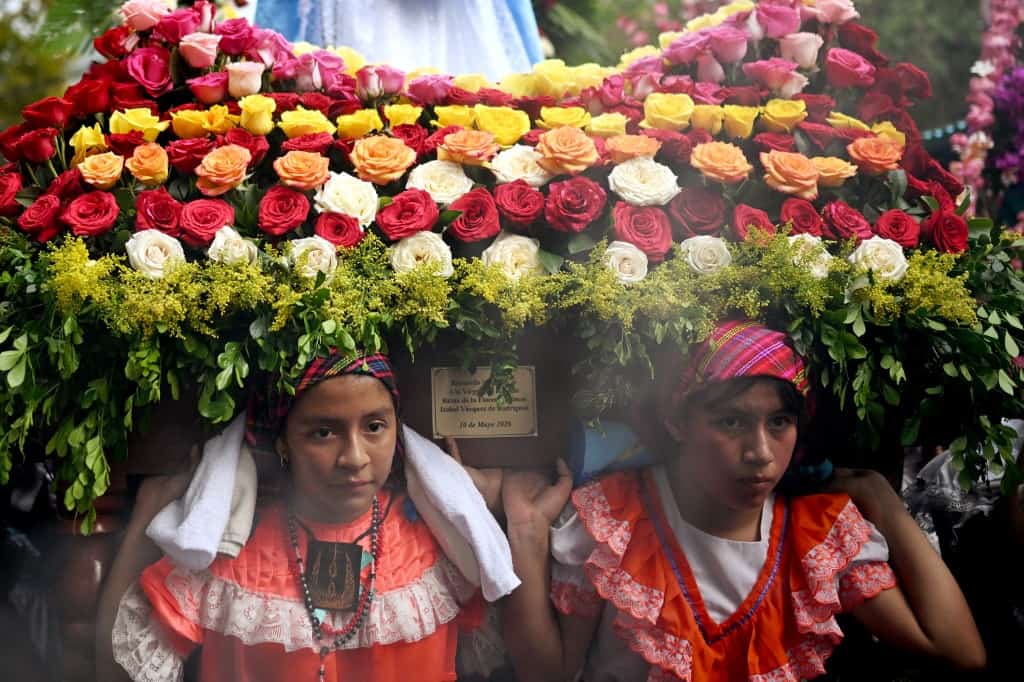
Panchimalco, one of El Salvador’s most important Indigenous-rooted towns, filled its streets Sunday with flowers, palms, music and religious devotion for the annual Cofradía de las Flores y las Palmas, a celebration that this year carried new international weight.
The May 10 celebration marked the 44th edition of the tradition and the first since UNESCO recognized the Cofradía de las Flores y las Palmas as Intangible Cultural Heritage of Humanity in December 2025. The procession drew local families, parishioners, dancers, students and visitors to the streets of Panchimalco, south of San Salvador.
The Cofradía is one of El Salvador’s most distinctive cultural and religious traditions. It brings together Catholic devotion to the Virgin Mary with Indigenous practices connected to the arrival of the rainy season. The Ministry of Culture describes it as a living, old and community-based tradition with Indigenous elements, while UNESCO lists it as a celebration that fuses Indigenous beliefs with Catholic practices.
Sunday’s celebration began long before the main procession. In homes linked to the mayordomías and capitanías, community members prepared tamales, atol, bread, tortillas and other food for those taking part. Others worked on the decorated palms, using flowers traditionally associated with the festival, including flores de mayo, barbona and flor de San José. Students from the Centro Escolar Católico Panchimalco also helped prepare the palms during the morning.
The procession moved through Panchimalco with religious figures, dancers and traditional characters. The route was led by altar servers, priests and local officials, followed by Los Historiantes and the Chapetones, figures that form part of the town’s ceremonial and popular tradition. Women and girls dressed in traditional clothing carried religious images, while bands played Salvadoran music including “El Carbonero” and “El Torito Pinto.”
One of the central moments came in the afternoon outside the church, when the images of the Virgen del Rosario and the Virgen de la Inmaculada Concepción met before the crowd. The meeting was followed by prayers, music and applause before the procession entered the church for the main Mass.
The celebration also included folk dance, artisan fairs, cultural workshops, live music and food, turning the town into a gathering point for both Salvadorans and foreign visitors. Local coverage described hundreds of people taking part in the event, which also coincided this year with Mother’s Day in El Salvador.
The UNESCO recognition has made the Cofradía a national milestone. It is El Salvador’s first inscription on UNESCO’s Representative List of the Intangible Cultural Heritage of Humanity. The nomination followed years of research and documentation by the Ministry of Culture, the Foreign Ministry and the Panchimalco community, with official recognition announced during a UNESCO committee meeting in New Delhi.
For Panchimalco, the designation does not turn the celebration into a museum piece. Its strength remains in the families who prepare food, the women who help preserve the devotional structure, the dancers who carry forward inherited roles, and the parish community that keeps the religious calendar alive. Sunday’s procession showed why the tradition has lasted for generations and why it is now being recognized beyond El Salvador.





