

Laura Fernández Delgado was sworn in as our new president on May 8, bringing into office the platform, style, and, unusually, the predecessor of the administration that shaped the past four years. Rodrigo Chaves, who governed from 2022 to 2026, now sits inside Fernández’s Cabinet as both minister of the presidency and minister of finance, an arrangement with no real precedent in our country’s political history. For those trying to read where the exchange rate goes from here, that continuity is the most important data point.
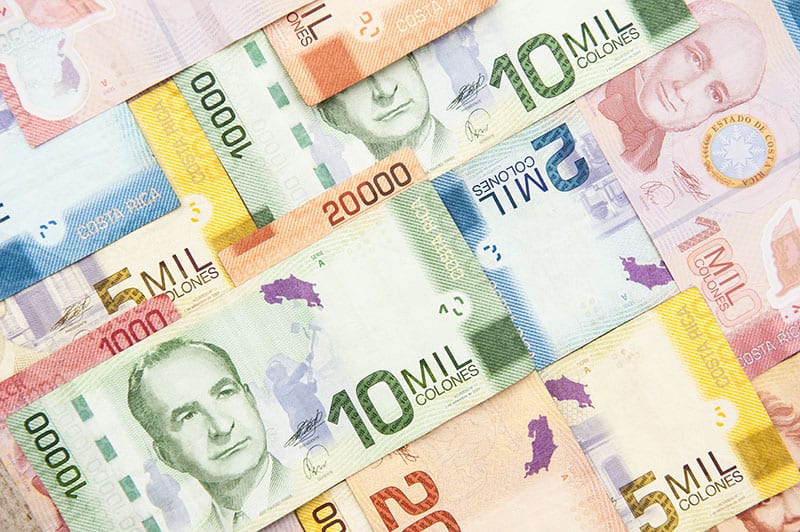
The dollar has lost roughly 30 percent of its value against the colón since Chaves took office in 2022, falling from around ₡677 per dollar at its peak to approximately ₡457 today. That collapse has been one of the most dramatic currency appreciations in Latin America over the period.
The causes are structural and well documented. A surge in dollar inflows from free trade zone exports, foreign direct investment, and year-round tourism receipts has flooded the local foreign exchange market with more dollars than it can absorb at historical rates. The Central Bank has intervened heavily, purchasing more than a billion dollars in the wholesale market in early 2026 alone, but the pressure has proven persistent.
The consequences have been uneven. Consumers benefited from cheaper imports and deflation. Costa Rica closed 2025 with annual inflation at negative 1.23 percent, a level of deflation not seen since 1983. But exporters, coffee farmers, banana producers, and tourism operators have been squeezed hard.
Tourism alone reportedly shed some 22,000 jobs as a stronger colón made Costa Rica more expensive for international visitors paying in dollars. The exchange rate sits roughly 10 to 20 percent below where most export-dependent businesses say they can operate comfortably.
Both Fernández and Chaves have publicly stated that the strong colón reflects deep structural changes rather than a temporary distortion, and that the dollar is unlikely to recover to historical levels in the near term.
Fernández has argued that dollars now flow into Costa Rica steadily throughout the year from multinational operations, medical device exports, and tourism, rather than in the seasonal peaks of an earlier era. The implication of that framing is that the new administration does not see itself as responsible for engineering a dollar recovery through monetary or fiscal intervention.
That said, pressure from the private sector is real and politically significant. Business leaders, exporters, and the Association of Free Trade Zones have all delivered a unified agenda to Fernández’s incoming team, naming the strong colón as one of the top structural threats to competitiveness.
They want the Central Bank to cut its policy rate further. The rate has already been reduced from 9 percent in 2023 to 3.25 percent, a move aimed at making colón-denominated savings less attractive and stimulating more demand for dollars.
With Chaves now controlling both the Finance Ministry and the political coordination of the government, his approach to the exchange rate will effectively continue as policy. During his presidency, Chaves showed little appetite to push for a weaker colón through aggressive intervention, framing the strong currency as a natural consequence of economic success.
Critics argued this reflected political calculus. The average wage-earning Costa Rican, paid in colones and buying in colones, had little reason to complain about cheap imports. The pain fell on exporters, a smaller and less politically mobilized constituency.
Whether Fernández’s administration applies enough pressure on the Central Bank to shift that calculus remains the open question. The bank is constitutionally independent, but political signals from a Finance Ministry controlled by a popular former president carry weight.
For expats, retirees, and investors holding dollars in Costa Rica, the Fernández presidency does not represent a meaningful break from the trajectory of the past four years. The policy signals point toward continued colón strength, or at best stabilization in the ₡450 to ₡480 range.
A dramatic dollar recovery toward ₡550 or beyond would require either a reversal of the underlying inflows, unlikely given Costa Rica’s diversified export base, or a significant policy shift from the Central Bank that the new government has not telegraphed.
The more likely near-term scenario is gradual, managed stabilization. The Central Bank is expected to continue modest interventions to prevent further appreciation without targeting a specific recovery level, while the Fernández administration pursues structural reforms on labor flexibility, energy costs, and public spending designed to improve competitiveness without directly addressing the exchange rate.
For those with dollar income living in Costa Rica, that means continued purchasing power pressure on local expenses, including rent, services, and domestic food, with no reliable timeline for relief.





