
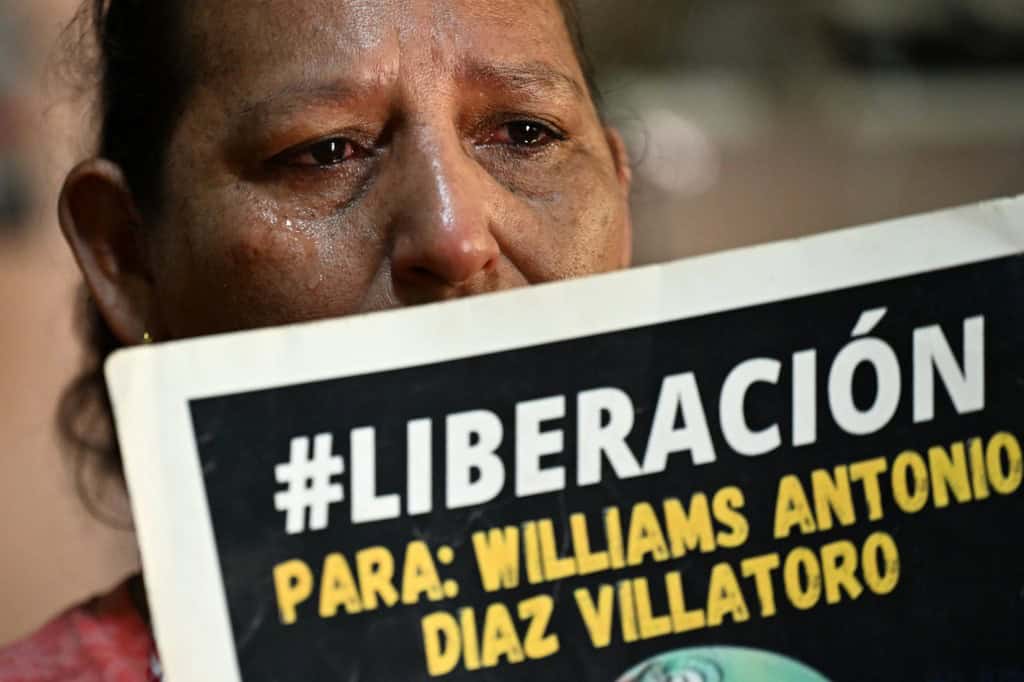
Amnesty International on Sunday called on El Salvador’s first lady, Gabriela Rodríguez, to facilitate dialogue between authorities and the mothers of thousands of people detained under the state of exception, so they can learn their whereabouts and exercise their rights. Since 2022, President Nayib Bukele has maintained a war against gangs that has led to the detention of some 92,000 people without judicial warrants, a move harshly criticized by human rights organizations.
Several associations estimate that thousands of innocent people have been imprisoned and say several hundred may have died in custody. Some relatives say they do not know where those arrested are being held.
On May 10, Mother’s Day in several Latin American countries, “our thoughts are with the mothers and families asking for something basic in the face of the state of exception in El Salvador: to know where and how their detained loved ones are,” Amnesty International posted. The NGO called on Rodríguez to “use her good offices to change this situation and ease the anguish of thousands of Salvadoran mothers and families.”
The message was accompanied by an open letter dated March 27 and signed by Amnesty International’s Americas director, Ana Piquer, urging the first lady to facilitate dialogue “as soon as possible” between government representatives and organizations of mothers and relatives of the detainees.
According to Piquer, the goal is to “promote mechanisms for timely access to information on the procedural status, location, and health conditions of detained persons,” so that their families “can exercise their rights and properly support their defense.” This week, the digital newspaper El Faro, a strong critic of Bukele, said in an editorial that a secret commission made up of one of the president’s brothers and staff from the first lady’s office “decides the fate” of thousands of people detained under the state of exception.
Amnesty International’s request comes amid one of the government’s mass trials involving about 500 gang members, proceedings that have been criticized by humanitarian groups who fear innocent people could be convicted because individual criminal responsibility is not being established.
In the letter, Piquer says that “approximately 470 people have died in state custody under circumstances that include possible acts of violence and lack of medical care.” “It is essential to examine the human costs of the measures adopted and the excesses committed in their implementation,” which reveal “repeated and widespread practices of human rights violations,” she adds.