

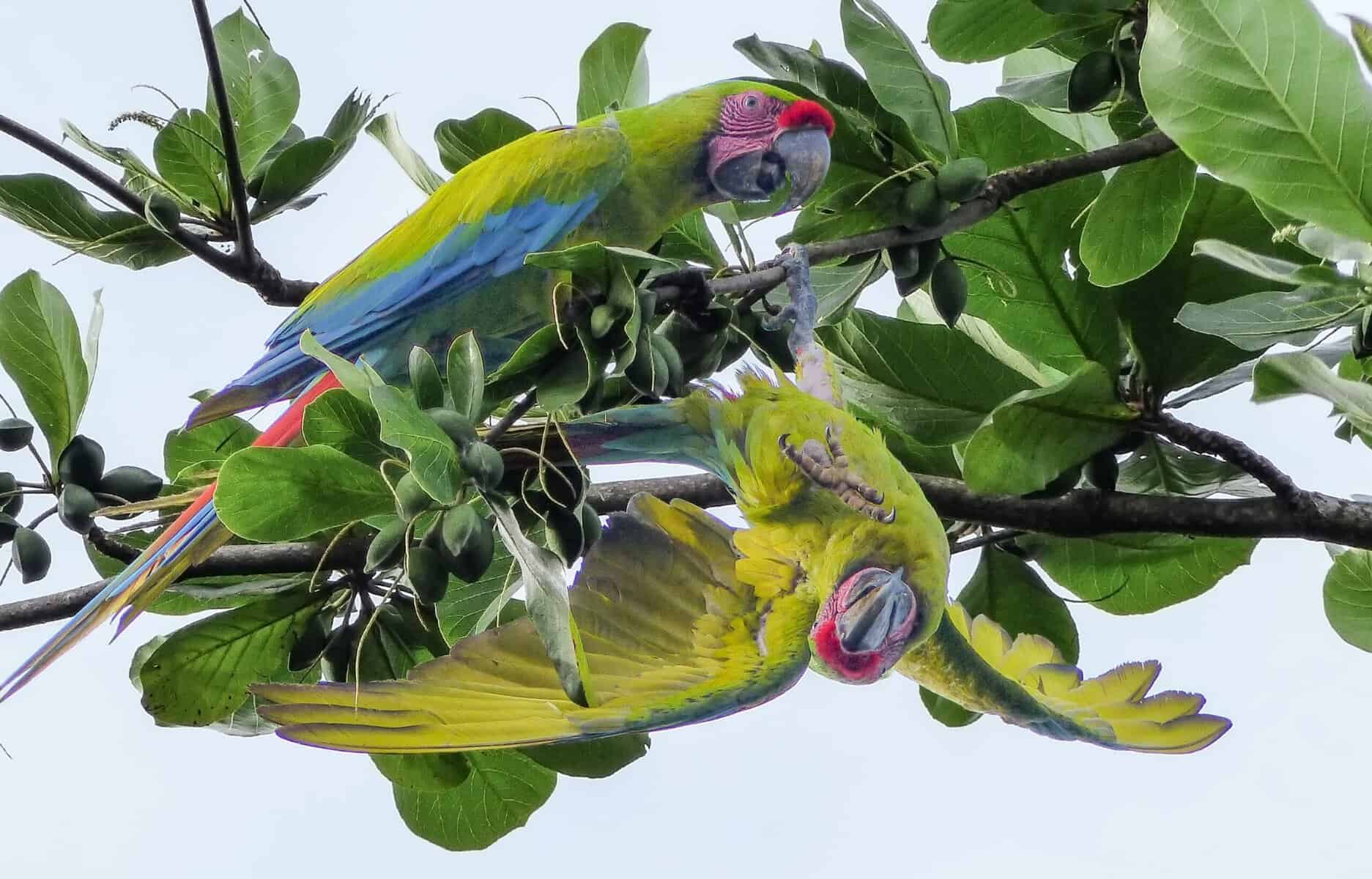
The possibility of allowing the keeping of certain wild birds, such as macaws, has returned to public debate with the new draft of the Wildlife Regulations. This issue has resurfaced as one of the most controversial points in the proposal put forward by the National System of Conservation Areas (SINAC).
The new wording retains the option to keep birds acquired before 2017 in captivity, even without clear verification mechanisms. For those working in wildlife rescue and management, this poses a risk to conservation. “SINAC has no way of verifying that I’ve had the macaw since before 2017; I could forge an invoice and claim I bought it earlier, and abroad, since sales are prohibited here,” said Laura Porras, director of Icomvis-UNA. The problem, then, is not only legal but also operational. If the animals’ origin cannot be verified, the regulation could end up facilitating illegal ownership.
Porras also commented on the case of hybrid iguanas. “Some people brought blue iguanas from Brazil; after keeping them in captivity, they felt sorry for them and released them in San Carlos. These iguanas began breeding with the country’s red iguanas, causing disruptions to the ecosystem and the species’ genetics. I am concerned that the keeping of exotic animals is being allowed or even encouraged, when we have a fragile ecosystem on which we depend.”
For veterinarian Isabel Hagenauer of the Rescate Wildlife Rescue Center, her main concern is the potential relaxation of regulations regarding the keeping of wild animals, especially birds, a practice that, as she explained, remains one of the leading causes of animals being brought to rescue centers.
“More than 50% of admissions result from private ownership, seizures, or people who turn animals in,” she said, noting that many of these animals arrive in critical condition, with health and behavioral issues stemming from captivity. Hagenauer also questioned the lack of clarity in the technical criteria underpinning some of the draft’s decisions. “What is the technical criterion by which the keeping of certain species is being authorized again?”
Both researchers criticized the way the regulations reorganize the management of captive wildlife. The proposal mixes categories such as rescue centers, zoos, and other facilities, which they believe could blur the objectives of each. From a technical standpoint, they warned that rehabilitating an animal for release is not the same as keeping it on display, and that this difference requires clear management criteria.
Porras noted that the draft prioritizes captive management over conservation in the wild. “These regulations don’t include anything about in situ conservation; it’s all about ex situ conservation and commercialization,” she said. She also questioned SINAC’s operational capacity to take on additional functions. “How are they going to centralize decision-making in an institution that has been dismantled for years?”
The regulation also incorporates lethal control of wildlife. This can be applied to crocodiles, for example. “Although there are protocols for handling dangerous animals, it opens a loophole allowing anyone to kill an animal if they feel at risk… and we’re not just talking about euthanasia, which takes animal welfare principles into account, but rather that if I feel threatened and find a stick nearby, I can beat the animal to death with it,” Porras explained.
Arturo Carballo, president of Aprefloflas, questioned the need to completely replace the current regulations, given that several of their provisions remain in place. In his view, a partial reform would allow for the correction of weaknesses without opening up new areas of debate. He noted that the document, and the number of technical annexes it contains, make it difficult to conduct a detailed analysis within the time available.
Amid the criticism, SINAC maintains a different position. José Manuel Quirós, coordinator of the process, explained that the proposal has been in the works for several years and incorporates feedback from various sectors.
“We believe we have developed a proposal with input from civil society, and that we have succeeded in improving the current decree.” The official argued that the new regulations aim to improve implementation through more flexible technical tools, such as annexes that can be updated without the need to reform the entire decree. He also said that improvements are being introduced in the standardization of processes





