

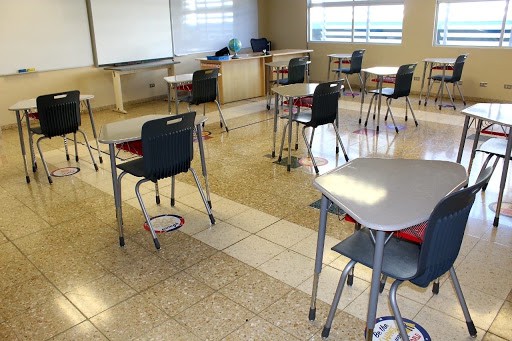
The Ministry of Public Education (MEP) reports that 150 schools have shut their doors over the past 10 years, a direct result of falling student numbers tied to the country’s shrinking birth rate. Education Minister Leonardo Sánchez Hernández laid out the numbers during a recent briefing, pointing to a steady decline that has reshaped classrooms across the nation.
The trend shows no signs of reversal. In 2021, public schools enrolled 1.1 million students. By the start of the 2026 school year this month, that figure dipped below one million for the first time. Projections from the ministry indicate the drop will continue through 2050, with primary school enrollment alone expected to fall 27 percent in the coming years.
Sánchez Hernández attributes the changes to demographic shifts. Costa Rica’s birth rate has plummeted, leaving fewer children to fill seats. “We adjust to the reality on the ground,” the minister said in a statement. The ministry has closed 13 schools in 2025, following 11 in 2023 and 12 in 2024. Each closure targets facilities with enrollment too low to sustain operations, often under 50 students total.
Families in rural areas feel the pinch most. Small, one-room schools in places like Guanacaste and Limón have consolidated into larger centers nearby. Parents drive longer routes now, but officials argue the move strengthens education overall. The ministry redistributes teachers from closed sites to busier ones, ensuring no job losses. Over 130,000 students have left public rolls in the last four years alone, pushing the system to rethink its structure.
This year brings a key shift: smaller class sizes. The ministry updated enrollment thresholds for groups, capping primary classes at 25 students and secondary at 30, down from previous limits. Sánchez Hernández calls it a step toward better learning. Teachers gain room to focus on individual needs, and early data from pilot programs shows gains in reading and math scores. “Fewer students per teacher means more attention where it counts,” one educator from Heredia noted.
The changes spark debate. Some lawmakers question if closures strain remote communities, where transportation lags. Others praise the efficiency, noting it frees funds for upgrades like digital tools and teacher training. The ministry insists every child keeps access to a school, no matter the shifts. “An open door stays open for any student,” Sánchez Hernández affirmed.
As the 2026 term unfolds under the theme “The school shapes us,” educators adapt. In Alajuela, a merged school now buzzes with activity, its halls fuller than before. Parents there report mixed views – relief at stronger resources, concern over lost local ties. Across Costa Rica, the story repeats: a system in transition, betting on quality over quantity to serve the next generation.





