

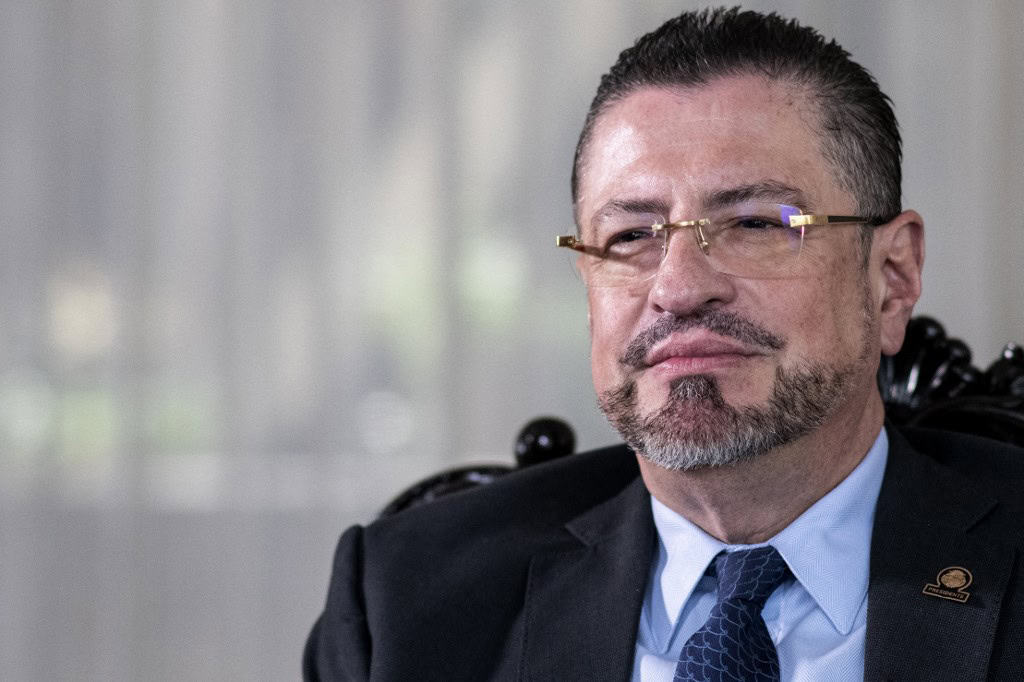
Officials in Costa Rica revealed today an alleged scheme to assassinate President Rodrigo Chaves, with the national election set for February 1 drawing near. The announcement arrived as the ruling party holds a strong position in polls, heightening tensions in the political arena.
Jorge Torres, director of the National Intelligence and Security Directorate (DIS), which reports to the presidency, stated that the agency received information about the plot on Monday from a confidential source. The tip indicated that a hitman received payment to target the president.
“We received a clear alert about a payment to a hitman aiming to attack the president’s life,” Torres told reporters outside the Prosecutor’s Office, where he submitted a formal complaint. Following the filing, Attorney General Carlo Díaz addressed the media, confirming that investigators focus on a female suspect known for her activity on social media. He withheld additional details about her identity or background.
The revelation coincides with El Salvador President Nayib Bukele’s official visit to Costa Rica, where he participated in laying the foundation for a new prison inspired by his country’s large-scale facility for gang members. Chaves has expressed admiration for Bukele’s approach to security. Vice President Mary Munive and Foreign Minister Arnoldo André welcomed Bukele at the airport in San José.
Costa Rica, home to 5.2 million people, once ranked among the safest nations in the Americas. However, the homicide rate climbed to 16.7 per 100,000 inhabitants in 2025, up from 11.2 in 2020, amid growing concerns over drug trafficking and related violence.
Polls show conservative former minister Laura Fernández leading with a focus on strict security policies. She aims to win a first-round victory and a legislative majority to push reforms in Congress and the judiciary, similar to Bukele’s strategies in El Salvador. Opposition figures have labeled Bukele’s visit as an electoral tactic to support these goals.
Torres avoided linking the alleged plot directly to the election. “I prefer not to speculate on that,” he said. The DIS operates under presidential oversight. Díaz initially dismissed any electoral connection. “This does not appear tied to the campaign,” he noted, adding that threats against executive officials occur frequently, especially those combating organized crime.
Opposition presidential candidate Claudia Dobles from the centrist Coalición Agenda Ciudadana challenged the claim’s validity in a social media post. She described the handling as a “media show” designed to attract attention rather than address facts. Costa Rica’s constitution bars immediate reelection, preventing Chaves from seeking another term despite his popularity, which critics attribute to populist tactics.
Torres confirmed enhanced security measures for Chaves and his family. He called for prompt action from prosecutors, an institution that has clashed with the president during his term.
These conflicts extend to the Supreme Court, Congress, and the Supreme Electoral Tribunal. Chaves accuses them of obstructing his government, while leaders from those bodies charge him with undermining the separation of powers and eroding the rule of law, for which Costa Rica earns global recognition.
Last year, lawmakers rejected two attempts to remove Chaves’s immunity—one related to alleged corruption and another to electoral involvement. As the election approaches, Costa Rican authorities continue their probe into the threat, emphasizing public safety amid the heightened alert.





