

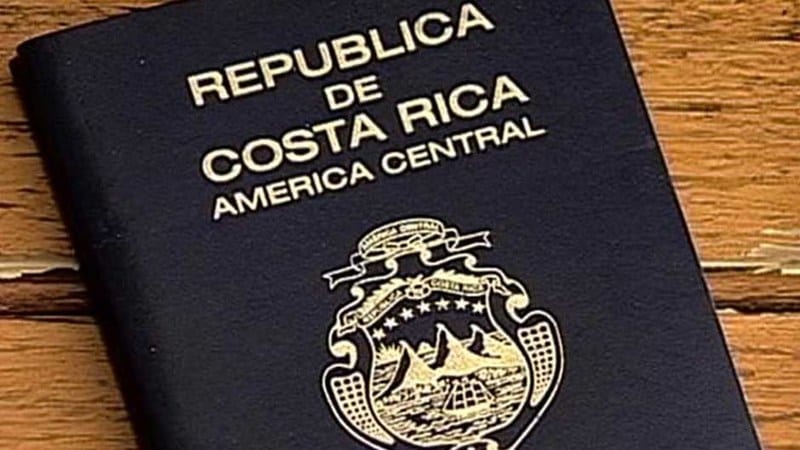
Costa Rica’s passport ranks 26th in the world according to the 2026 Henley Passport Index, released this January by Henley & Partners. This position allows Costa Rican citizens visa-free or visa-on-arrival access to 148 destinations, a drop of three from last year’s 151. The index, based on data from the International Air Transport Association, measures travel freedom across 199 passports and 227 destinations.
Costa Rica shares its 26th spot with Panama, making it the top-ranked passport in Central America. Other countries in the region lag behind: El Salvador and Guatemala tie at 35th with 132 destinations, Honduras at 37th with 130, Nicaragua at 40th with 125, and Belize at 49th with 99. In the broader Latin American context, Chile leads at 13th with access to 175 destinations, followed by Argentina and Brazil at 16th with 169 each. Mexico ranks 21st with 157, and Uruguay 22nd with 156.
The index highlights how Costa Ricans can travel freely to most of Europe, as well as many countries in Asia, Africa, and the Americas. Popular spots like the United States, Canada, and Australia still require visas, but the passport opens doors to places such as Japan, South Korea, and the United Arab Emirates without prior approval.
Globally, Singapore tops the list with visa-free access to 192 destinations. Japan and South Korea follow in second place with 188 each. A cluster of European nations dominates the upper ranks: Denmark, Luxembourg, Spain, Sweden, and Switzerland tie for third with 186. Ten more European countries, including France, Germany, and Italy, share fourth place with 185. The United Arab Emirates ranks fifth with 184, while New Zealand sits at sixth with 183. Australia and the United Kingdom tie for seventh with 182, Canada and Iceland for eighth with 181, Malaysia ninth with 180, and the United States rounds out the top 10 with 179.
This year’s report points to a growing split in global mobility. The gap between the strongest and weakest passports now stands at 168 destinations, compared to 118 two decades ago. Afghanistan remains at the bottom with access to just 24 places. Experts attribute the divide to diplomatic efforts, economic strength, and regional agreements that favor some nations over others. Over the past 20 years, countries like the UAE have climbed 57 spots by forging new visa waivers, while others, such as Bolivia, have slipped 32 places to 61st with 78 destinations.
For those of us who have Costa Rican passports, the ranking reflects stable diplomatic ties and participation in international pacts. Our country has maintained its position despite the minor loss in access points, which could stem from policy shifts in other nations. Travelers should check current requirements, as security measures and bilateral deals can change.
The Henley Passport Index serves as a benchmark for both governments and citizens, showing how passport strength affects business, tourism, and personal opportunities. Costa Rican officials have not commented on the latest rankings, but past efforts to expand visa waivers suggest ongoing work to boost mobility.





