
I spend much of my time using motion-sensor camera traps to observe the natural behaviors of wildlife in Costa Rica. The thousands of resulting videos need to be reviewed and entered into databases, so I also spend a large portion of my time sitting in my sweaty little office watching wildlife videos. After years of video watching, one thing has become very obvious. I’m using my cameras to observe wildlife, and, in turn, the wildlife are observing my cameras.
Some of the species that I’ve caught on camera noticing the camera wouldn’t surprise you. Monkeys, especially white-faced monkeys, not only notice the camera but inspect it, smash it, twist it, turn it, sit on it, and leave it in a position where the next rainstorm ruins it. Similarly, common opossums, northern raccoons, white-nosed coatis, and Baird’s tapirs not only notice the camera but, let’s say, take it upon themselves to adjust it.
The perceived intelligence levels of some of the species doing this camera-noticing might surprise you. I suspect that many folks aren’t accusing doves or egrets of having a ton of brainpower but what they do have is enough to notice the cameras and stare deeply into the lenses. Recently, during a camera trap tour with a few wildlife lovers in Guanacaste, a new, reptilian, species was added to the list of animals that mess with my cameras.
In Estación Experimental Forestal Horizontes there’s a small lake surrounded by tropical dry forest. This lake shrinks to a puddle during dry season and floods its banks during rainy season. These giant fluctuations in water levels makes it impossible for the lake to support a large population of large fish.
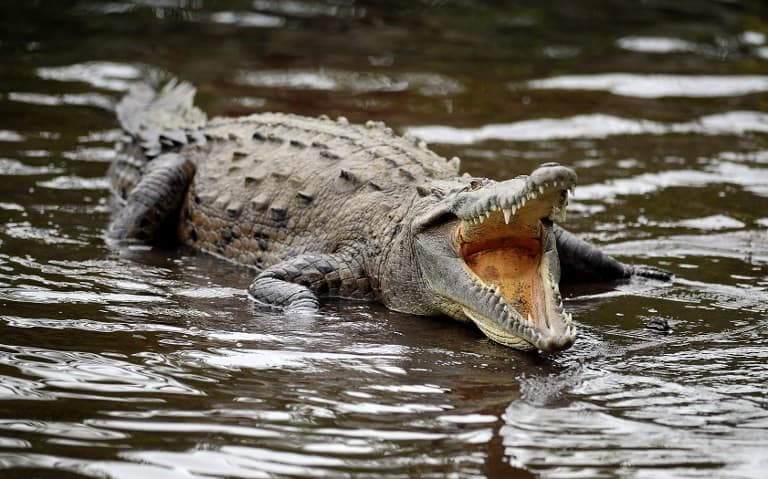
During the wetter months of the year, the lake is home to a handful of American crocodiles, whose normal diet includes a solid amount of large fish. I suspect that makes these crocs reliant on other forms of food, so I placed a camera trap along the waterline where it appears that wildlife are coming to the lakeside to drink, hoping for a gruesome yet fascinating video of a crocodile taking a non-fish meal.
At the beginning of June, I placed the camera at the perfect spot on the water’s edge under the watchful eye of one of the crocodiles, whom I observed inspecting the area about 15 minutes after I left. A few weeks ago, I reviewed this camera with a few guests and the videos we found were surprising.
The first two videos are of the crocodile hanging out directly in front of the camera. In the third video, the crocodile rose up out of the water and gently took the camera in its jaws. It changed its grip a few times and swung the camera around, so it was facing the water. Two hours later, it returned and took the camera in its jaws once more, again very gently.
The videos were interesting for a couple of reasons. First, the view of the inside of a croc’s mouth isn’t something that you see every day and if you do see it, it’s usually the last thing you see. What really impacted me though was how gentle it was with the camera. My cameras are mounted on supports that screw into trees.
The one fault of these supports is that they break off of the camera extremely easily. I break them from simply screwing the camera in too hard. The fact that such a powerful animal was able to manipulate the camera with its jaws without breaking the support was shocking.
So what’s going on here? The first thing I did to find out was look for similar stories. Oddly enough, I found two. There’s a story out of Australia of a saltwater crocodile mouthing up a camera trap and another one of an alligator taking a camera in its jaws in Oklahoma. Both cameras were recovered, so again, these crocodilians are playing rather gently.
So, I’m not the only one recording this behavior but that doesn’t shed any light on why it’s happening. I noted to the group I was with when we discovered the videos that it looked as though the croc was playing with the camera, but crocodiles don’t play, do they? Surprise, surprise, crocodiles do play.
I found a paper appropriately enough entitled Play Behavior in Crocodilians which discusses the fact that different species of crocodilians have been documented exhibiting three different types of play behavior. One of the most frequently documented types of play behavior is called object play, where the animal is observed playing with an object.
Obviously, what I’ve come to here isn’t any type of scientific conclusion, but I’ve found a lot of interesting information that could lead one to speculate that the crocodile in Horizontes was playing with my camera trap. After reviewing the camera, I placed it a little higher in the tree and reinforced it with a strap in case the next encounter isn’t so gentle. Perhaps next time, we’ll have more information. Take a look at the current suspected evidence of crocodile play in the video below.
About the Author
Vincent Losasso, founder of Guanacaste Wildlife Monitoring, is a biologist who works with camera traps throughout Costa Rica. Learn more about his projects on facebook or instagram. You can also email him at: vincent@guanacastewildlifemonitoring.com