

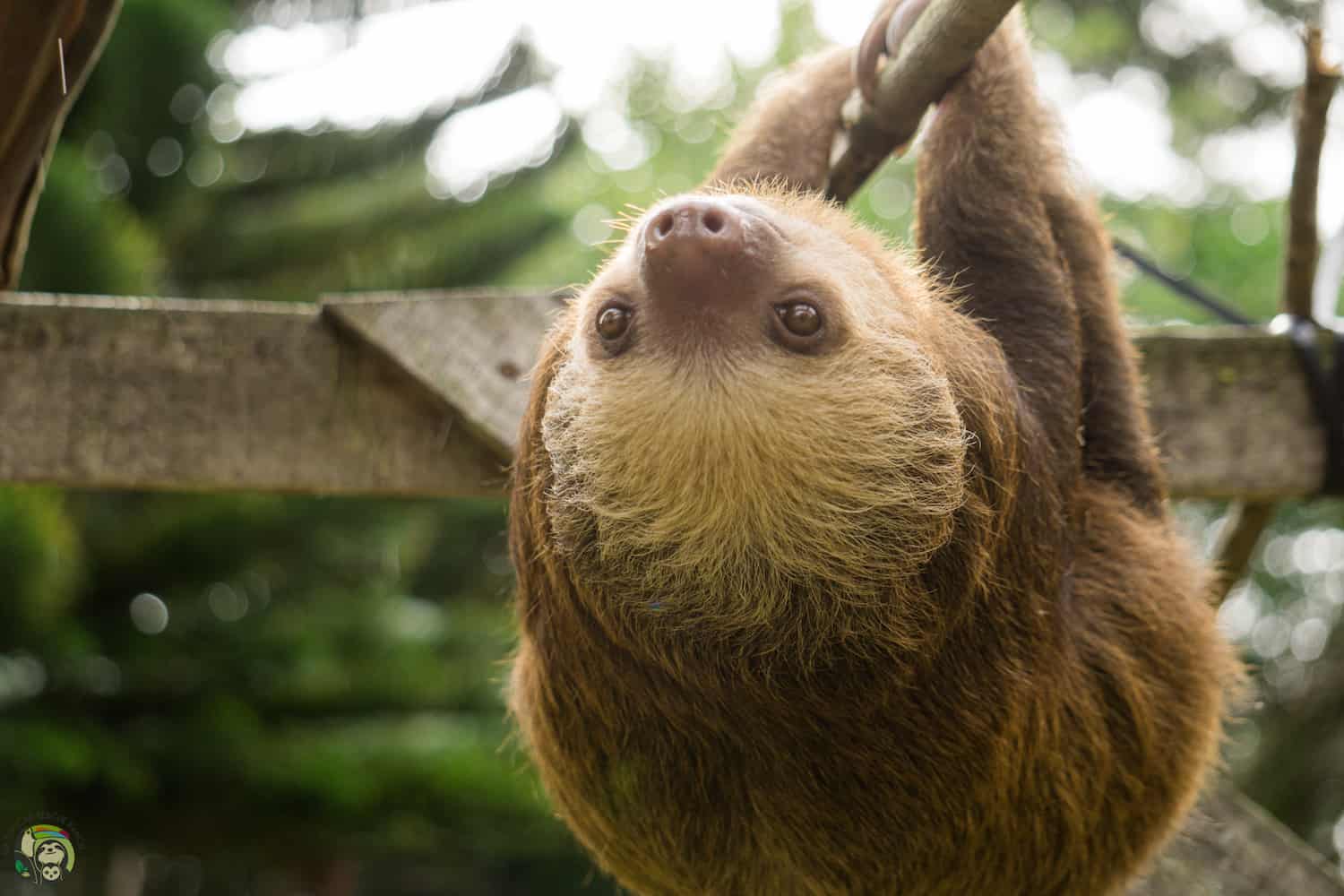
Have you ever tried hanging horizontally from your local monkey bars? How about doing a headstand? If you’ve ever tried, you might have realized that hanging upside down is kind of the worst. Blood pools near your head or your stomach, it’s hard to breathe, vision becomes fuzzy and blurry, and your hands and legs get tired.
So imagine living your whole life upside down, always hanging from branches while you munch on a nutritious leaf. That is the life of the sloth.
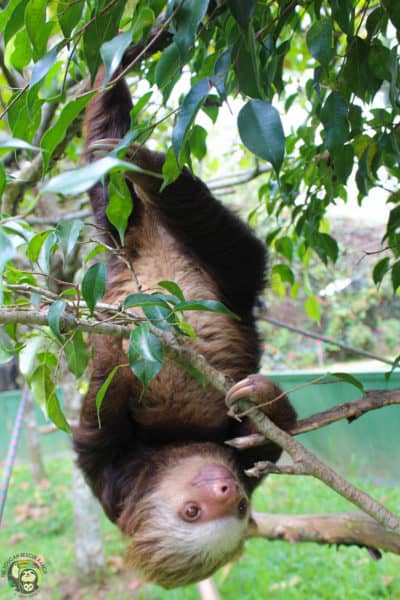
For most animals, hanging upside down is pretty cost-ineffective. When you hang upside down, you require a lot more energy to perform basic functions. Breathing is harder, and eating is almost impossible.
In our normal position, gravity keeps organs away from each other and helps move food through our digestive system. But upside down, everything gets in the way. In this position, your organs move toward your head, pressing against the long muscle that separates your abdomen from your thorax, the diaphragm. This muscle is extremely important for breathing, so when it has added weight on it, it reduces our ability to inhale.
This is also exactly what happens when we eat a lot on Thanksgiving. Our belly grows so large that it presses against the diaphragm, making it harder to breathe. Our digestive system is a series of long tubes, and when trying to move food up instead of down, it needs a lot of energy.
Another big problem is, of course, just hanging on. Gripping something and staying in place is a lot less efficient than letting gravity push your weight onto a solid surface. Suspending yourself is also pretty hard — fingers cramp up, sweat makes things slippery and the strength of our arms limits how long we can stay in any one position.
For humans, it’s all in the muscles. Our hands and fingers, while made for gripping, are not made for hanging. Hanging puts a lot of strain in the articulations and can easily lead to pain in the short term and problems later in life.
So, how do sloths do it? Through the ages, sloths have been perfected as mean, sometimes green, hanging machines! To deal with the pressure of organs weighing on their torso, sloths have developed a sort of organic scotch tape that ties their organs to the walls of their abdomen. This means that sloths can freely move upside down without really impeding their quite capable lungs.
When it comes to feeding, sloths are marvels of bioengineering. They possess esophagi capable of producing strong and efficient pressures, allowing the animal the extraordinary ability to be able to efficiently move food from their mouths to their stomachs with low energy requirements. They also have a very strong lower esophageal sphincter, which closes the esophagus once the food has passed and allows the sloth to freely hang upside down without fear of food coming back up!
Sloths are also incredibly efficient when it comes to the proper action of hanging. Their claws and hairless pads are ideal to find traction and stability in the thick and slippery branches of the canopy. Unlike us, sloths are extraordinarily adapted to get rid of metabolic waste. Around their arms and legs, one can find a net of blood vessels — veins and arteries that help cool down the muscles, feed them with oxygen and move all the lactic acid away, giving sloths a lot of advantages when just hanging down.
Sloth limbs are also perfect from hanging on the anatomical level. Their strong muscles and bundles of tendons allow them the ability to hang upside down while expending almost no energy. Sloths can sometimes be seen hanging even after their death.
Sloths are marvelous creatures, so well adapted to a method of locomotion that is solely unique to them that they’ve evolved to perfection. No other animal hangs like a sloth! That’s one of the many reasons these animals are so unique and worthy of preservation.
— Andrés Sáenz Bräutigam is a Veterinary Medicine Student & TRR Veterinary Assistant & Tour Guide.
This article was produced by The Toucan Rescue Ranch. The Toucan Rescue Ranch specializes in helping wild animals recover so that they can be reintroduced into the wild.





