
Costa Rica’s General Prosecutor Jorge Chavarría Guzmán says he is ready to present the biggest indictment in Costa Rican history: charges against 26 people for irregularities committed in the failed construction of a road along the border with Nicaragua.
At a press conference on Tuesday, Chavarría said that shoddy work on “La Trocha” (“The Trail”), a failed project, meant to provide a crucial piece of infrastructure for a poor region, caused economic losses for the country of some ₡1.2 billion ($2 million).
The list of those indicted includes three former National Roadway Council (CONAVI) officials, 18 private contractors, three men who impersonated CONAVI inspectors, and the wives of two of the indictees.
They will face assorted charges of influence peddling, bribery, corruption, embezzlement, concealment of assets and money laundering, among others.
The chief prosecutor said the investigation found that the three CONAVI officials conspired with private contractors to charge the government for the alleged use of construction equipment for works that never took place. That equipment was actually being used on other projects, some of them in other countries, at the time they were supposed to be at the border road, he said.
Chavarría said that at the trial, prosecutors will present evidence collected over five years, including 668 volumes of documents, 86 reports from the Judicial Investigation Police, 50 files containing invoices, 40 boxes of documents seized during 58 raids and statements from 250 witnesses.
Washed away
President Laura Chinchilla Miranda (2010-2014) approved the construction of the 160-kilometer road to facilitate the transit of residents from border communities who faced problems because of frequent invasions by the Nicaraguan army into Costa Rican territory.
Starting in 2010, Nicaraguan soldiers prevented Costa Ricans from navigating the San Juan River, a natural border between the two countries. The river was the only transportation route for many local residents in northern communities.
Chinchilla’s administration launched the construction of Route 1856 — the project’s official name — in December 2010. She granted the project to private contractors without going through a public bidding process as required by law.
At the time, she justified her decision because of the emergency situation that border residents were facing due to the actions of the Nicaraguan soldiers.
Chinchilla inaugurated the road in February 2012, despite claims from local residents that the work was far from complete.
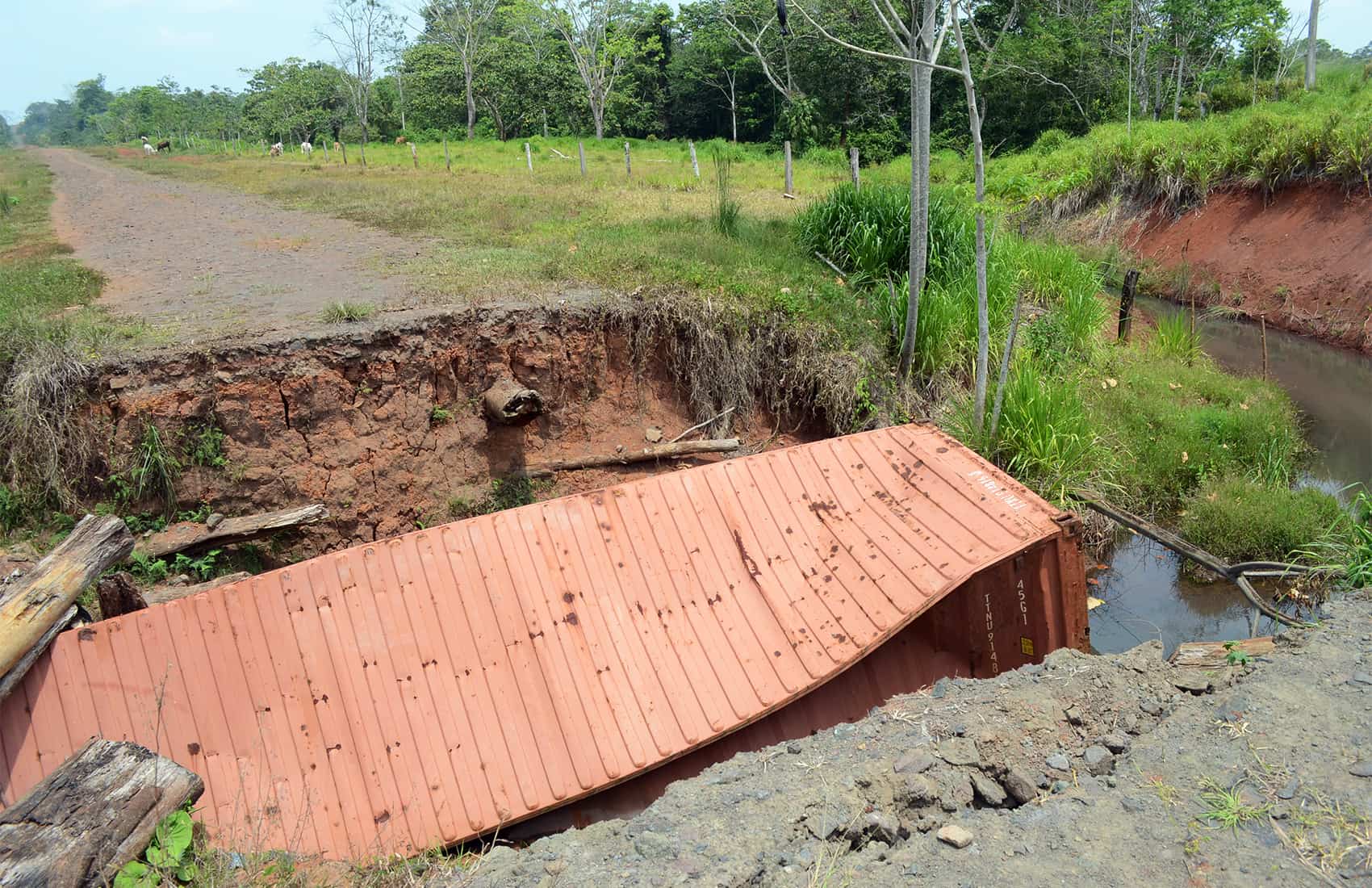
Subsequent inspections by experts from the University of Costa Rica released in May of that year found that shoddy work on the road’s drainage systems could leave the road in danger of collapsing during the rainy season.
Those predictions turned out to be correct. The first rains of the season washed away several stretches of the road and various bridges collapsed.
In May 2012, Chinchilla said that CONAVI officials had received bribes from private contractors and construction equipment suppliers to secure contracts for the project.
The scandal prompted President Chinchilla to order the removal of Public Works and Transport Minister Francisco Jiménez, CONAVI Executive Director Carlos Acosta and several other public officials.