

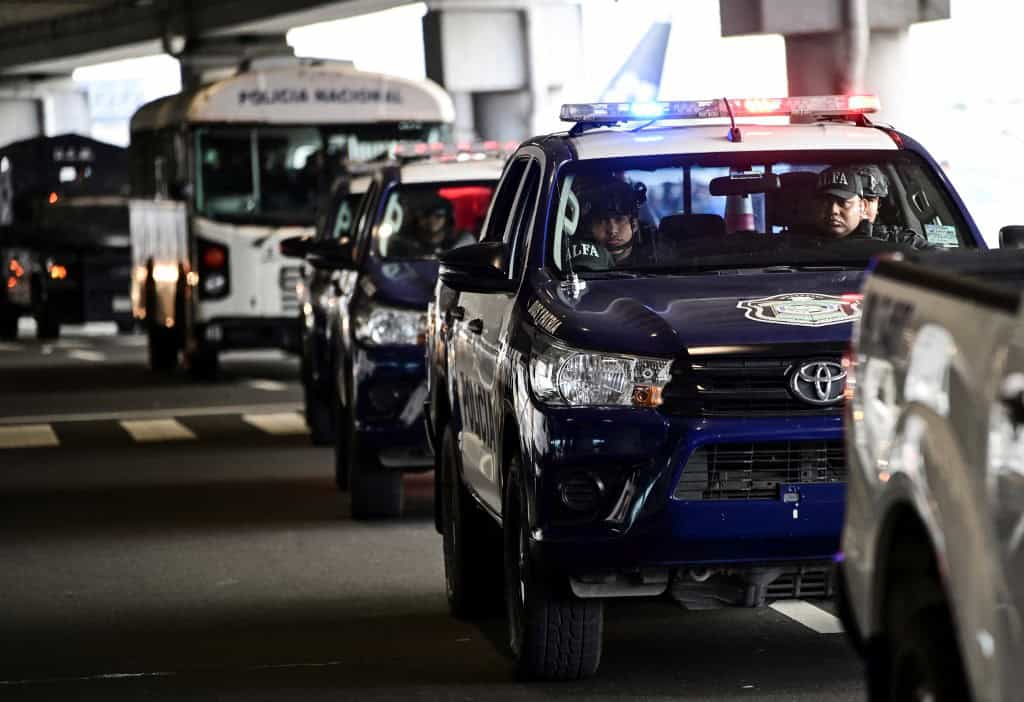
Panama took custody Monday of the main suspect in the 1994 bombing of Alas Chiricanas Flight 901, the deadliest terrorist attack in the country’s history. Ali Zaki Hage Jalil, a 57-year-old Colombian-Venezuelan national of Lebanese descent, arrived at Tocumen International Airport in Panama City yesterday under heavy security. Police transferred him immediately to the headquarters of the Judicial Investigation Directorate.
The extradition from Venezuela comes more than 31 years after the attack. On the morning of July 19, 1994, the commuter flight lifted off from France Field in Colón. Minutes later, it exploded mid-air, killing all 21 people on board. Twelve of the victims were members of Panama’s Jewish community, and three held U.S. citizenship.
Hage Jalil was arrested on November 6, 2025, on Venezuela’s Margarita Island, where he had lived openly for years and operated a luxury restaurant. Venezuela’s Supreme Court approved his extradition on March 27, 2026, after Panama submitted a formal request in January.
Panamanian prosecutors allege he played a central role in the logistical planning of the attack, including the procurement of explosive materials and maintaining contact with the suicide bomber. That bomber has been identified as Ali Hawa Jamal. His body was the only one recovered from the wreckage that relatives never claimed.
The bombing occurred one day after the attack on the AMIA Jewish community center in Buenos Aires that killed 85 people. U.S. and Israeli intelligence have long attributed both operations to the Lebanese Shiite group Hezbollah. A group calling itself Ansar Allah, identified by the U.S. government as a Hezbollah alias, claimed responsibility for the Panama attack.
For years, Panamanian authorities considered theories ranging from a narcotics-related settling of scores to an antisemitic attack. The investigation gained new momentum in 2018 when then-President Juan Carlos Varela received intelligence from Israeli Prime Minister Benjamin Netanyahu. Panama formally reopened the case.
In 2024, the U.S. Office of the Director of National Intelligence publicly attributed the bombing to Hezbollah. The U.S. State Department’s Rewards for Justice program offered up to $5 million for information leading to those responsible. Hage Jalil was born in Maicao, Colombia, a border town with established Lebanese commercial networks. He relocated to Venezuela’s Margarita Island as a child and later lived in Panama’s Colón Free Zone for approximately four years around the time of the attack.
U.S. officials coordinated closely with Panamanian and Venezuelan authorities on the transfer. “This extradition sends a definitive message: the Trump Administration has a long memory and an even longer reach,” U.S. Ambassador to Panama Kevin Marino Cabrera said. “If you target Americans or our allies, we will find you.”
Panamanian prosecutors have charged Hage Jalil with intentional homicide in the deaths of 21 people and crimes against means of transportation and communication. If convicted, he faces a possible life sentence. U.S. authorities have indicated they reserve the right to seek his extradition because American citizens were among the victims.
For the families of the victims, the development brings renewed hope after more than three decades. Karina Smith, whose grandfather died in the crash, said the extradition fills her with hope that their loved ones have not been forgotten.
Panama’s foreign ministry called the extradition a significant advance. Prosecutors plan to question Hage Jalil in the coming days as the judicial process moves forward in Panama.





