
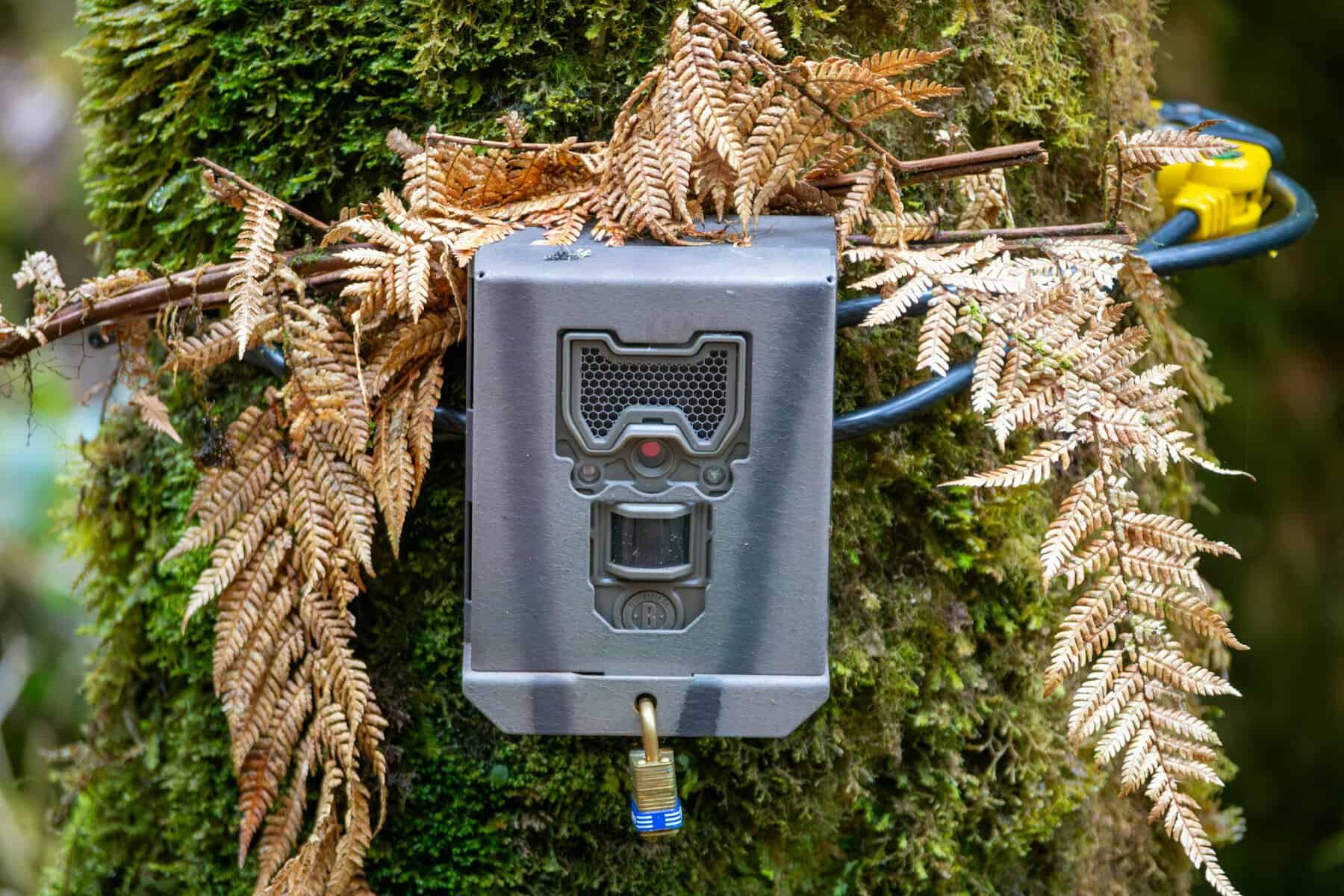
Certain things are guaranteed when camera trapping in Costa Rica. Some things are magnificent, for instance, with enough time and even the smallest patch of forest, you’re going to record an ocelot. Other things are downright infuriating, for example, with enough time, working in just about any forest in Costa Rica, your camera trap is going to get stolen.
I haven’t kept track, because some statistics are too heartbreaking to tally, but I must have had over thirty cameras stolen over the last eight years or so. Theft is simply something that needs to be factored into any wildlife monitoring project using camera traps and its effects are manyfold. First, and for me most devastating, is the loss of data. If I sit and think about the content of the SD cards on all my stolen cameras, a single tear begins to form in the corner of my eye.
Then there’s the loss of the equipment, the associated cost, and the difficulty in acquiring replacement gear. Each of my cameras, with the support, batteries, and SD card, runs about $200. This may surprise you, but I’m not exactly racking in millions of dollars with my wildlife monitoring business, so each time I find an empty spot on a tree instead of a camera, my wallet takes a significant hit. Replacing the camera is no walk in the park.
I can’t go to my friendly camera trap salesman down the street. The cameras I require aren’t sold in Costa Rica. I rely on trips to the US and visitors for my camera replacements and that doesn’t always go perfectly smoothly (My mom was once briefly detained at the airport with 17 cameras in her suitcase. Sorry Mom!).
So, who’s stealing my cameras? Surprisingly, it’s probably people who I have a lot in common with. It’s mostly dudes who love being out in the wild. The trick is, these dudes aren’t recording videos of wildlife or hiking around taking in the natural beauty of Costa Rica, they’re poaching. It’s important that I use the word poaching instead of hunting.
In many cases, I have no problem with hunting. Well managed hunting can be an important conservation tool, but the folks in charge of these types of decisions in Costa Rica decided that a ban on hunting would have the best impact on the conservation of the country’s varied habitats. That is why any hunting that’s happening here is illegal. Thus, any poacher who notices that he’s being recorded by one of my cameras is going to have a strong motivation to hide his activities by stealing the camera. Plus, I’m sure they could make a few bucks by selling them.
I do all sorts of things to combat camera theft during my wildlife monitoring projects. The most obvious is that I avoid putting cameras where poachers will pass by. Unfortunately, these guys like to travel on trails, dry streambeds, and along the sides of rivers, and these are all fantastic places to record wildlife.
I also modify my equipment to make it less steal-able. I mostly use cameras that do not have any visible light at night, because a lot of poaching happens at night and a glowing camera is easily spotted and stolen. To make the cameras more difficult to see during the day, I’ve taken to wrapping them in camouflage.
I have several methods of doing this, but I generally wrap camo fabric around the cameras in a way that breaks up their boxy silhouette and helps them to blend in. While I do believe that the camo fabric does make the cameras harder to spot by human beings, it has the unfortunate side effect of attracting curious wildlife. Many species have decided to give the fabric a hard tug, resulting in cameras being dislodged, recording the sky or the ground for weeks instead of the area I was interested in monitoring.
In the end, no matter what precautions I take, camera thieves are going to continue to participate in my wildlife projects. I suppose the only thing I can do is accept it, say ‘Pura Vida’, and smile at the downstream effects of my attempts to hide my cameras, i.e. videos of wildlife pulling on the camo fabric and spinning my cameras all over the place.
About the Author
Vincent Losasso, founder of Guanacaste Wildlife Monitoring, is a biologist who works with camera traps throughout Costa Rica.