
Every July 25, Costa Rica marks one of the defining moments in our history. Two hundred and two years ago, a decision taken in a small colonial town on the Pacific coast redrew our country’s map, expanded its economy and permanently enriched its cultural identity. The date is commonly called the “Annexation of Guanacaste,” but historians at the University of Costa Rica and elsewhere note that the historically accurate term is the Annexation of the Partido de Nicoya, the colonial administrative district that voluntarily chose to join Costa Rica in 1824.
On July 25 of that year, the municipal council of Nicoya convened a cabildo abierto, an open town meeting, at which the communities of Nicoya and Santa Cruz voted to become part of the newly independent State of Costa Rica. Unlike most territorial changes in nineteenth-century Latin America, the decision was not the product of war, military conquest or an imposed treaty. It reflected the expressed will of the local population, a principle later immortalized in the motto that still appears on the coat of arms of Guanacaste province, “De la patria por nuestra voluntad,” or “Of the homeland by our own will.”
A longer process than a single vote
The reality was more complicated than one afternoon’s show of hands. The Villa of Guanacaste, today the city of Liberia, declined to join. Its landowning families held closer commercial and social ties to Rivas, in Nicaragua, than to the poorer, more indigenous and mestizo communities of Nicoya and Santa Cruz to the south. The 1824 vote therefore delivered a divided district rather than a united one.
Ratification came from above. The Federal Congress of Central America, to which all the parties belonged, took up the matter the following year and on December 9, 1825 issued a decree separating the Partido de Nicoya from the State of Nicaragua and attaching it to Costa Rica, explicitly on a provisional basis until the boundaries of the member states could be formally drawn.
That decree was ratified in March 1826. Several historical accounts place the definitive incorporation of the Villa of Guanacaste itself later still, under a federal law of March 18, 1829, while the University of Costa Rica dates the villa’s integration more broadly to the federal government’s 1825 disposition. The competing dates reflect a genuine historiographical distinction between the decree covering the district as a whole and the separate resolution of Liberia’s status.
Nicaragua protested and continued to claim the territory for decades. The dispute was not settled until the Cañas-Jerez Treaty of 1858 fixed the boundary between the two countries, and elements of that treaty have been litigated at the International Court of Justice within living memory.
Understanding the distinction between the Partido de Nicoya and the modern province of Guanacaste also matters. In the colonial period the partido was an administrative district whose boundaries did not match those of today’s province, and Nicoya was not permanently governed by Nicaragua throughout that era. Its administrative status shifted more than once between dependence on Nicaragua, dependence on Costa Rica and a degree of autonomy.
Why Nicoya chose Costa Rica
The decision was driven largely by practical calculation. Nicaragua descended into civil war in 1824 and remained politically unstable for years after independence from Spain. Costa Rica, by contrast, offered relative security, functioning institutions and steadier commerce. Trade routes linking Nicoya to Puntarenas and onward to the Central Valley were already well established, and the cattle ranchers and merchants of the district wanted predictability more than they wanted allegiance. Ethnic and economic divisions within the partido shaped the outcome as well, with the large cattle estates concentrated north of the Tempisque River and landholding more widely distributed to the south.
The annexation transformed the young state. Costa Rica gained the vast plains of what is now Guanacaste, and cattle ranching there became a pillar of the national economy through the nineteenth century, giving rise to the figure of the sabanero, the Guanacastecan cowboy who remains a national symbol. In the decades that followed, the region also emerged as a major producer of sugarcane, rice, melons and other agricultural exports.
Guanacaste remains one of Costa Rica’s most important economic engines. Its beaches, volcanoes, national parks and tropical dry forests have made it a global tourism destination, and Daniel Oduber Quirós International Airport in Liberia serves as one of the country’s two main international gateways, carrying much of the North American traffic bound for the northern Pacific coast.
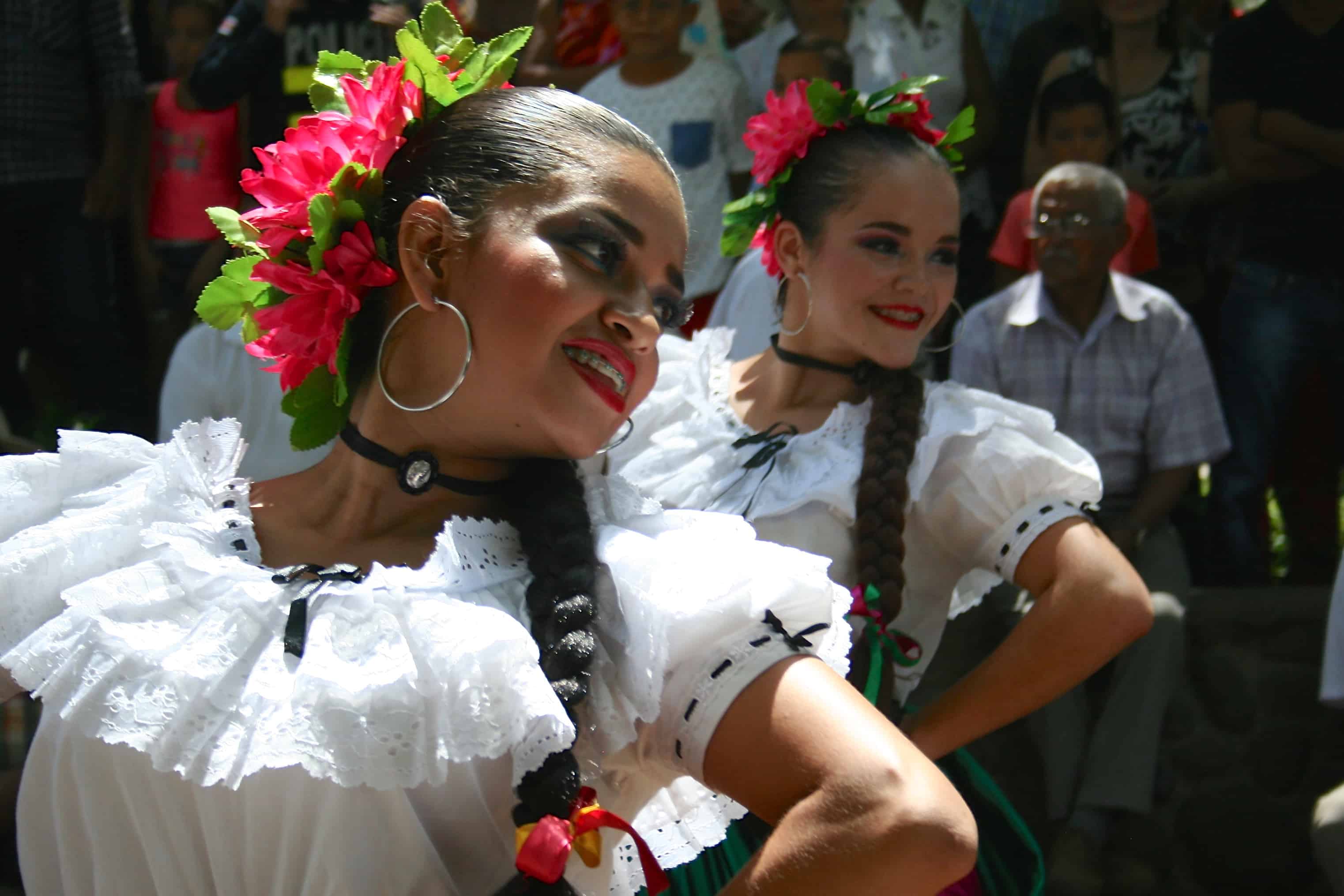
The annexation shaped the national culture just as profoundly. Many of the traditions Costa Ricans treat as emblematic of our country as a whole originated in the former partido, among them marimba music, the Punto Guanacasteco dance, Chorotega pottery, the shouted rhyming couplets known as bombas, topes and the non-lethal bullriding festivals staged across the province. The regional cuisine, built on corn, gave the country handmade tortillas, rosquillas, gallo de queso and tamal asado.
What happens on July 25th
This year the anniversary falls on a Saturday, and no holiday is being moved. Costa Rica applies no transfer of holidays to Mondays in 2026, so the commemoration stays on its calendar date. July 25 is a mandatory-pay holiday, which means employees who do not work are paid for the day and anyone who does work is paid double, with overtime at triple. Because the date falls on a weekend, the practical effect for most office workers is simply a normal Saturday rather than a long weekend, though banks, government offices and many businesses will be closed.
For anyone here on vacation, the celebration is worth planning around. Nicoya has been running a nine-day Festival Cultural La Anexión from July 17 through July 26, with free admission to marimba performances in the streets, an artisan and food fair at Parque Recaredo Briceño, a regional Iberoamerican horse fair, a tope and free bull riding events at the San Blas fairgrounds on July 25 and 26.
Liberia, Santa Cruz and other Guanacaste towns hold their own parades, civic ceremonies and folkloric performances, and the Education Ministry has organized commemorative acts in schools across the province. Expect heavy traffic on Route 21 and around Nicoya and Santa Cruz on the day itself and expect hotels in the northern Pacific to be fuller than a typical July weekend.
More than two centuries later, the Annexation of the Partido de Nicoya represents far more than a day off. It stands as a rare example in Latin American history of a territorial union achieved through negotiation, shared economic interest and voluntary agreement rather than armed conflict. Every July 25, Costa Ricans celebrate not only the expansion of the national territory but a decision that continues to shape the country’s geography, economy, culture and identity.
Where to be this weekend
If you want to see the celebration up close, here is what is happening in and around Nicoya over the final days of the festival. Nicoya’s Festival Cultural La Anexión runs through July 26, and Santa Cruz is holding its Fiestas de Santiago Apóstol at the same time, so the whole northern Pacific is busy.
Today, Friday, July 24
The day is dedicated to Nicoya’s San Antonio district, with the usual dawn diana through Moracia and Corralillo, the artisan and food fair at Parque Recaredo Briceño, marimbas in the streets and a cimarrona parade through the center. The taurine events begin today: a tope of bulls and clowns winds through the central streets from 1 p.m., and a free montadera opens at the San Blas fairgrounds at 3 p.m. On the main stage, the Reinado del Maíz gives way to folk acts and the national band Marfil.
Saturday, July 25 — the main day
The big day opens at 5 a.m. with a diana, a dawn procession through the central neighborhoods of Nicoya. The formal ceremony follows during the morning, with the floral offering at the Annexation Monument and a solemn joint session of the Nicoya Municipal Council and the national Council of Government. From 1 p.m. the San Blas fairgrounds host a tope of bulls, clowns and a cimarrona, followed by a free montadera, Costa Rica’s non-lethal bullriding, from 3 p.m.
The afternoon brings folkloric groups from Costa Rica, Mexico and Chile, retahíla contests and the traditional Noches Guanacastecas. The evening closes with the twelve-hour dance on the Necoc stage and a headline performance by Malpaís. Across the province, every school in Guanacaste holds its own civic act, and Liberia and Santa Cruz stage their own parades and ceremonies.
Also in Santa Cruz
The Fiestas de Santiago Apóstol continue in Santa Cruz with bullriding at the fairgrounds nightly from 7 to 9:45 p.m., a broadcast of Teletica’s Verano Toreado at 8 p.m. on the 25th, and a free concert by Dominican singer Mickey Taveras at 10 p.m. that same night.
What it means if you are traveling
Banks and government offices are closed. If you are driving the Nicoya–Santa Cruz corridor or Route 21, expect slow going and temporary closures around the parades, and expect hotels along the northern Pacific to be fuller than a normal July weekend. The easiest way in is the free daytime program: the artisan and food fair at Parque Recaredo Briceño, the marimbas in the streets and the topes. The evening concerts draw the largest crowds, so arrive early if you want a good spot. Outdoor events can shift or cancel in bad weather, so check the Municipalidad de Nicoya’s schedule the morning of the event before you set out.