

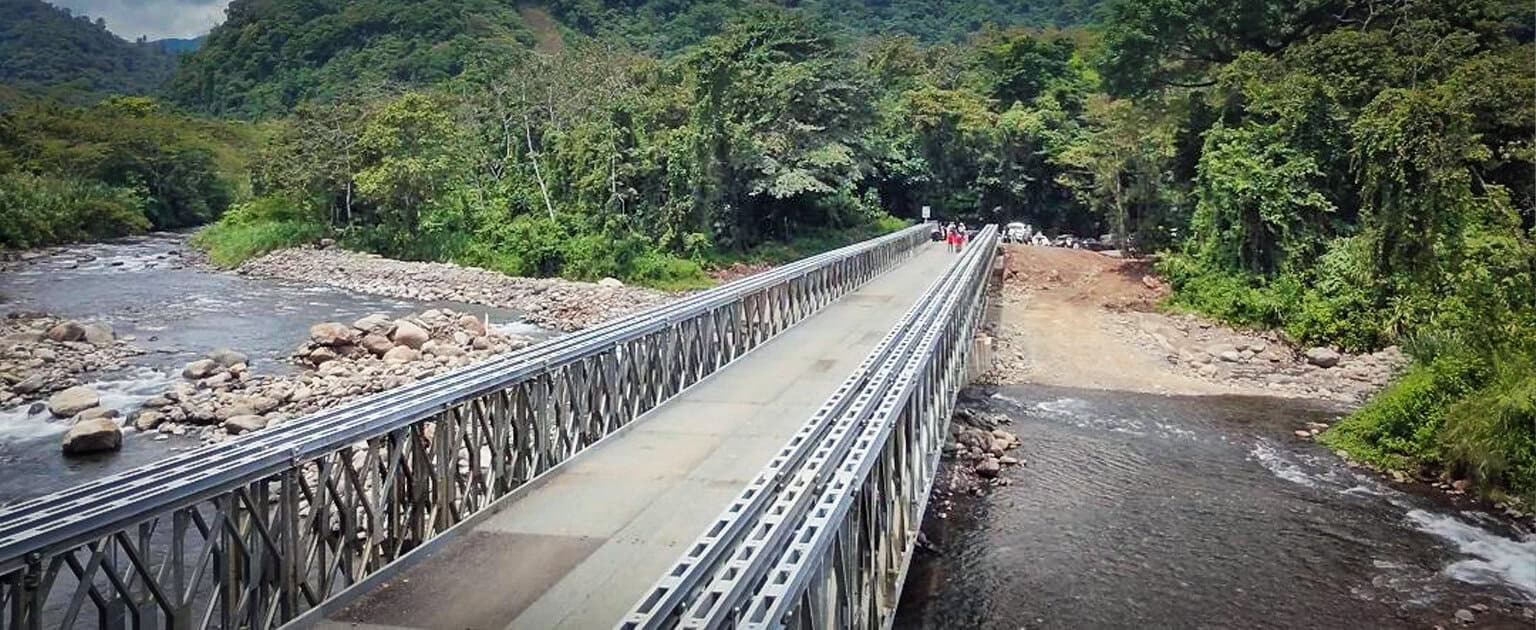
The new Caño Negro bridge is reshaping travel between La Fortuna, El Castillo and Monteverde, creating a faster inland tourist route across one of Costa Rica’s best-known tourist areas. The 112-meter bridge over the Caño Negro River was put into service on April 24 after roughly 50 years of local requests. The Ministry of Public Works and Transport (MOPT) said the project directly connects La Fortuna de San Carlos with Monteverde and benefits nearby communities including El Castillo, Tilarán and surrounding areas.
For those in the area, the biggest change is time. The trip between La Fortuna and Monteverde, long one of the most common overland routes for visitors, can now be made in about one hour and 50 minutes using Route 936 through El Castillo and Río Chiquito. The older route through Nuevo Arenal on Route 142 could take about three and a half hours.
That shift gives El Castillo a new role in the area’s tourism map. The community sits across Lake Arenal from the volcano and has often been passed over by travelers moving between La Fortuna and Monteverde. The new bridge makes it a natural stop between the two destinations rather than a side trip.
Tourism operators in the area are already promoting the route as a way to add Lake Arenal activities to itineraries that once moved directly from the Arenal area to the cloud forest. El Castillo’s tourism offerings include boat trips, kayaking, jet ski tours, sunset tours, wakesurfing, birdwatching, lake viewpoints, small hotels and access to nearby adventure parks. La Nación also noted Sky Adventures’ aerial tram, canopy and hanging bridge options near the community.
The bridge is made up of two metal Bailey structures, supported by abutments on both riverbanks and a central concrete pier. MOPT and Conavi provided the designs and the bridge structures, while local development associations handled the bridge launch and geological studies.
The project also solves a long-standing safety problem for residents. Before the bridge opened, local drivers heading toward Monteverde via Route 936 had to cross the riverbed, a risky option during the rainy season. The new structure allows regular vehicle movement and improves access for communities that depend on tourism, commerce and local transport.
The economic stakes are significant. ICT data has combined annual visitation to La Fortuna and Monteverde at more than 700,000 tourists, making the corridor one of the most important inland tourism links in Costa Rica.
For visitors, the new route also changes how an Arenal and Monteverde itinerary can be planned. Instead of treating the transfer as a long travel day, tourists can now move between the two regions in under two hours under favorable road conditions, with stops along Lake Arenal and in rural communities on the way.
Tourists should still treat the route as a mountain and rural road rather than a highway, allowing extra time during the rainy season, driving in daylight, checking road conditions before leaving, and filling up with fuel before heading across the corridor.
The opening gives Costa Rica’s northern tourism zone a more direct connection between volcano, lake and cloud forest destinations. For El Castillo, it may be the biggest opportunity in years to move from being a quiet lakeside community to a regular stop on one of our country’s busiest visitor routes.





