

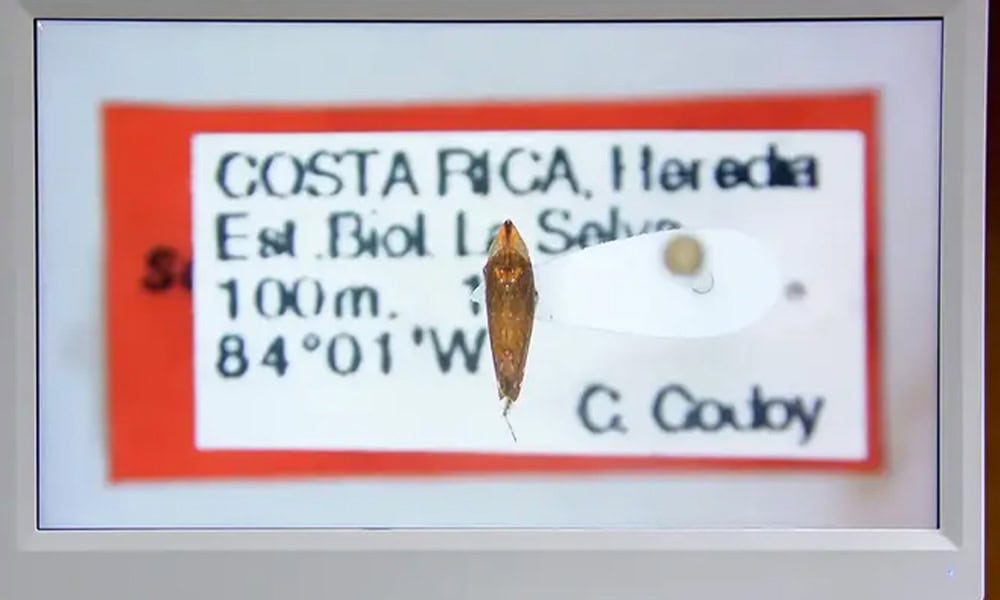
Biologists at the University of Costa Rica have uncovered 16 new species of leafhoppers after examining insect collections that sat untouched in museums for over three decades. The find also includes nine species newly recorded in the country, pushing the total known Scaphytopius species in Costa Rica to 29.
Carolina Godoy and Andrés Arias-Penna led the research, starting their review in 2023. They pored over specimens from the University of Costa Rica’s insect museum and others held in U.S. institutions. “We looked at material stored for years and spotted many unidentified species in the Scaphytopius genus,” Godoy explained. “This led us to detail their taxonomy and confirm the new ones.”
These leafhoppers, part of one of the planet’s largest insect families, feed on plants and jump like small cicadas. Adults measure under six millimeters, with younger stages even smaller. Though not widely recognized, they hold key positions in ecosystems and signal environmental conditions.
The team pinpointed the new species in biologically rich spots across Costa Rica. Locations include La Selva Biological Station in Sarapiquí, humid Caribbean forests, the Osa Peninsula, and Talamanca’s mountains. Some names reflect local features or pay tribute to scientists: Scaphytopius vulcanus draws from Guanacaste’s Cacao Volcano, while S. hansoni honors biologist Paul Hanson. Others, like S. ancorus and S. viperans, evoke their distinct forms.
Before this study, published in Zootaxa in September 2025, records of the genus in Costa Rica stopped at four species in 1982. The update fills a long-standing gap and shows how museum archives can yield fresh insights. Arias-Penna, who curates the UCR insect museum, noted that these insects might appear in everyday settings. “People could find them in their gardens without realizing,” he said.
The discovery underscores Costa Rica’s role as a biodiversity hub, where protected areas still hide unknowns. Researchers stress that the actual number of species may exceed current counts, calling for continued exploration. Godoy and Arias-Penna’s work not only adds to global knowledge but also supports conservation efforts by highlighting overlooked groups.
This breakthrough came from routine checks of old collections, proving that science advances through patient review. As Costa Rica protects its natural wealth, findings like these reinforce the need to study even the smallest inhabitants.





