

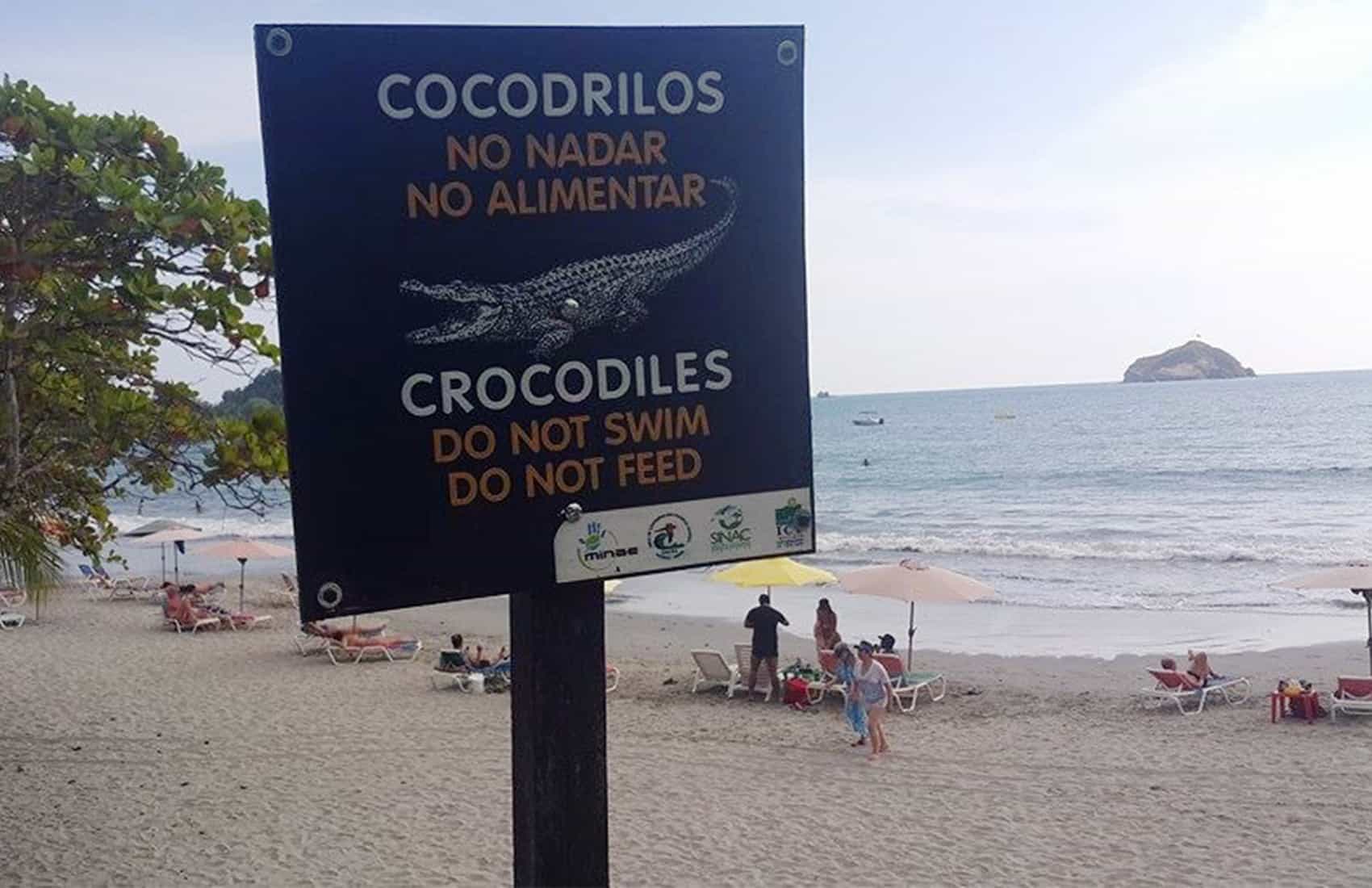
Surfers in Costa Rica know the excitement of riding the perfect Pacific swell, but at certain beaches, they share the water with an unexpected local: the American crocodile. These reptiles, drawn to river mouths and estuaries where fresh and saltwater mix, sometimes venture into surf zones. While attacks remain rare, recent sightings remind riders to stay alert. Authorities and experts track these encounters to keep beaches safe for everyone.
Playa Tamarindo in Guanacaste stands out as one of the most talked-about spots. The beach’s estuary attracts crocodiles that swim out to sea. In 2015, a surfer suffered serious injuries from a crocodile bite here, marking just one of our country’s notable cases. Drones have captured footage of crocodiles gliding through waves near the lineup, and locals report occasional appearances. Surfers paddle carefully, especially at dawn or dusk when animals feed.
Nearby, Playa Grande sees similar activity. Crocodiles cross between Tamarindo and Grande, using ocean currents. This stretch, part of Las Baulas National Marine Park, protects leatherback turtles but also hosts reptiles from the Tamarindo River. Riders here describe moments when a crocodile surfaces mid-session, prompting quick exits from the water.
Further south in Guanacaste, Playa Hermosa draws attention for its consistent waves and crocodile cameos. In September 2025, video showed a crocodile cruising the lineup, unfazed by surfers. Experts note these animals depend on the area’s mangroves and rivers. The beach, a World Surfing Reserve, balances human use with wildlife needs. Surfers respect the space, knowing coexistence comes with risks.
Nosara offers another example. River mouths like the Nosara River empty into the ocean, creating ideal habitat for crocodiles. While not as frequent as in Tamarindo, sightings occur, especially after heavy rains that push animals seaward. The area’s eco-focus means surfers learn to spot signs, such as ripples or shadows in murky water.
On the central Pacific coast, Jacó faces growing concerns. A December 2025 video captured a crocodile swimming in the surf, close to shore. This popular spot, known for beach breaks, sits near the Tárcoles River – famous for its dense crocodile population. Bridge tours over the Tárcoles reveal dozens of reptiles basking below, and some wander to nearby beaches. Surfers here check conditions beyond just wave height.
Esterillos, also in the central region, reported a crocodile during an international surf event in October. The sighting halted competition briefly, highlighting how tourism and nature intersect. Playa Azul nearby had an incident that drew response from the Costa Rican Surf Association, which now works on solutions like monitoring and signage.
Boca Barranca, a left-hand point break near Puntarenas, warns of crocodiles among its hazards. The river outflow pollutes the water but also brings reptiles. Surfers avoid paddling too close to the mouth. Playa Tambor on the Nicoya Peninsula added to the list in June 2025, when a crocodile appeared on the shore. This calmer bay sees less surf action but attracts beginners who might overlook dangers.
Other beaches like Agujas, Bejuco, Blanca, Boca Vieja, Cabo Blanco, and Balsitas have recorded sightings. These southern spots, often remote, border rivers teeming with wildlife.
Data from 1990 to 2017 shows 99 human-crocodile interactions in Costa Rica, with 27 attacks. Numbers rose in recent years due to habitat changes and population growth. In 2024, officials noted more sightings nationwide, linked to flooding and development. By 2025, no fatal surf-related attacks made headlines, but close calls persist.
The Ministry of Environment and Energy advises against surfing near river mouths. Signs at beaches warn visitors, and rangers patrol high-risk areas. Surfers use drones or apps to scan for animals. Experts recommend group sessions and quick responses to sightings – exit the water calmly without splashing.
Local groups push for better management. Feeding crocodiles, illegal here, worsens problems by drawing them to people. Conservation efforts protect habitats while educating the public. Costa Rica’s surf scene thrives despite these challenges. Riders adapt, turning potential threats into stories of respect for nature. As the dry season approaches, surfers prepare for bigger swells – and watchful eyes on the water.





