

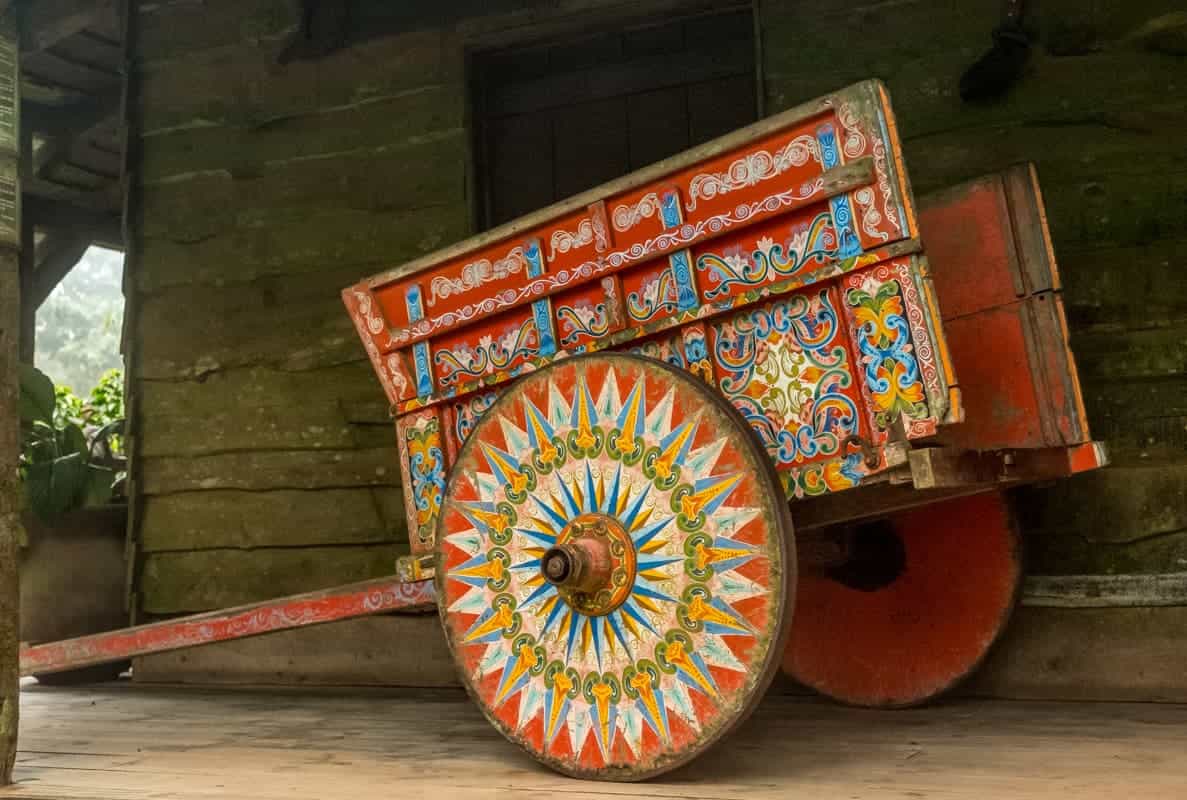
A hands-on workshop that allows visitors to create their own version of Costa Rica’s traditional painted oxcart designs has earned international attention as travelers increasingly look for souvenirs with a deeper connection to local culture. Forbes included the oxcart-painting experience at El Silencio Lodge & Spa in Bajos del Toro in a selection of 10 workshops around the world where visitors make their own keepsakes alongside local artists and craftspeople.
Rather than buying a mass-produced souvenir, guests learn traditional painting techniques and create a colorful wooden mandala inspired by Costa Rica’s oxcart patterns and the surrounding cloud forest. The workshop is led by Kenneth, an eco-concierge and local artist at the lodge. He guides participants through the bright geometric shapes, floral details and precise brushwork associated with one of Costa Rica’s most recognizable artistic traditions.
The completed mandala is small enough for travelers to take home and frame, providing a more practical alternative to attempting to pack an actual oxcart wheel into a suitcase. Costa Rica’s elaborately painted oxcarts began as working vehicles used to carry coffee and other agricultural products across difficult roads. By the early 20th century, owners increasingly decorated their carts with distinctive patterns, colors and symbols.
Different regions developed their own designs, allowing people to recognize where a cart came from by its painted wheels. The tradition eventually became an important expression of Costa Rican identity rather than simply a decorative addition to farm equipment. Costa Rica’s oxherding and oxcart traditions were added to UNESCO’s Representative List of the Intangible Cultural Heritage of Humanity in 2008. Sarchí, northwest of San José, remains the country’s best-known center for traditional oxcart production and painting.
The Forbes recognition reflects a broader change in what many travelers expect from a vacation. Cultural workshops, cooking classes, farm visits and meetings with local artisans allow visitors to participate in traditions rather than observe them from a distance. These activities can also create income for local craftspeople and encourage hotels to preserve knowledge that could otherwise decline as younger generations move away from traditional trades.
El Silencio Lodge is in the cloud forest of Bajos del Toro, about 65 kilometers northwest of Juan Santamaría International Airport. The property offers several nature and cultural activities, including waterfall hikes, birdwatching, coffee tasting, Costa Rican cooking, tree planting and visits to nearby rural communities.
The lodge currently holds two Michelin Keys, the hotel equivalent of the restaurant guide’s Michelin Stars. The designation recognizes properties offering an exceptional stay based on their design, service, character and connection to their surroundings. Costa Rica was one of 10 destinations featured in the Forbes selection.
Other experiences included recycled-glass jewelry making in Namibia, Maasai beadwork in Kenya, basket weaving in Rwanda, volcanic-stone carving on Easter Island, Tibetan painting in China and Berber pottery in Morocco. Each workshop produces a physical object, but the larger attraction is the process behind it: spending time with a local craftsperson, learning why the tradition matters and understanding the work required to create something by hand.
For Costa Rica, the international recognition provides another example of how it can expand its tourism appeal beyond beaches, wildlife and adventure activities. Oxcart painting gives visitors a direct connection to Costa Rica’s rural and agricultural history while offering them something personal to take home. The value is not simply the painted piece, but the story of how and where it was made.





