

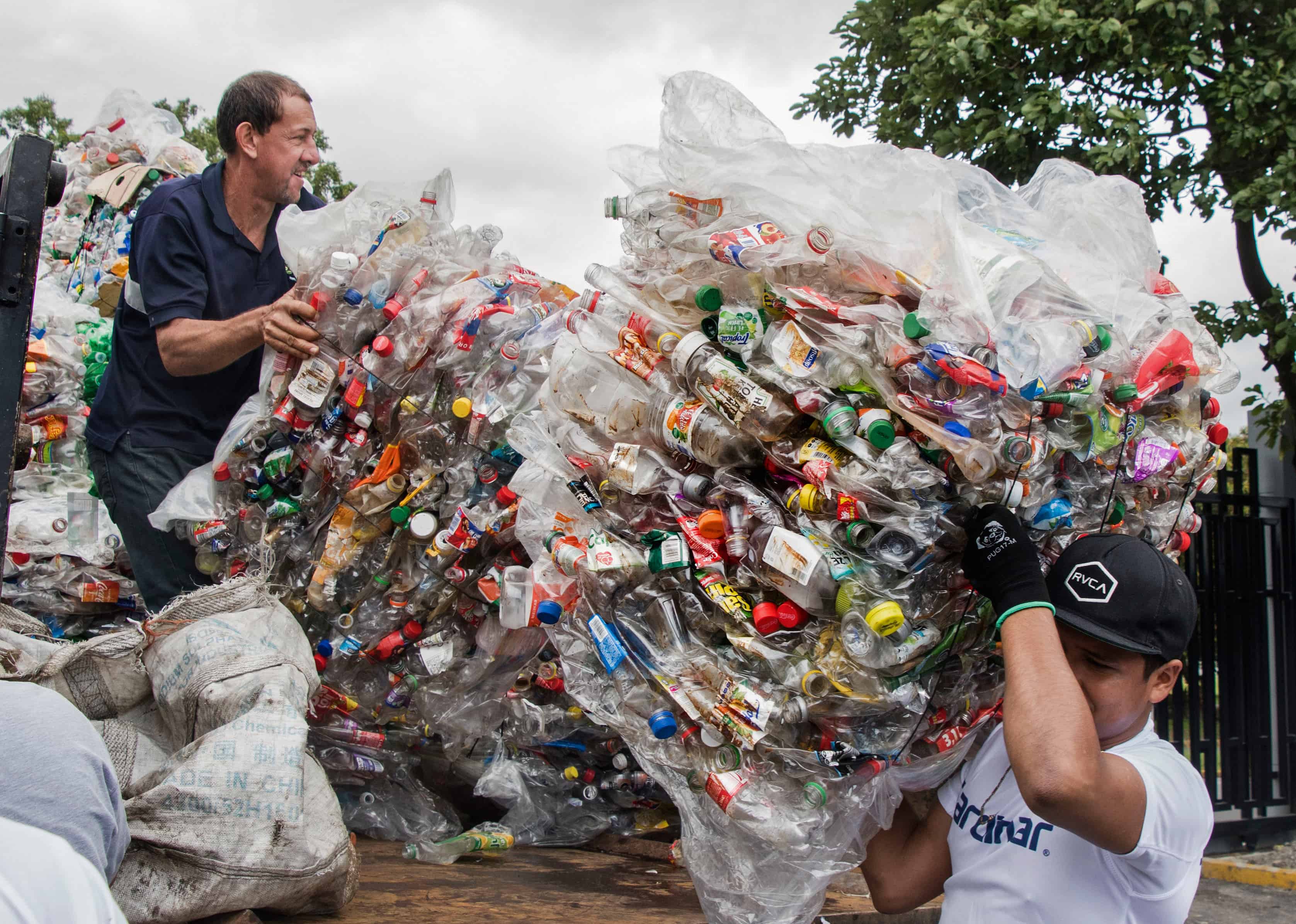
Costa Rica ranks among Latin America’s most affected countries for plastic bottle pollution on its beaches, according to a new study by Chile’s Universidad Católica del Norte. The report, titled “In Search of the Origin of Plastic Bottles,” reveals that plastic bottles and caps dominate coastal waste, threatening the country’s renowned biodiversity and marine ecosystems.
The study, conducted across ten Latin American countries with over 1,000 volunteers, found that Central America’s continental Pacific beaches, including those in Costa Rica, El Salvador, Nicaragua, and Panama, have the highest plastic waste levels in the region, averaging 1.4 items per person per minute.
“Costa Rica is part of this important international network, which not only measures the amount but also standardizes the types of waste accumulating on coastal areas,” said Juan Manuel Muñoz, a biologist at the National University (UNA) and study collaborator. In Costa Rica, urban areas like Puntarenas and El Roble showed elevated waste levels. “Although, in general, the highest abundances were found on the beaches, in the case of Costa Rica, the cities of Puntarenas and El Roble showed higher amounts of waste than those found on the beaches,” Muñoz added.
International sources significantly contribute to Costa Rica’s pollution crisis. Marine currents and illegal maritime activities, such as foreign fishing fleets, transport plastic waste from countries like China, North America, and Europe to Costa Rican shores, with up to 40% of debris in some regions originating from maritime sources, according to the Galápagos Conservation Trust. Locally, the Tárcoles River, one of Central America’s most polluted, funnels plastic waste into the Pacific, exacerbating the problem.
The study identifies The Coca-Cola Company, PepsiCo Inc., and AJE Group as the primary corporate contributors to plastic waste in Costa Rica and the region. Personal-size containers (0.5–0.9 liters) for soft drinks, energy drinks, and bottled water were the most common items found. Coca-Cola alone produces over 110 billion single-use plastic bottles annually, with projections estimating 602 million kilograms of its plastic waste entering oceans by 2030 if trends continue, per Oceana.
Costa Rica has taken steps to address plastic pollution through its National Marine Waste Plan (2021–2030) and participation in the UN’s Clean Seas campaign, alongside 11 other Latin American and Caribbean countries. However, the Costa Rica’s 2021 goal to ban single-use plastics has been hindered by low recycling rates—less than 10% of plastic waste is recycled in the region—and inadequate waste management infrastructure. “The Tárcoles River’s pollution underscores the need for stronger local and regional action,” Muñoz noted.
The report recommends urgent strategies, such as promoting returnable bottle systems, which Coca-Cola operates at scale in countries like Brazil. A 10% global increase in refillable bottles could reduce marine plastic pollution by 22%, according to Oceana. Other suggestions include mandating corporate recovery and recycling programs and fostering international collaboration to address transboundary pollution. Regional innovations, like Guatemala’s bio-fences made from recovered plastic to trap river waste, offer potential models.
As our country continues to come to grips with its role in the global plastic crisis, researchers stress the need for collective action to protect our beaches and biodiversity from further harm.





