
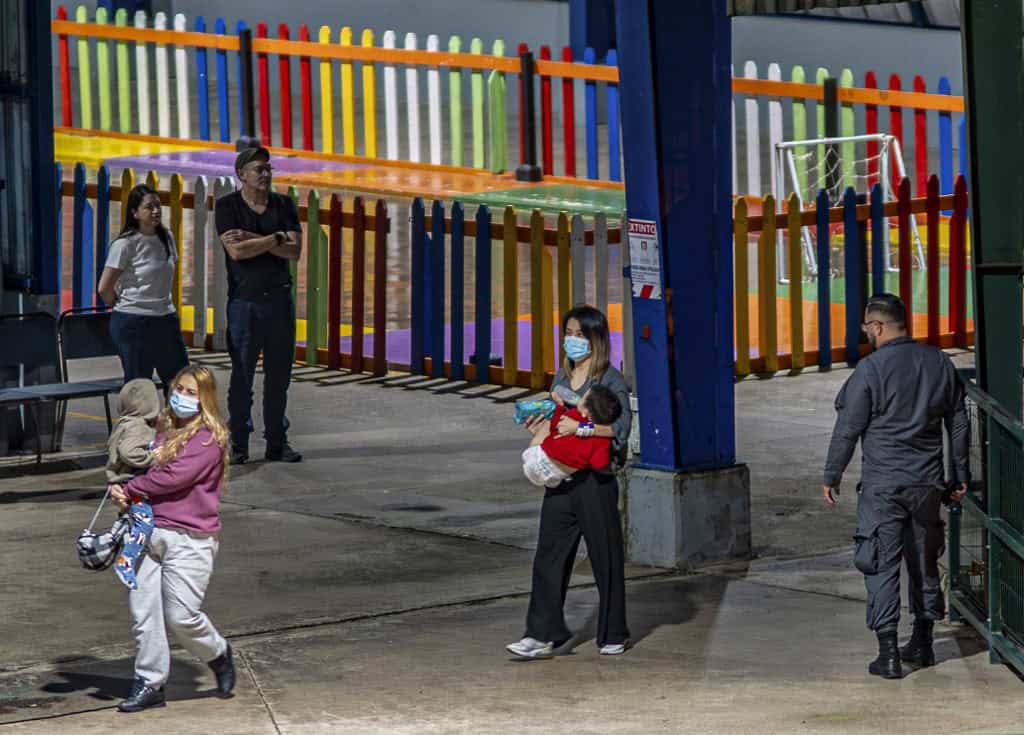
The General Directorate of Migration (DGME) confirmed the departure of the first group of migrants deported by the United States, who were temporarily hosted in Costa Rica for repatriation. This first group included an Armenian mother and her two young daughters. They arrived on February 20 and stayed at the Center for Temporary Attention of Migrants (CATEM) in the Southern Zone before being transferred to Juan Santamaría International Airport, where they began their journey home.
The repatriation process is part of an agreement between Costa Rica and the U.S. government, under which Costa Rica will receive up to 200 migrants at a time and serve as a temporary transit point for their return to their home countries. According to officials, these individuals remain in Costa Rica for a few weeks while the necessary procedures are completed to facilitate their departure.
“This confirms the government’s commitment to serving as a bridge country for repatriation. These individuals have received appropriate support since their arrival,” said Omer Badilla, Deputy Minister of the Interior and Director of Migration.
René Celaya, representative of the International Organization for Migration (IOM), emphasized that humanitarian assistance was provided throughout the process. “We offer humanitarian aid to those who voluntarily decide to return, as long as it does not pose a risk. Our priority is ensuring that migrants are treated with dignity and that their fundamental rights are respected,” he stated.
The first group of deportees arrived in two separate flights. The initial flight on February 20 carried 135 individuals, while the second flight on February 24 brought an additional 65. Each case undergoes a personal risk assessment to determine whether the individual can safely return to their home country. If a return is deemed unsafe due to vulnerabilities or threats, alternative solutions, such as relocation to a safe third country, are explored.
So far, the DGME has reported that no individuals from these groups have requested refugee status in Costa Rica. However, the arrival and deportation of these individuals have sparked criticism from national and international human rights organizations, particularly regarding the presence of minors among them. Critics argue that the policy raises concerns about the treatment and welfare of vulnerable groups within the migration process.