
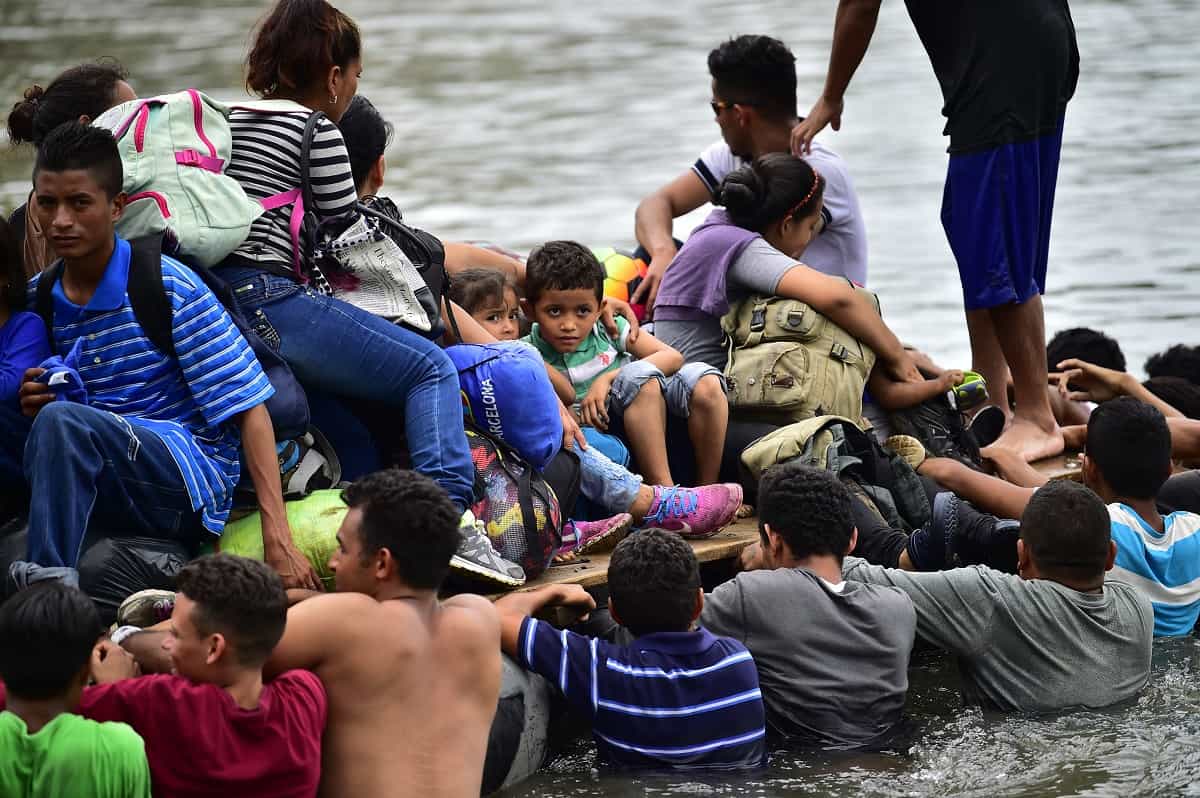
Ana Maria had to pay to enter Mexico illegally — or risk being kidnapped by ruthless criminals who have turned the migration crisis into a multibillion-dollar business. As US President-elect Donald Trump prepares to take office next week with a vow to crack down hard on illegal migration, gangs are using threats and extortion to exploit those trying to arrive in time.
Gang members took photos and videos of Ana Maria and her three daughters — apparently to intimidate them — after they arrived in the Guatemalan border town of Tecun Uman on their way from their native Honduras to the United States. Her $250 payment to them included a raft river crossing followed by a taxi ride to a shelter in Tapachula, in southernmost Mexico.
“It was the only way we could enter,” the 26-year-old said. Like others interviewed, she spoke on condition that her identity be concealed out of fear of retribution. Her story is just one example of the costs — and profits — involved in human smuggling. Worldwide, the practice earns criminal networks an estimated $7 billion to $10 billion annually, according to the United Nations and the Financial Action Task Force.
The networks include the most violent drug cartels in Mexico, where authorities processed more than 900,000 irregular migrants in 2024 alone. The United States recorded 2.1 million encounters with migrants on its southern border in the fiscal year that ended in September.
Tapachula’s shelters are packed with migrants waiting for an immigration permit allowing them to reach the Mexican-US border before Trump, who has threatened mass deportations, takes office on Monday. Criminal groups intercept migrants before they reach the official crossing between Guatemala and Mexico, said a local priest, adding, “Organized crime has a stranglehold on the migrant population.”
Those unable to pay the gangs are forced to call their families to ask them to send hundreds of dollars, the priest added. If the relatives pay, the criminals place a mark on the migrants’ arms and let them go, he said.
Cartel turf war
In recent months, Mexico’s Chiapas state has been shaken by a bloody turf war between the Sinaloa and Jalisco New Generation cartels — the country’s two most powerful criminal organizations. Local gangs sometimes hand migrants over to drug cartels to be extorted or trafficked, according to the International Organization for Migration (IOM).
The criminals’ control over migration begins farther south in the Darien jungle, a rugged and lawless region between Colombia and Panama. Alberto, a 50-year-old Venezuelan, paid about $1,800 to a group for the right to cross by foot with his wife and three children.
“They take your money in Colombia. The groups accompany you as if they want to protect you in the jungle,” said Alberto, one of millions of Venezuelans who have left their crisis-wracked country since 2014. Other migrants said they were kidnapped by criminal groups in the Darien.
“They took everything we had,” said Dayana, a 36-year-old Venezuelan. In the Darien, Colombia’s largest criminal group, the Clan del Golfo, decides which routes can be used and “gets rich at the expense of migrants,” said Juan Pappier, deputy director for the Americas at Human Rights Watch.
Towns transformed
On the Panamanian side, migration has provided new income streams for locals in the small towns through which more than a million people have passed in the last three years. After arriving in the communities of Canaan Membrillo and Bajo Chiquito, migrants must pay $25 each to be taken downriver to a shelter where they are cared for by Panamanian institutions and international organizations.
Small shops that once supplied basic necessities to a few dozen residents now serve hundreds of migrants each day. Locals have also opened stalls selling everything from SIM cards to flip-flops and clothing to protect against the sun and rain.
When they leave the jungle, migrants must pay $40 for a bus to the border with Costa Rica, on a route organized by the Panamanian government. Some migrants take on huge debts to pay people smugglers, including Ericka, a Guatemalan who was deported by the United States on January 10 and now owes $15,000.
Some smugglers offer to take migrants through tunnels dug under the Mexican-US border, while others sell fake asylum request appointments. Corrupt officials pose an additional risk. “The police took all my money,” one Panamanian woman said about her experience in Guatemala.