
Part of the fun of moving from a temperate climate to the tropics is the discovery of new fruits. During my first year in Costa Rica, I was treated to a variety of new tropical delights including guava, passion fruit, mamón chino, mangosteen, and water apple. Even the fruits that I recognized from the grocery store like papaya and mango were almost like new discoveries because the taste of locally grown fruit blows away the flavors of items shipped for hundreds of miles.
I was only in Costa Rica a matter of days when a new friend invited me on a bike ride to harvest the fruits of a few large trees on one of the back roads of our little beach town. With the selection of a few recently fallen fruits and a well-thrown stick encouraging more to fall, I had my first taste of water apple.
The water apple tree (Syzygium malaccense) is also known as the Malay apple tree in English. In Spanish, it’s known as the manzana de agua. Though found in many a Tico garden, the water apple tree is not native to Costa Rica. This species hails from the other side of the planet in tropical Asia. People have been responsible for spreading it from its native lands across the tropics for centuries for an obvious reason, it’s delicious.
The tear-shaped fruits are the size of a small apple. Red or a combination of red and white, the fruits are soft with a large seed inside. The taste is mild, a mix of apple and pear. I’ve read that folks make jam out of them but for the most part they are eaten directly off of the tree. The trick with water apple, and the reason they aren’t amongst the fruits that are shipped to grocery stores in temperate climates, is that they have a very short self-life. Your best bet for sampling them are finding a tree, visiting a local farmer’s market, or pulling over at a little fruit stand on the side of the highway.
Aside from producing delicious fruit, the water apple tree also has the benefit of being beautiful. The dense, dark foliage provides plenty of shade and during the time of year when they’re flowering, the trees branches are alive with puffs of pink flowers reminiscent of the flowers from Dr. Seuss’ Horton Hears a Who. These puffy flowers attract a wide range of pollinating insects and birds. Once the flowers are pollinated, the many stamens of each flower fall to the ground forming a beautiful pink carpet below the tree.
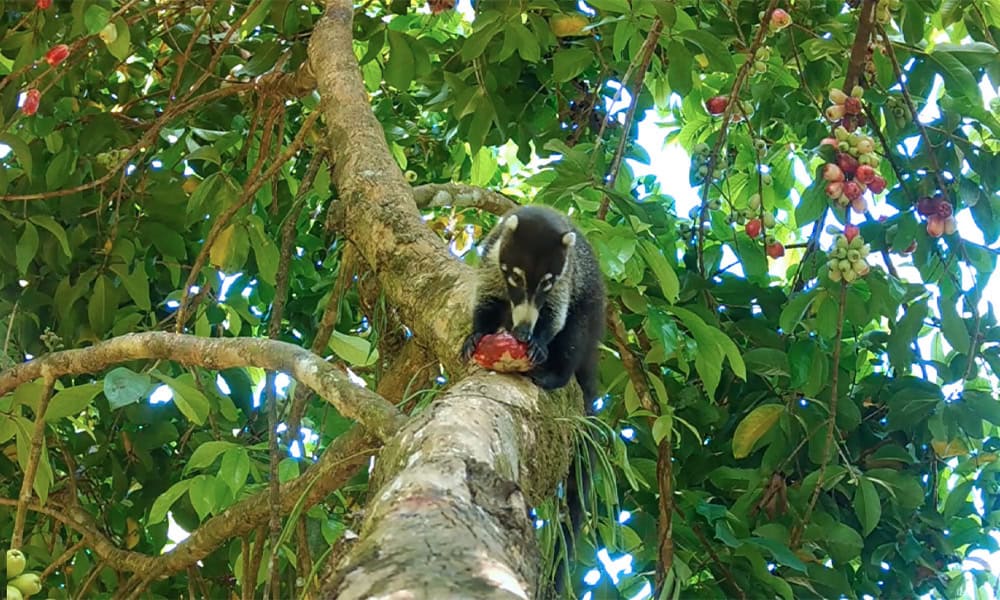
While I am a fan of nibbling on the refreshing fruits, what I really love about water apple trees are the fact that they act like a magnet for Costa Rica’s non-human residents. A large variety of birds and mammals visit these fruit-laden trees during the time of year when they are producing, making them an ideal spot for one of my camera traps. I happened to be working on two different properties over the years that presented me with water apple trees that were full of fruit. Amongst the many species that I recorded chowing down on the tree-based buffet were toucans, coatis, and howler monkeys. You can find clips of those species and more in the video below.
About the Author
Vincent Losasso, founder of Guanacaste Wildlife Monitoring, is a biologist who works with camera traps throughout Costa Rica. Learn more about his projects on facebook or instagram. You can also email him at: vincent@guanacastewildlifemonitoring.com