

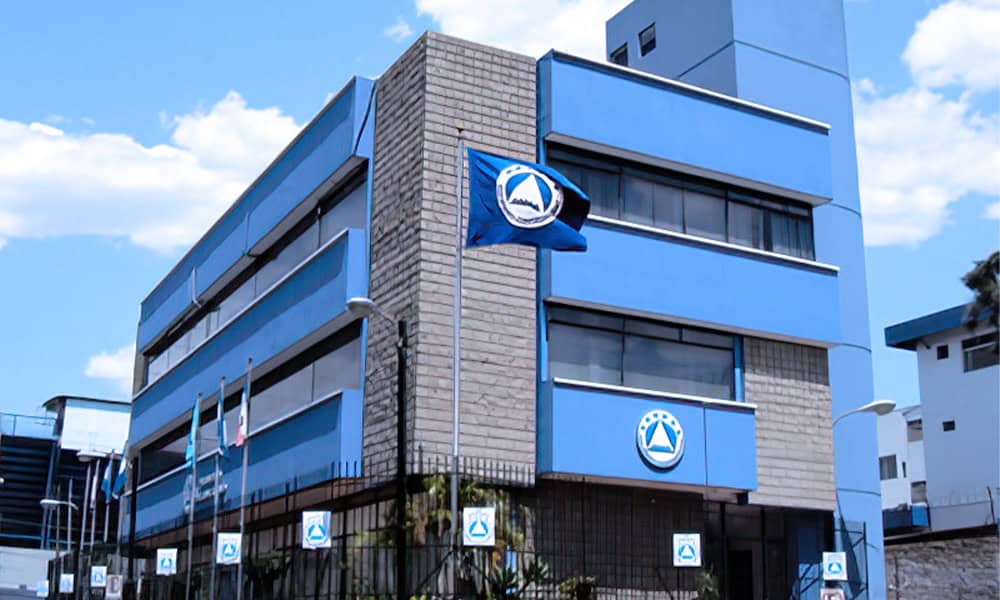
Panama, which will assume a seat as a non-permanent member of the UN Security Council in January, lamented on Sunday the decision of the Central American Parliament (Parlacen) to approve a request to incorporate Russia as an observer. The Panamanian government “deeply regrets the untimely decision of the Central American Parliament to grant Permanent Observer status to the Russian Federation,” the Panamanian Foreign Ministry stated in a press release.
According to the note, the rejection “comes at a time of a complex and worrying international context, where Panama firmly defends the principles of peace among nations, full democracy, and the effective recognition of human rights.” Parlacen approved last week a request from the State Duma and the Federation Council of the Russian Federation to join Parlacen as a Permanent Observer State.
The request was approved by the Parlacen plenary, headquartered in Guatemala City. However, several ratifications are still pending for the incorporation to be finalized, a process that can take about eight months. Russia, which has close cooperation ties with Nicaragua, expressed interest in 2018 in becoming an observer in Parlacen, a forum integrated by El Salvador, Guatemala, Honduras, Nicaragua, Panama, and the Dominican Republic.
Panama announced days ago that it will open a Ukrainian embassy in the country, following a meeting between the Panamanian President, José Raúl Mulino, and the Ukrainian President, Volodymyr Zelensky, during the last United Nations General Assembly.
Panama will also assume, starting January 1, a position as a non-permanent member of the UN Security Council. According to the press release, Parlacen’s decision “does not reflect the national government’s foreign policy” and “much less in view of the independent role” that Panama “will soon play” in the United Nations Security Council.
Most Central American governments have spoken in favor of Ukraine in its war against Russia, except for Nicaragua, which supports Moscow. Parlacen’s resolutions, created in 1991, are not binding. Costa Rica and Belize are not part of the forum, which has Mexico, Morocco, Puerto Rico, Taiwan, and Venezuela as observers.





