

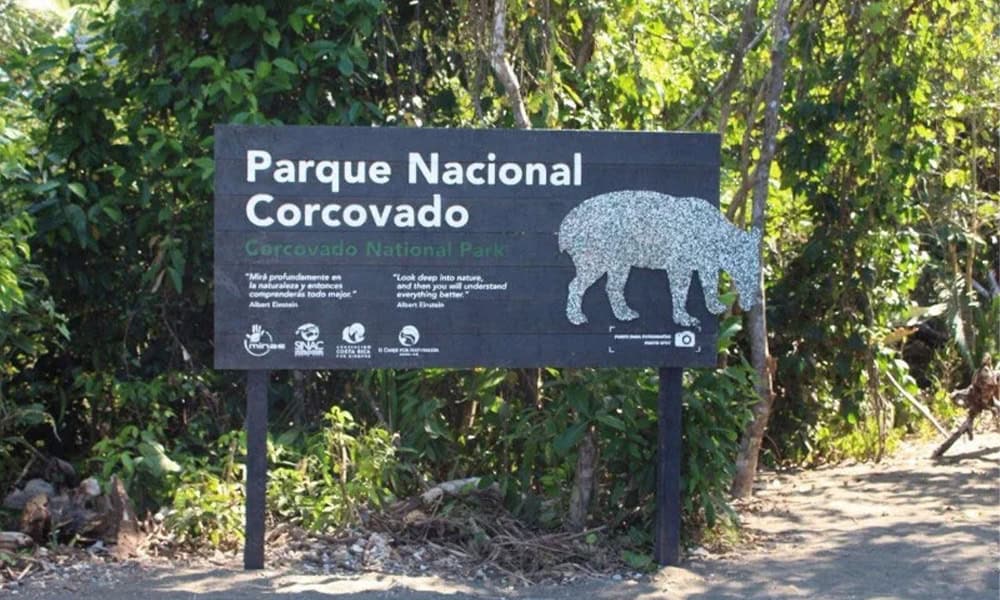
The Ministry of Environment and Energy (MINAE) issued a statement denying any intention to conduct gold mining in Corcovado National Park. This clarification came after Mario Gómez Venegas, director of the Directorate of Geology and Mines (DGM) at MINAE, submitted a request to Paula Mena Corea, director of the Osa Conservation Area, asking for a delegation to enter the park as part of the PlanetGOLD Costa Rica project.
Earlier this year, the Global Environment Facility (GEF) approved MINAE’s project, “Global Opportunities for the Long-term Development of the Artisanal and Small-scale Gold Mining Sector (ASM) – PlanetGOLD Costa Rica.”
In a press release, MINAE denied the information being circulated and clarified the situation.
“We strongly deny this statement and clarify that, in response to the illegal gold mining problem in the country, MINAE, with the support of GEF and the United Nations Environment Program (UNEP), launched a series of workshops in July to implement a project aimed at eliminating the use of mercury in gold mining,” the statement read.
Document DGM-OD-368-2024 further explained that the PlanetGOLD program is in its initial phase, which requires field visits by the consulting team. The purpose of these visits is to inspect gold extraction sites, identify potential mineralization sources, collect samples, evaluate gold recovery processes, and verify whether mercury is being used.
MINAE emphasized that the document signed by Mario Gómez is aimed at studying artisanal and small-scale mining associations, establishing gold value chains, and assessing environmental impacts in the cantons of Jiménez and Osa, all of which are linked to illegal mining activities.
“This project tackles the issue of illegal mining and promotes safer methods in artisanal and small-scale mining (ASM), which currently employs extraction techniques that pose health risks, such as mercury use,” the statement added.
MINAE also assured that, in collaboration with law enforcement, it will continue to address the problem of illegal gold mining, which extends beyond Corcovado National Park. The ministry will further promote initiatives to eliminate the use of hazardous substances, such as mercury, to protect human health and the environment.





