

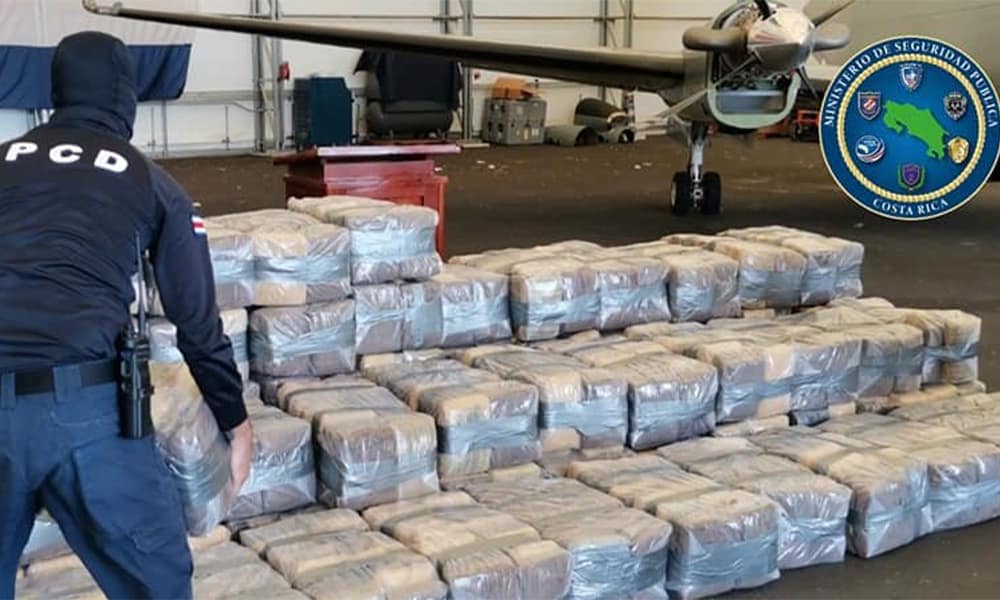
Criminal organizations are among the biggest problems Costa Rica is currently facing. The nation is experiencing an unprecedented surge in violent crimes, largely due to conflicts between drug-trafficking groups. Many are curious about the origins of these organizations and their reasons for choosing Costa Rica as an operational base.
Minister Mario Zamora explained that some of these groups originated in Panama, especially given the increasing police presence there. A decade ago, both countries had roughly 13,500 police officers. However, that number has grown significantly in Panama.
“Today, Panama boasts more than 21,000 police officers. This bolstered security in Panama has inadvertently pushed many of these gangs that previously operated there into our territory,” he explained.
Regional security concerns resurfaced this week when the U.S. President listed several nations, spanning from Mexico to Venezuela, as major hubs for drug production or trafficking. This list includes Costa Rica.
“Central America is a critical conduit for drug trafficking,” Minister Zamora mentioned.
He also emphasized the alarming correlation between these drug-trafficking gangs and rising homicide rates.
To combat the drug issue, one proposal gaining traction among local authorities is the formation of a unified entity, modeled after similar initiatives in the U.S., specifically the United States Customs and Border Protection (CBP).
“Our prime reference is the U.S. CBP model. This Border Control Police serves as an exemplary framework, illustrating how we might integrate our own police and border forces,” the Minister said.
The goal is to establish a comparable organization in Costa Rica. “We’re working on creating an entity similar to the CBP. In the U.S., this body successfully merges different police forces,” he added.
Minister Zamora highlighted that in operations like “Operacion Soberania” (Operation Sovereignty), focused on port surveillance, elements from various police departments are already collaborating.
Costa Rica has launched several operations to tackle security and drug issues in the country. However, the problem persists as it causes have deeper roots, that aren’t easily solved.





