
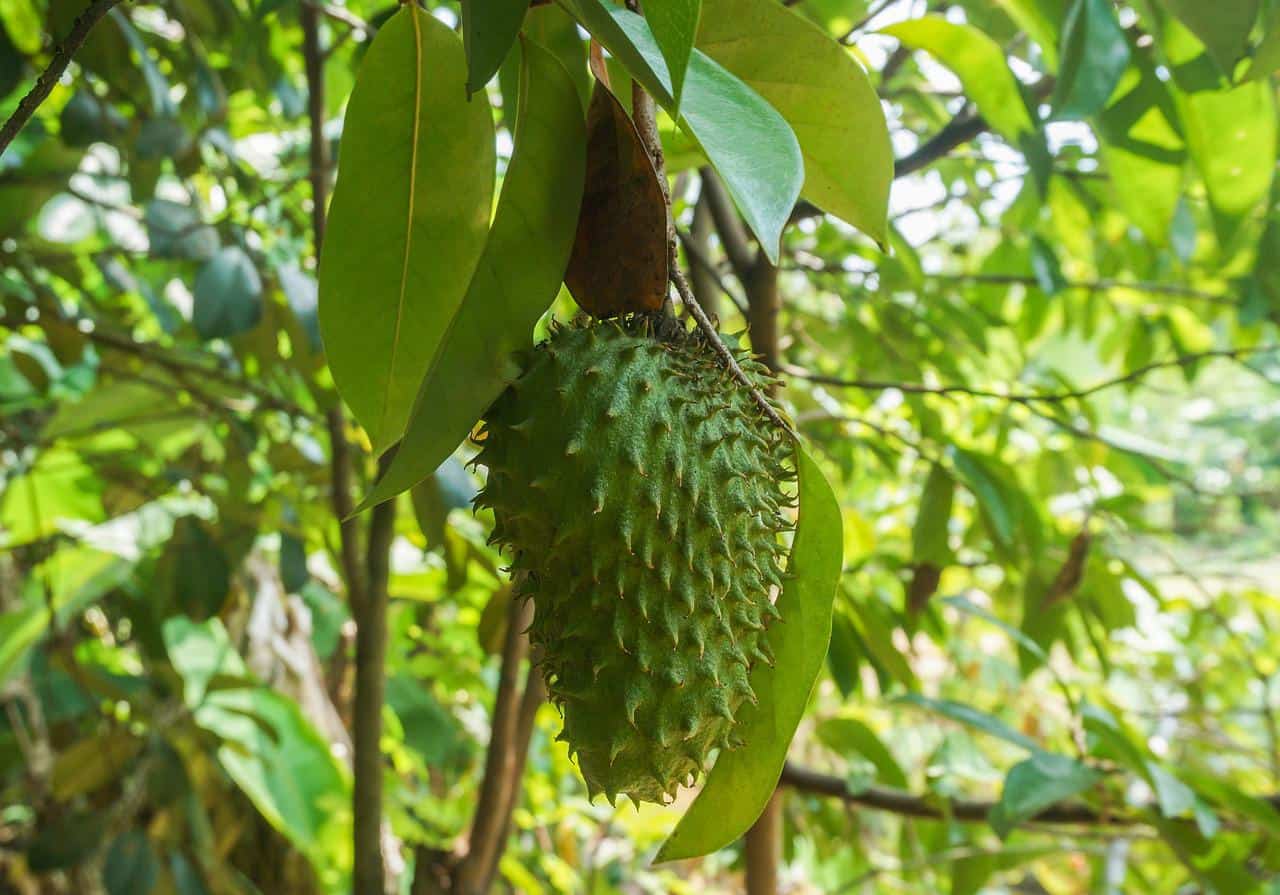
Since June 15 was celebrated around the planet as tree day, I thought it would be appropriate to highlight a special tree you can plant in the tropical home garden. Recently, this particular tree has also been making headlines concerning its remarkable properties discovered in scientific studies.
I’m referring to the soursop tree (Annona muricata), which is known in Spanish as guanábana. The guanábana fruit is one of the most delicious tropical treats you can find here in Costa Rica. Guanábana fruits are easily recognized in local markets by their heart-shape; their green, spiny skin and their white, creamy pulp with oval, black seeds.
The pulp from these rather large fruits is a bit sour to the taste, thus the name soursop. But with a little natural sweetener, it blends into a creamy fruit drink that rivals a milkshake. It can also be used to make ice creams and other desserts too.
The soursop tree is relatively small, growing up to only 10 meters, which makes it ideal for a home garden orchard. The young branches and trunk of the tree bear unusual pale yellow, conical flowers which later turn into the large fruits. The glossy, evergreen leaves have a peculiar odor and have proven to be valuable as a natural medicine.
You can start your own guanábana trees simply by saving the seeds from a fruit you buy in the market. Plant one seed per pot filled with fertile soil. Germination often takes two weeks or more, so be patient and water the container several times a week to prevent it from drying out. When the seedlings emerge, wait until they grow to 30 centimeters tall, and then transplant them to a permanent place.
These trees do well on a wide range of soils with good drainage. Additions of organic compost fertilizer will help to keep the trees growing well. When a guanábana tree reaches five years, it can begin to produce fruit.
It’s important to protect the trees and fruits from disease and insect attacks. Citrus seed oil extracts are effective for preventing diseases and bagging the fruits with recycled plastic bags can protect the fruits from fruit flies without using harmful chemical insecticides.
The leaves, roots and bark of the soursop have been studied extensively by the University of Purdue’s school of pharmacy. The studies concluded that the trees contain special organic compounds called annonaceous acetogenins, which can target and kill six types of human cancer cells.
These acetogenins are inhibitors of enzyme processes that are only found in the membranes of cancerous tumor cells, and have no toxicity to healthy cells. Many of the acetogenins have demonstrated selective toxicity to tumor cells at low dosages, as little as one part per million.
These studies have confirmed the anti-tumor, anti-parasitic, insecticidal, and anti-microbial activities of soursop, which indigenous people discovered centuries ago.
I hope you’ll plant guanabana trees in celebration of the benevolent nature of trees. Until next time … life’s a garden.
This article first appeared in 2012