

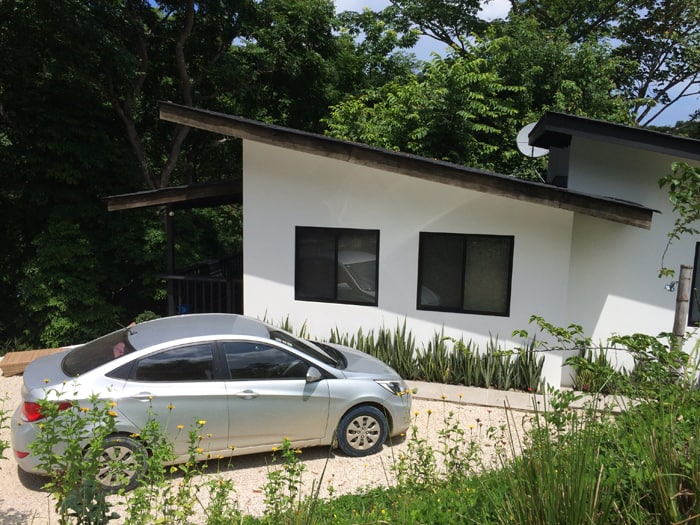
If you are moving to Costa Rica, or already here and hunting for a place to live, renting is usually the first step. The rules, though, are not what most newcomers expect. Costa Rican law leans hard toward protecting tenants, the line between a short-term and a long-term rental change everything from your taxes to how long you can stay, and what you will pay swings widely depending on where you land.
Here is what to know before you sign.
Most rentals are governed by Law 7527, the General Law of Urban and Suburban Rentals — locally called the ley de inquilinato, or tenancy law. It covers almost any lease of a home or commercial space, whether the agreement is written or only spoken, and many of its protections cannot be signed away even if a contract tries to.
The most important thing it does is set a minimum term. Under the law, a residential lease runs for three years, even when the contract says otherwise. A clause setting a shorter term is simply void, and the lease is treated as a three-year agreement. If neither side gives notice at the end, it renews automatically for another three years. In practice, landlords often write the contract as “one year, renewable for two more,” but the three-year floor is your right as a tenant as long as you keep paying and honor the terms.
Rent increases are capped too, and the cap depends on the currency you pay in. If your rent is set in colones, the landlord can raise it once a year, at the end of each contract year, by no more than the past 12 months’ inflation. When yearly inflation runs above 10 percent, the Housing Ministry (MIVAH) sets the maximum instead. If your rent is set in U.S. dollars, the law is blunt: the amount stays fixed for the whole term, with no annual increase allowed. And even on a dollar lease, you have the right to pay in colones at the Central Bank’s selling exchange rate on the day you pay.
A few other tenant protections are worth knowing. You are entitled to a receipt for every payment, the landlord cannot cut off your water or power to pressure you, and you cannot be evicted without going through the courts. These are not courtesies; they are the law.
Short-term rentals and the new tax rules
A short-term rental is any stay under 30 days — the vacation rentals you see on Airbnb, Vrbo and “for rent by owner” sites. These fall outside the tenancy law and under a separate framework for what Costa Rica calls non-traditional lodging, created by Law 9742 and its 2021 regulations.
If you own a property and rent it short-term, the obligations are real and tightening. You must register the activity with the Costa Rican Tourism Institute (ICT), register as a taxpayer with the tax authority (Hacienda), issue electronic invoices, and charge guests 13 percent value-added tax (IVA) on stays under 30 days. The IVA is not yours to keep — you collect it from the guest and pass it to the government each month. ICT registration carries a first-time fee in the range of a couple hundred dollars, with annual renewals after that.
The big change is enforcement. Starting in 2026, booking platforms such as Airbnb, Vrbo and Booking.com are being required to withhold a 12.75 percent tax on hosts’ gross rental income and send it straight to Hacienda, and to report host names, income and property details under a global tax-transparency agreement Costa Rica has joined. The practical effect is that the tax authority no longer depends on owners to declare this income — the platform handles it at the source, whether or not the owner is registered. Hosts who have been operating quietly should expect to be on the radar.
One more trap for owners: Costa Rica sets no nationwide cap on rental nights, but condominium and homeowners-association rules can ban short-term rentals outright, even where national law allows them. Check the building’s bylaws before you count on the income.
For renters, the short-term route is the flexible one. Many snowbirds — North Americans escaping winter — rent for one to six months in Central Valley towns like Atenas or Grecia without committing to the three-year tenancy law. You trade the legal protections of a long lease for the freedom to leave.
Long-term rentals, deposits and what you will pay
For anyone settling in, the long-term lease is the norm, and it comes with the full weight of the tenancy law behind you. Expect to put down a security deposit, usually one month’s rent. Landlords may ask for an extra deposit if you have pets. By law, advance rent is capped at one month, so a landlord cannot demand several months up front. One thing to be aware of: Costa Rica has no government-backed deposit-protection scheme like those in the U.S., U.K. or Ireland.
The landlord simply holds your money, which makes a clear, written inventory of the property’s condition at move-in your best protection. Deposits are typically returned about 30 days after you leave, once utilities are settled and the place is inspected, and most contracts require 30 to 60 days’ notice before you move out. Leaving before the first year is up usually means forfeiting the deposit, so read that clause carefully.
If you use an agent, the landlord — not you — pays the commission. Agents tend to skip lower-budget rentals under about $800 a month unless they also handle property management, so for cheaper places you will often be searching on your own.
What you will pay depends almost entirely on location. As of early 2026, a one-bedroom apartment in San José runs around $1,000 a month on average, with most falling between roughly $750 and $1,400. Studios sit lower, around $600 to $800, and two-bedrooms in the greater San José area land around $1,100 to $1,600.
The upscale western suburbs — Escazú, Santa Ana and Rohrmoser, where the international schools, private hospitals and corporate offices cluster — run 30 to 50 percent above the city average, commonly $900 to $1,900 and higher. Move out to Central Valley towns like Atenas, Grecia or Heredia and less central one-bedrooms can drop to $350 to $600.
On the Caribbean side, around Puerto Viejo and Cahuita, rents tend toward $500 to $1,000. Beach areas vary the most: the Southern Zone around Dominical and Uvita runs roughly $800 to $1,500, while Guanacaste hot spots like Tamarindo and Nosara can range from $1,000 to $2,500 for a two-bedroom and climb far higher for beachfront. Furnished units generally cost 15 to 25 percent more than unfurnished ones.
A couple of practical notes. Rents have been unusually flat lately, rising only about 1 to 3 percent a year in dollar terms, so you have some room to negotiate. Inventory in the popular expat zones moves fast — vacancy in the best San José neighborhoods sits around 5 to 7 percent — so be ready to act when you find something. Listings live on sites like Encuentra24, in classified sections, with local agents, and, as anywhere in Costa Rica, through word of mouth once you are on the ground.
Finally, the contract. A lease in Costa Rica is written in Spanish, and that is the version that legally binds you. Ask for an English copy to understand it, or have a bilingual attorney review it before you sign — never sign something you do not fully understand. If a deposit dispute ever turns ugly and a landlord refuses to return your money, your recourse is a lawyer and, potentially, the courts, which is slow and costly. Far better to document everything, get it in writing, and read before you sign. Pura vida rewards the prepared.





