
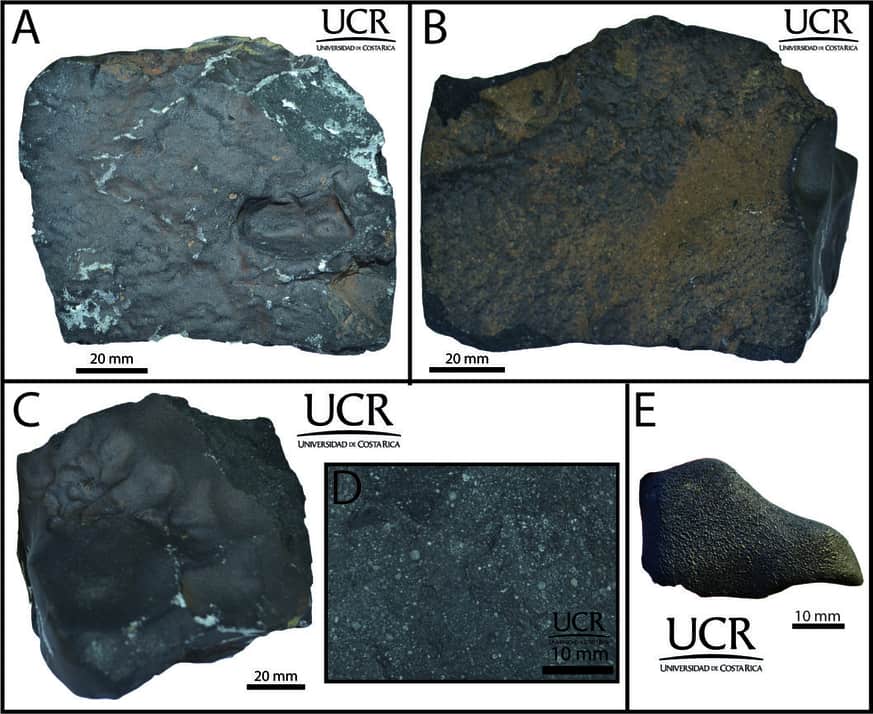
In April, the skies above Costa Rica illuminated as a meteorite impacted the northern town of Aguas Zarcas.
At the time, the University of Costa Rica (UCR) called the event an “extraordinary find and of great scientific interest,” and plenty of people agree. The largest chunk of that meteorite has now been donated to the Field Museum in Chicago, where it will be studied and preserved, according to ABC 7 News.
“This type of meteorite is sometimes called a cosmic mud ball meteorite because it made of mainly clay and is rich in a variety of organic materials as well the building blocks of life,” the Field Museum’s Dr. Philipp Heck told the ABC affiliate.
Meteor hunter Terry Boudreaux purchased the largest piece of the meteorite and donated it to the museum, per ABC 7.
While it won’t be on display to the public, Field Museum representatives said they hope the meteorite will help scientists form a better picture of the origins of the universe and life on Earth.
According to Costa Rican geologists who analyzed the meteorite in April, the so-called “Meteorito de Aguas Zarcas” has a weight of 1,071 grams in its main fragment.
Numerous other fragments were distributed around Aguas Zarcas, and many of them were recovered by neighbors in the area.
April’s event marked the first time that Costa Rican scientists had the opportunity to observe and analyze a meteorite recovered in the country.
“The Aguas Zarcas event is an extraordinary find and of great scientific interest at a national and international level that transcends any possible economic value that may be assigned to the fragments,” the geologists said in a report.
They stressed that the finding is important “for the study of the age and composition of the Solar System, as well as to understand the genesis of particles of organic origin that later allowed the development and evolution of life on the planet.”
Information from AFP was used in this report.