

For some governments, improving their country’s standing in the World Bank’s Doing Business survey has become a national priority. Yet the results of such efforts sometimes are deceptive.
That’s because the annual ranking of business friendliness of regulatory systems isn’t based on surveys of businesses. Instead, it analyzes regulations and regulatory change, and awards points for pro-business measures and takes them away for anti-business ones. In practice, that means rating government policies without considering their real effect. It’s a ranking of institutional good intentions, which explains why so many politicians swear by it.
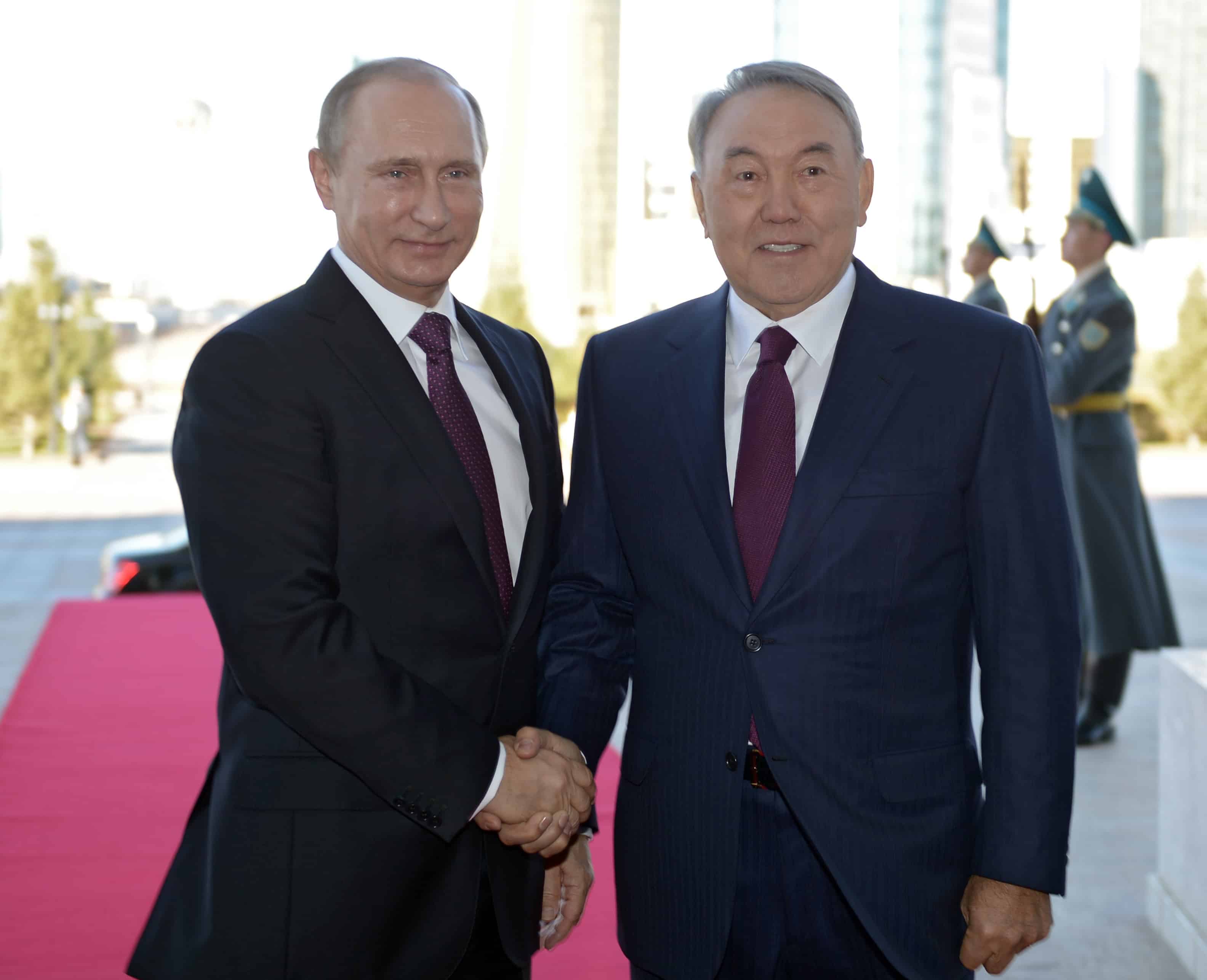
Consider the case of Prime Minister Narendra Modi, who has set the goal of getting India into the top 30 by 2018 (for 2015, it was ranked 130th for Ease of Doing Business). President Vladimir Putin’s goal is more ambitious: He wants Russia (No. 51) to be in the top 20. Nursultan Nazarbayev, the strongman of Kazakhstan (No. 41), aims for the top 35 by 2020. Ukraine’s economy minister, Aivaras Abromavicius said he wanted his country (No. 83) to rise by 25 places in 2015 because “one notch in the rankings is $600 million of extra investment.”
Even relative success is a reason to break out the Champagne. When this year’s ranking was published this week, the Kenyan government discovered Kenya had jumped 21 positions to 108th place. Deputy President William Ruto called the improvement “historic.”
Costa Rica’s ease of doing business ranking leaped an impressive 21 spots on the 2016 Doing Business report, reaching 58th out of the 189 countries surveyed for the 2016 report, compared to 79th in 2015.
Russia has a lot to celebrate this year: It jumped 11 slots to reach No. 51, almost achieving the goal of No. 50 set by President Vladimir Putin for 2015. If the World Bank is to be believed, it is now easier to do business in Russia than, say, in Luxembourg, ranked 61st, or in Israel (No. 53). Russia jumped in the charts thanks to four innovations: It cut the number of days required for a new company to open a bank account and register property, cut property taxes and simplified the process of obtaining an electricity connection.
These hardly seem substantial improvements, compared with the danger of losing property to powerful and thoroughly corrupt law enforcement agencies and bureaucrats, the risks imposed by Putin’s external aggression, and the country’s shrinking economy and decayed infrastructure. It’s not for nothing that Russia is 143rd out of 152 nations in the Heritage Foundation’s latest Index of Economic Freedom.
How did Russia do so well in the Doing Business survey? “On the whole, we are working actively with the World Bank, this work is constant,” Deputy Prime Minister Igor Shuvalov boasted to Putin as he presented Russia’s improved results. He didn’t imply anything improper: Like officials from other countries, Shuvalov’s staff merely draw the attention of the survey’s team to relevant policy measures.
A recent study by Mary Hallward-Driemeier of the World Bank and Lant Pritchett of Harvard contrasted the Doing Business data with enterprise surveys in developing countries and found that the business environment couldn’t be assessed just from the de jure regulatory climate. For example, some companies’ bureaucratic problems are resolved much faster, or slower, than required by law — presumably depending on their ability to grease the wheels. “Given our evidence, it is a completely open question how reforms that altered the Doing Business indicators will actually affect the investment climate that most firms actually experience,” the economists wrote.
To be sure, Doing Business is not completely useless. Despite the economy minister’s stated goal, Ukraine only rose four places in the ranking this year, reflecting the government’s failure to fulfill its promises of reform. When little is happening, even on paper, the ranking takes note.
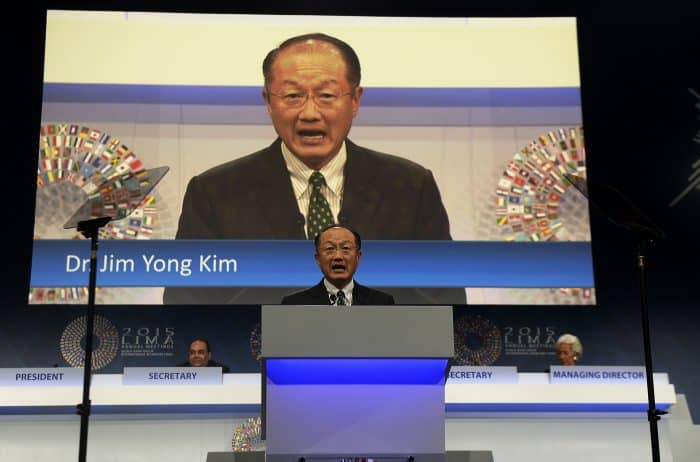
Doing Business, however, shouldn’t reward governments for tweaking the rules here and there when those rules are arbitrarily enforced. Two years ago, an independent panel urged the World Bank to stop compiling an aggregate country ranking and to stick to assessing policy moves in specific fields. World Bank President Jim Yong Kim rejected the suggestion, saying the ranking was “part of the success” of Doing Business. The survey may be good for the World Bank, but it needs real-life data from businesses to be truly relevant.
Leonid Bershidsky, a Bloomberg View contributor, is a Berlin-based writer. For more columns from Bloomberg View, visit http://www.bloomberg.com/view
© 2015, Bloomberg View





