

It was the mid-1980s, at the height of a brutal civil war in El Salvador, when Jemera Rone, a young American lawyer working for a human rights group, watched as five decomposed bodies were brought up from a well.
Four had been shot, one garroted. The stench was overpowering. Later, Rone spoke of that day with an interviewer for Mother Jones magazine.
“Her voice cracks only once, when she describes how the mother of one of the victims identified her son only by the neatly folded handkerchief in the pocket of his pants,” the magazine wrote in a 1988 profile of Rone.
Having spent years in El Salvador for the human rights group Americas Watch, Rone became known for her intrepid and meticulous work as she visited remote sites across the war zone, gathering evidence of abuses by death squads and trying to dispel false reports intended to bolster U.S. financing for right-wing, anti-Sandinista forces in nearby Nicaragua.
“She expanded the scope of what can be verified in a country determined to hide its crimes,” Mother Jones wrote.
It seemed an unexpected leap from the privileged corridors of Barnard College, where she had been an undergraduate, and Skadden Arps, the New York law firm where she had worked as a corporate takeover litigator from 1977 to 1985. But she also had a progressive streak that included an early stint as a women’s rights lawyer and a career-changing trip to El Salvador in 1984 with the Lawyers Committee for Human Rights.
She spent the next two decades reporting abroad for Human Rights Watch, the agency that expanded from Americas Watch, and became a specialist in the tumult of eastern Africa. She retired in 2006 after a debilitating car accident and lived in Washington until her death at a District of Columbia hospital on July 29. She was 72.
By all accounts, Rone made her deepest mark in Sudan, where she built a reputation as a dogged researcher who reported on abuses by rebel and government forces in a murky conflict where power switched hands.
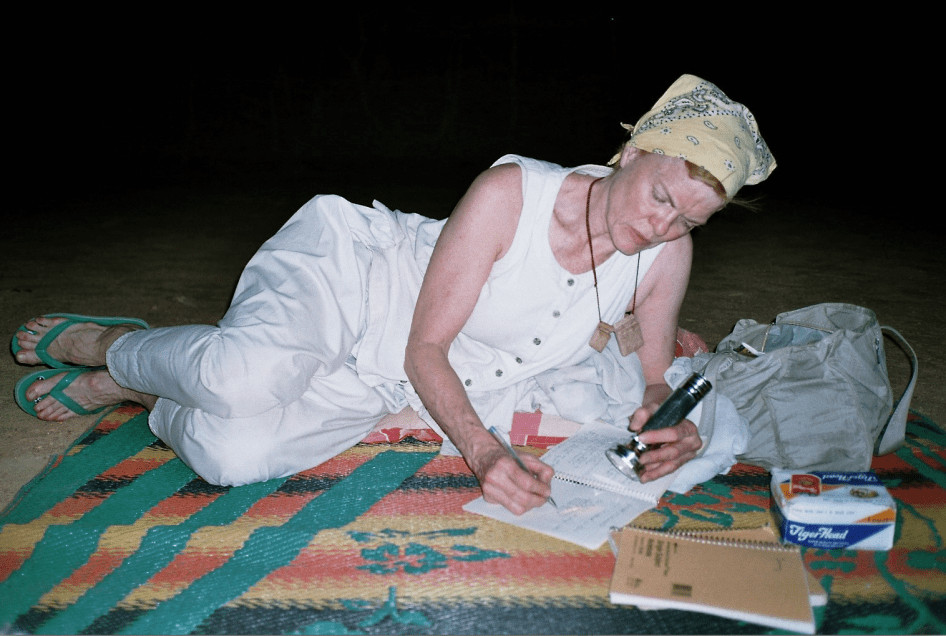
Unpretentious and blunt, she cut an unmistakable figure in the field. Photographs show her swathed in voluminous tribal robes and scarves with tousled orange hair poking through, taking notes in a camp by flashlight or bumping through the bush in a four-wheel-drive truck.
During 15 years of research in Sudan, she documented numerous atrocities, including ethnic slaughter and village destruction. She explored the role of human rights abuses in a 1990 famine and produced a definitive 567-page tome on the devastating impact of oil exploration and extraction in southern Sudan, including the displacement of local populations.
Although passion drove her, friends said, Rone’s enduring legacy was to bring lawyerly, dispassionate expertise to issues where truth was often overshadowed by moral outrage and ideological fervor.
In particular, Human Rights Watch officials said, she pioneered the application of humanitarian “laws of war” to internal conflicts, which meant holding government authorities and rebel or irregular militias to the same standards. They said her approach came to define later rights reporting in diverse conflicts, including Syria.
Corrine Dufka, a longtime colleague of Rone’s, recalled meeting her “over dinners or exhumations” in El Salvador and later finding her “buried in a book on Nuer-Dinka sub-clan relations” in Sudan.
In an emailed tribute, Dufka praised Rone for her thick skin and terrier-like focus, probing atrocities until there was “at times literally, no stone unturned.”
Rone’s work sometimes won grudging respect from adversaries, including Reagan administration officials who often overlooked abuses by U.S.-backed forces in El Salvador and the African government and rebel leaders she hounded with equal conviction. One Ugandan leader referred to her with chagrin as “that crazy redhead.”
In a 2005 online discussion in The Washington Post about the war in Darfur, Rone described dealing with the Sudanese government in Khartoum as “like being in a parallel universe: everything they said was directly opposite from what the hundreds of victims interviewed by Human Rights Watch and others have said.”
Asked by one reader what people could do to help stop the violence in Darfur, Rone replied: “Find new ways of expressing your outrage. . . . Be creative! Don’t stop. And remember, solutions are not easy or fast, but for that reason it is all the more necessary to stay involved and not give up hope. The people of Darfur, I can assure you, are really counting on you.”
Read rememberances of Rone on Human Rights Watch’s memorial page
Jemera Frances Rone was born in Fort Worth, Texas, on March 13, 1943. She spent much of her childhood in Venezuela, where her father worked in the oil business. She graduated from Barnard in 1966 with a focus on Spanish literature and economics and completed law school at Rutgers University in 1974.
Survivors include a sister, Janice Rone of Arlington, Virginia.
© 2015, The Washington Post





