

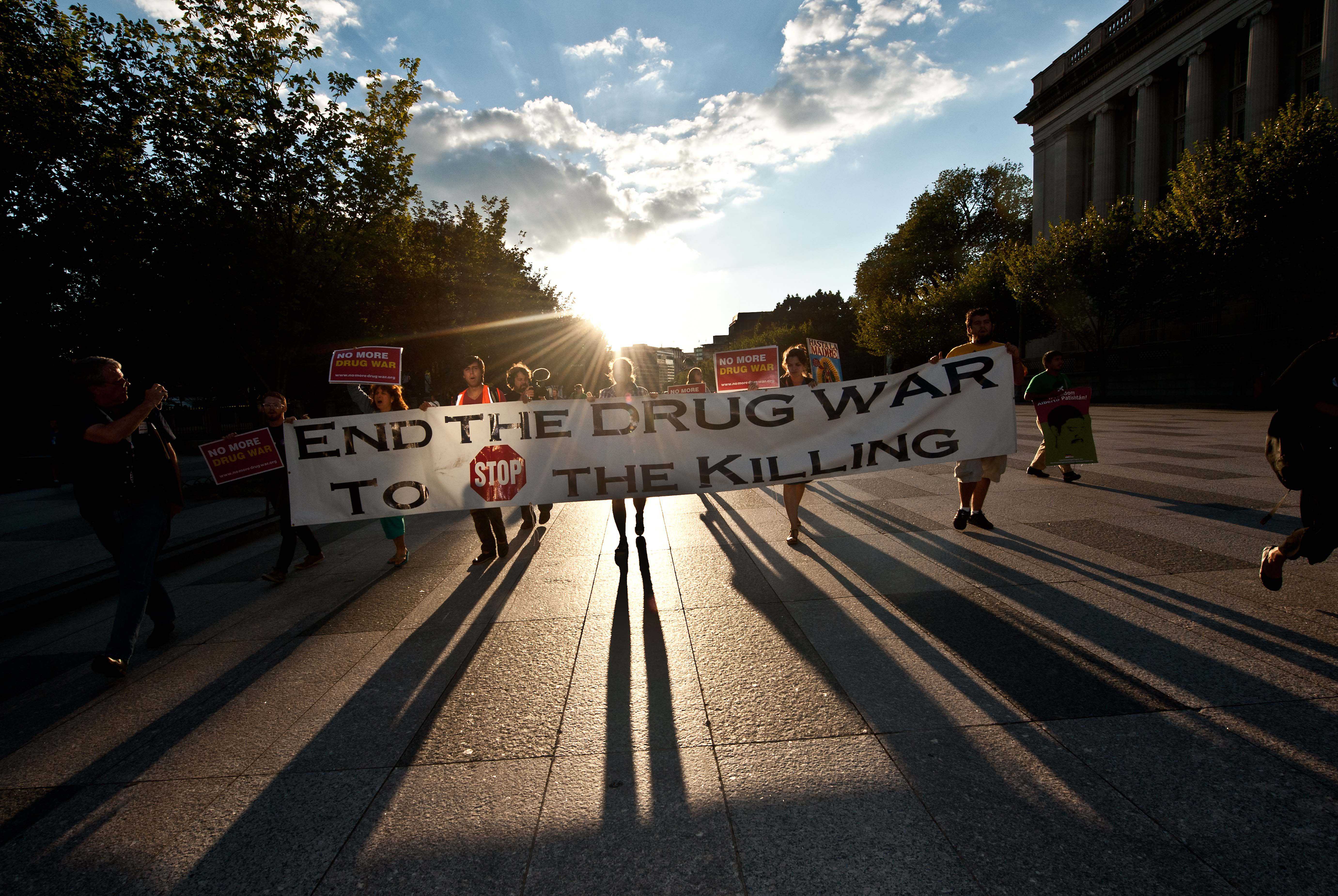
WASHINGTON, D.C. – If the Obama administration is to be believed, the U.S.’ infamous “War on Drugs” is over.
In its most recent National Drug Control Strategy, released last week, officials promised a more humane and sympathetic approach to drug users and addiction. Out, the report suggests, are “tough on crime” policies. Rather than more police and more prisons, officials talk about public health and education. They promise to use evidence-based practices to combat drug abuse. And they want to use compassionate messaging and successful reentry programs to reduce the stigma drug offenders and addicts face.
Unfortunately, the government’s actions don’t jibe with their rhetoric.
For decades, the White House’s Office of National Drug Control Policy (ONDCP) and its allies have used government resources to marginalize, stigmatize and demonize drug users. There were the nonsensical ads like “this is your brain on drugs” and inexplicable demonstrations like torching cars and valued possessions. The Office of Drug Control Policy, Partnership for a Drug-Free America, the Ad Council and Above the Influence portrayed small time dealers as snakes and users as rats.
They also showed drug use as a gateway to prostitution and, in the wake of 9/11, explicitly linked casual drug users to supporting terrorism and cop killing. The United States has spent millions stigmatizing drug use, sale and abuse — all before one even begins to calculate the costs to arrest, try and incarcerate offenders for the past 40 years. This, of course, comes in addition to the stigma that comes with incarceration and criminal records.
The Obama administration says it wants to de-stigmatize drug addiction. But no matter how hard it tries, it’s virtually impossible to de-stigmatize behavior that is still a crime.
And the administration is doing little to actually de-stigmatize drug use. Despite their supposed adherence to “evidence-based practices,” officials steadfastly refuse to consider legalization or decriminalization, even though the evidence unambiguously shows drug prohibition has been a disaster.
Prohibition-related violence has killed thousands in this country and multiples of that number more in supplier nations like Colombia, Mexico and Afghanistan. In the United States, incarceration rates have become so onerous (over 700 adults per 100,000) that research suggests they’re probably doing harm to society by pulling too many workers out of the economy, breaking up families and making offenders less employable upon release.
Although “alternatives to incarceration” are touted throughout the latest strategy, suggestions for fully or even partially separating nonviolent drug use from the criminal realm altogether are absent. Indeed, the marijuana liberalization in Colorado and Washington State are mentioned only as adding “challenges” the Office of National Drug Control Policy’s efforts to maintain the perception of the drug’s harm.
Though the ONDCP repeatedly states that drug addiction is a disease, police and incarceration remain the primary instruments to treat its myriad manifestations. It’s fair to say that disease takes a backseat to the still-aggressive law enforcement tactics as the first weapon against American drug use and sale — even if the rhetoric sounds less harsh than it used to.
Supposing the old commercials and posters are relics of the past and the ONDCP has legitimately turned over a new leaf, there are others within the Obama administration who still haven’t received the memo. Seemingly everyone can agree that some drugs are more harmful than others, but the head of the Drug Enforcement Administration was unable or unwilling to say to Congress that marijuana was less harmful than methamphetamine, cocaine or heroin.
Even under a prohibition regime like the United States’, it is absurd to suggest that an honest, relative assessment of harms and consequences is unknown to the people in charge of setting and executing drug policy. Yet the nation’s top drug enforcement agent can’t say a drug on which is virtually impossible to fatally overdose is less harmful than drugs that kill thousands of U.S. users each year.
Clearly, this is not yet a federal government willing to apply compassion, embrace evidence, and repudiate years of drug misinformation.
If this administration is serious about ending the stigma associated with drug addiction and is truly dedicated to education and evidence-based methods to fight drug abuse, it must first address and then reject the rank dishonesty and propaganda that has defined the U.S. drug war for decades. The ONDCP’s language seems to be moving in the right direction, but the government remains unable to be honest with itself, let alone the general public. As people in recovery might suggest, getting past entrenched denial is a requisite first step toward fixing the United States’ drug war problem.
This is your government on drugs. Any questions?
Blanks is a writer and researcher in Washington, D.C.
© 2014, The Washington Post





