

When was the last time you saw the ground from which your vegetables sprouted, the fields where your beef grazed or the hands that harvested this morning’s cup of coffee?
Seeing as I’m from the suburbs of Philadelphia, my farming experience is pretty limited.
I’m talking mini-herb-garden-and-some-tomatoes, at most. But getting up close and personal with nature is my kind of thing, so I set off for Costa Rica to broaden my horizons.
Hiking pack strapped to my back, I trudged through the jungle of people in the Philadelphia International Airport. In passing gate D-something-or-other I realized I was in a haze. I couldn’t tell whether it was just my tired eyes, or the endless hallways of artificial lighting. I hadn’t even left the country and disorientation was already setting in.
Then it hit me: During my crack-of-dawn departure, I neglected to grab my steaming cup of coffee. In other words, I left my brain on the kitchen counter. Fellow coffee addicts, I’ll leave the rest of my muddled morning to your imagination.
Luckily, 2,000 miles south, my caffeinated Costa Rican adventure was brewing. Staying in San Luis, a montane community sprawled along the curving roads and hidden mountain nooks, I had the pleasure of meeting a number of local organic farmers.
Not only have I tasted some of the world’s most delicious coffee, but I’ve also seen the farms on which it was grown, and shook the hands of the incredible people who picked it.

Elisa Mata Leitón, a coffee farmer in San Luis, near Monteverde, gives tours of her and her husband’s farm, covering the entire process – from planting to pruning to producing. Her work ethic is a testament to her spirited character; even during heavy circumstances, such as her husband fighting cancer, Elisa carries on with a smile on her face, and genuine expressiveness in her voice.
“It is also a way to provide a bit of income for my family. When Alvaro was well he also used to help me with the tours, but lately it’s almost always me. But I like it,” she said.
It’s hard to miss the beauty of Elisa’s hands. Once she started using her hands to point out flowers and sift through coffee beans, I was mesmerized. With even the slightest lift of a finger, her tendons and veins danced up her tanned forearms, disappearing under the sleeves of her worn, magenta shirt.
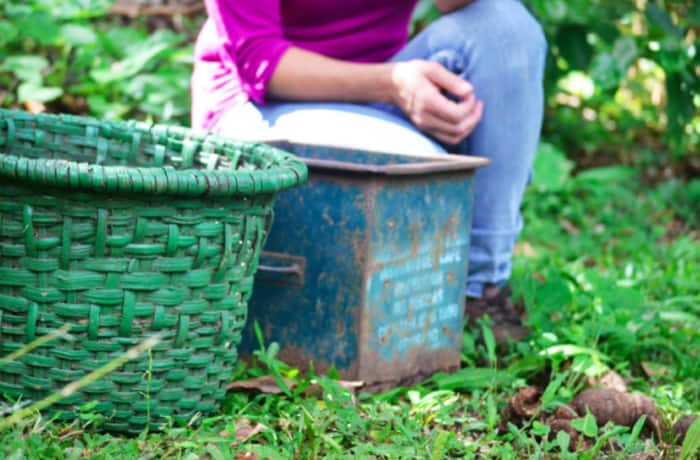
In a good year, the fruits from Elisa’s coffee plants can fill approximately 200 boxes or cajuelas. One full cajuela is one kilo of coffee. And each kilo makes about 50 cups.
How many cups of coffee is that annually? “You can do the math,” she said in Spanish, giggling. We did, and in a good year her finca can produce up to 10,000 cups of coffee. Cheers to that!
It’s a surprise to learn that the majority of the coffee grown on her farm is to provide for her household and her husband’s family. The remainder is what is sold, under a certified organic label, therefore with a slightly inflated price.
For Elisa and her family, a major component of growing organically revolves around health consciousness. “We know that what we are eating and producing isn’t contaminated, for us and for other people,” Elisa said.
So how does Elisa deal with pests?
Organically, of course. Her land is speckled with wildflowers and fruiting plants that detract coffee pests and bring in pollinators. When birds used to snack on coffee cherries too frequently, Elisa’s husband planted other fruiting trees, like quadrados, a type of banana, and limones.
They make a refreshing mid-tour snack.
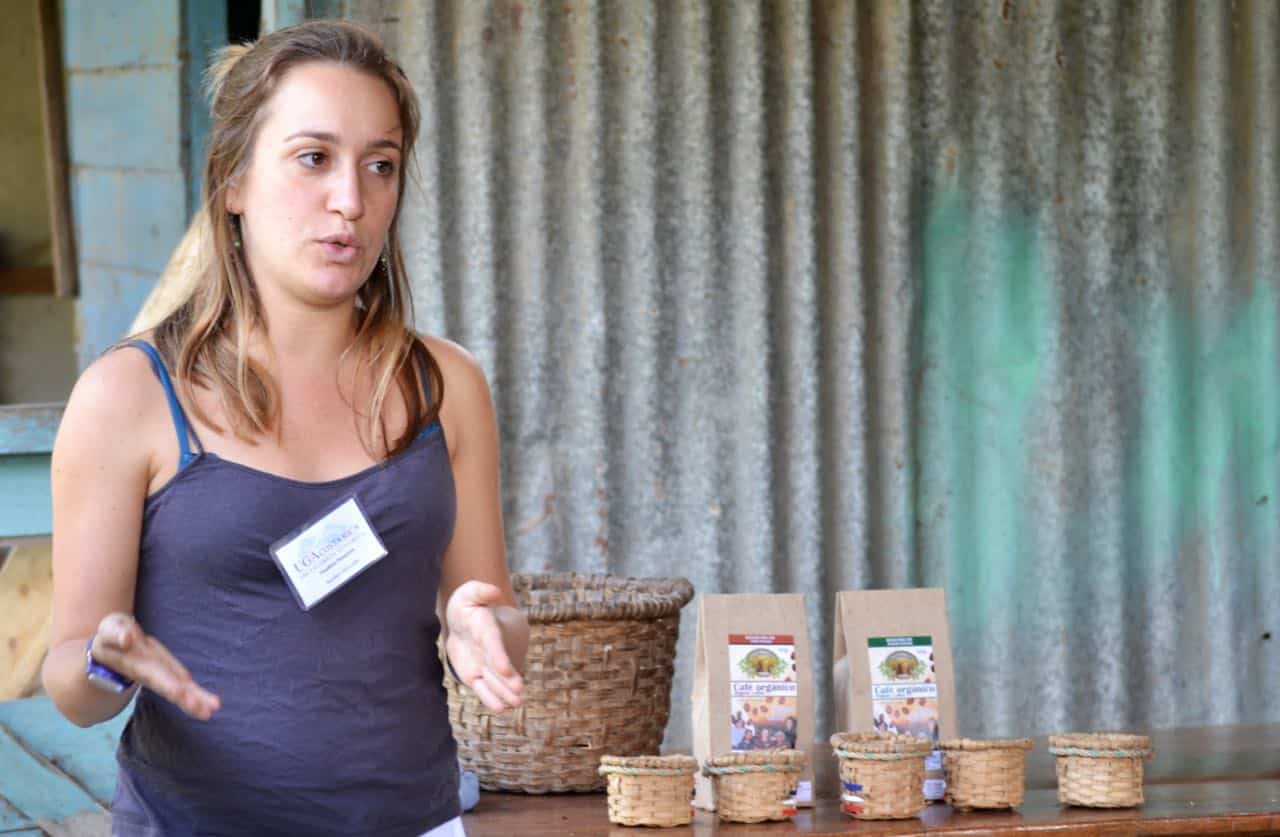
I didn’t need directions to our final stop. The scent of freshly brewing coffee pulled me toward the house with magnetic force. Ersy Leitón Cuvero greeted us outside with a warm smile and a summary of the arduous process behind becoming certified organic. It takes time: The farmer is required to cultivate a farm with no chemicals for five years, and the progression is overseen by routine checkups.
“I could spend hours explaining the hardships and the problems and all the authorities we’ve had to go through, like the ministry, municipality. Everything about this is a great investment,” Ersy said.
Ersy and her family plan to have a small store from which they will sell the coffee. But that too requires a number of hard-to-attain permits. “Poco a poco,” she says. “Little by little.” It takes time to make dreams come true.
At the tour’s end we’ve all compacted ourselves into Ersy’s kitchen. I pour myself a cup, letting the perfumed steam envelop my face. I lose myself in the richness of the coffee. No milk or sugar required. Everyone is oohing and aahing, thanking Ersy for the complimentary caffeine. They load their arms with bags of coffee for friends and family back home, or, like me, to ease the nostalgia that will come with leaving Costa Rica and its jovial, sedulous people.
As I sip from my steaming mug, I glance up at Ersy, whose eyes are smiling. She bows her head humbly.





