

During one of the first phone conversations I had with Papi after he left Cuba, I asked him to send me a bicycle with an umbrella attached to the seat, something I’d seen in a cartoon and believed he could buy in the States because I was 4 and what wasn’t possible in the land of opportunity?
I never got that bike. Instead I spent three years of my childhood without a father to teach me how to ride one.
My parents were chemical engineers in Cuba; they met while working in the pharmaceutical industry. I was born on Aug. 14, 1990, a day after Fidel Castro turned 64. Mami extended her labor so I wouldn’t share a birthday with our country’s revolutionary leader.
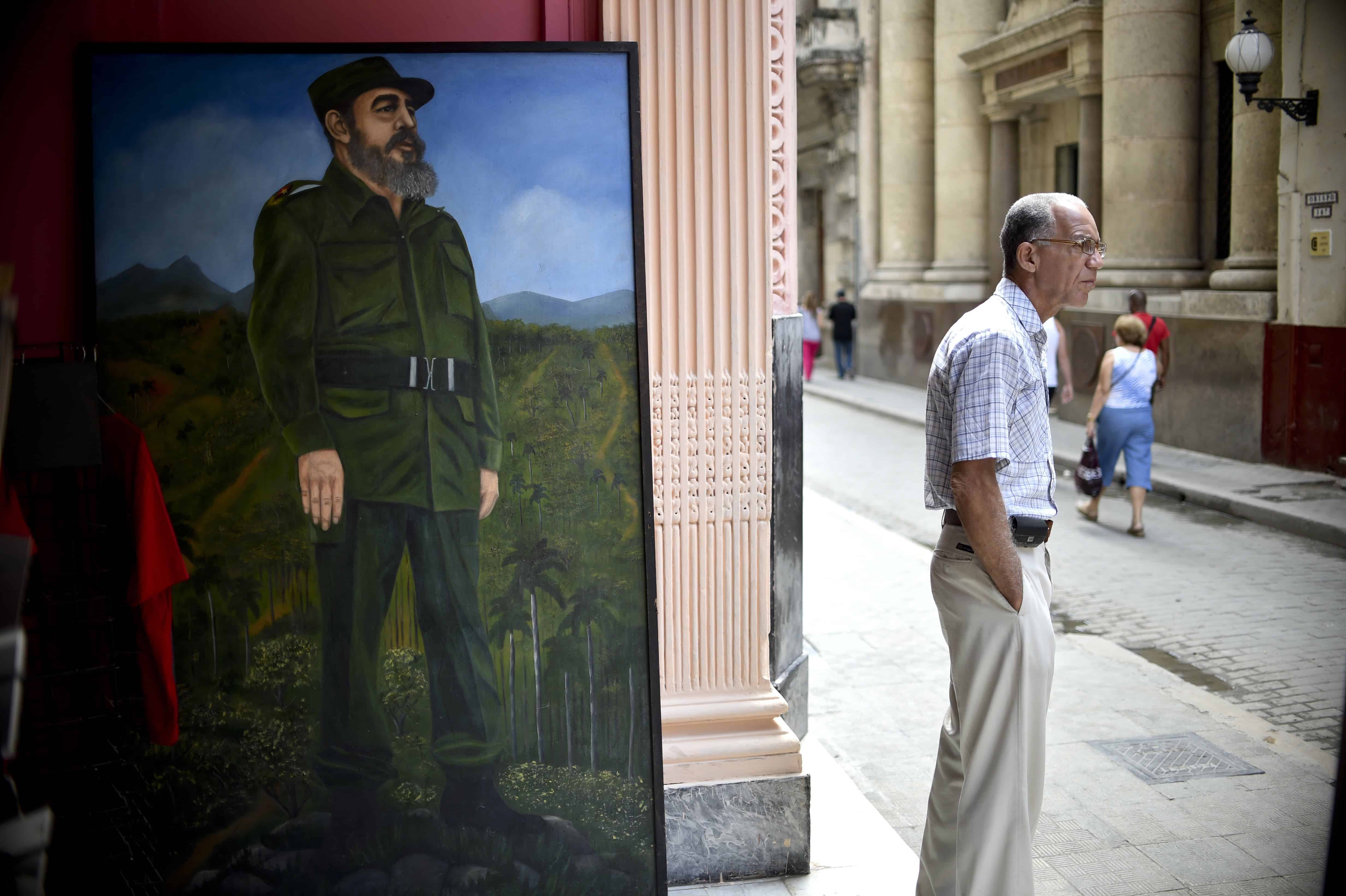
By then, the Soviet Union had fallen and Fidel had announced the beginning of the “Special Period,” a time of rations, famine and poverty from which the country is still recovering. To this day, anytime I hear someone praising Cuba’s social progress, its advances in medicine, its free health care and education, all that comes to mind are the sugar sandwiches I often ate for lunch as a kid because our household had run out of what the government assured us would suffice. I think, too, of the 16-hour apagones in the scorching summer months, blackouts that prevented us from plugging in our fans to keep cool.
In response, more than 30,000 Cubans fled, braving the Florida Straits on rubber rafts. Many didn’t survive. My father joined the exodus in 1994, moving to Toronto to work, ostensibly, on his PhD.
A few months later, he drove to a town west of Toronto called Sarnia, where trains carried cargo underground to the United States. He pulled over on the side of the road near the tracks. He popped open the hood as if the car had broken down, and he started walking, following the railroad beneath the St. Clair River until he reached Michigan. When he came out on the other side, a pickup truck followed behind him for a while, headlights illuminating his planned route. This is it, Papi thought: I’m going to jail. I’m getting deported. But he made it to the hospital he’d been told to find, sat on a bench outside and waited for the police to arrest him. What would he achieve by hiding?
No one came, though, and a helpful nurse called him a taxi. The driver asked Papi to show him the money before he drove more than an hour to nearby Detroit, but my father was prepared. He flashed the crisp bills he’d saved for this occasion, got a ride to the airport and bought a one-way ticket to Miami, where we had something resembling a social network. No passport or visa required.
Emigrating from a country with a dictator has few advantages, but one is the right to claim political asylum, which Papi did so that he could win visas for me and Mami. On Oct. 24, 1997, I finally made it to America, reunited with my father.
***
I know that I’ve been lucky. I grew up in the United States, earned a free ride to the state college of my choice and graduated from a creative-writing program where I wrote about whatever I pleased.
Even so, I was furious to see Tony Castro, Fidel’s youngest son, dressed in an expensive suit and using his iPhone 6 in the stands during the Cuban national team’s game against Tampa Bay in Havana last Tuesday. Because of his family, my family had suffered. And he, along with the rest of his oligarch family, will likely never acknowledge that, much less understand it.
I know I’m not alone. “I cry just about every time I write about Cuba,” ESPN’s Dan Le Batard wrote. “My pain is very much borrowed. My grandparents and parents endured it so that my brother and I never would. . . . But now my grandparents are dead, and my parents are old, and the Cuban regime that strangled them somehow lives on.” Le Batard’s uncle was imprisoned for a decade because of his politics; his mother was persecuted for her beliefs; his family was torn apart.
I hear that pain from other Cuban Americans, too, especially from those who, like me, know the regime only through childhood and the wrongs done to our parents. It’s a particular kind of rage, a feeling of helplessness, of knowing your family suffered for you.
But excruciating pain, like unconditional love, can blind you.
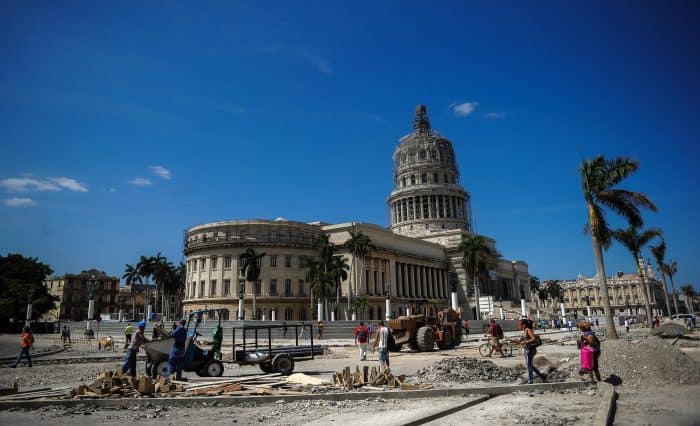
President Obama has made great strides in striking through the rhetoric that the Castros have used for years. And what is the alternative to his diplomacy? Another Bay of Pigs? More sanctions? Refusing to engage or lend a helping hand? Despite the images shown during the Obamas’ visit of brightly painted colonial buildings and smiling crowds, the people of Havana are living amid destruction, in decrepit houses that crumble like dried-out sandcastles with the passage of hurricanes and time. They lack basic over-the-counter drugs such as ibuprofen and cough medicine. Food prices are through the roof. Milk is becoming scarcer; it is rationed only to households with children up to 7 years old and in some cases to diabetic adults.
There are hundreds of trash heaps piled on the roads of Habana Vieja, their fetid odor coursing through the potholed streets with each rain shower.
These things will not get better if we stay righteous and angry; if we close our eyes to the suffering of our countrymen in order to make a point.
In 2017, the United States will have a new president, and so will Cuba the following year. A non-Castro will govern the country for the first time in almost 60 years. Obama has laid the groundwork for a path to progress.
It’s not an easy journey. But Cubans will one day communicate freely with the world and choose their head of state without being restricted to one party, one dogma. I will remain hopeful of this until proven wrong, and I am hopeful that the 45th president of the United States will not reverse course.
***
Do I want the regime to stop arresting journalists and dissidents? Would I love for my father to return for the first time to the land that birthed him and visit his 95-year-old mother in Vedado without fearing detainment?
Absolutely. But none of that will ever be possible if U.S.-Cuba relations continue as they were. Those of us who made it here are more than grateful to America for our freedom, but instead of nursing the pain our decaying island has caused us, we should prioritize the suffering of the people who never left and who continue to endure lies and oppression.
My father drove this point home for me when I called him to talk about Le Batard’s piece. I was moved by the writer’s words; I felt his anger reflected in my own complicated feelings about Cuba.
My dad didn’t see it that way. He said Cuban exiles whose families had been hurt that badly are the last ones who should be influencing U.S. policy toward Cuba, because they are blinded by their pain. Or, as Obama said in his remarks at the joint news conference Monday: “The future of Cuba will be decided by Cubans, not by anybody else.”
Zurita, who emigrated from Havana at 7, is a graduate of the master’s writing program at Johns Hopkins.
© 2016, The Washington Post





