

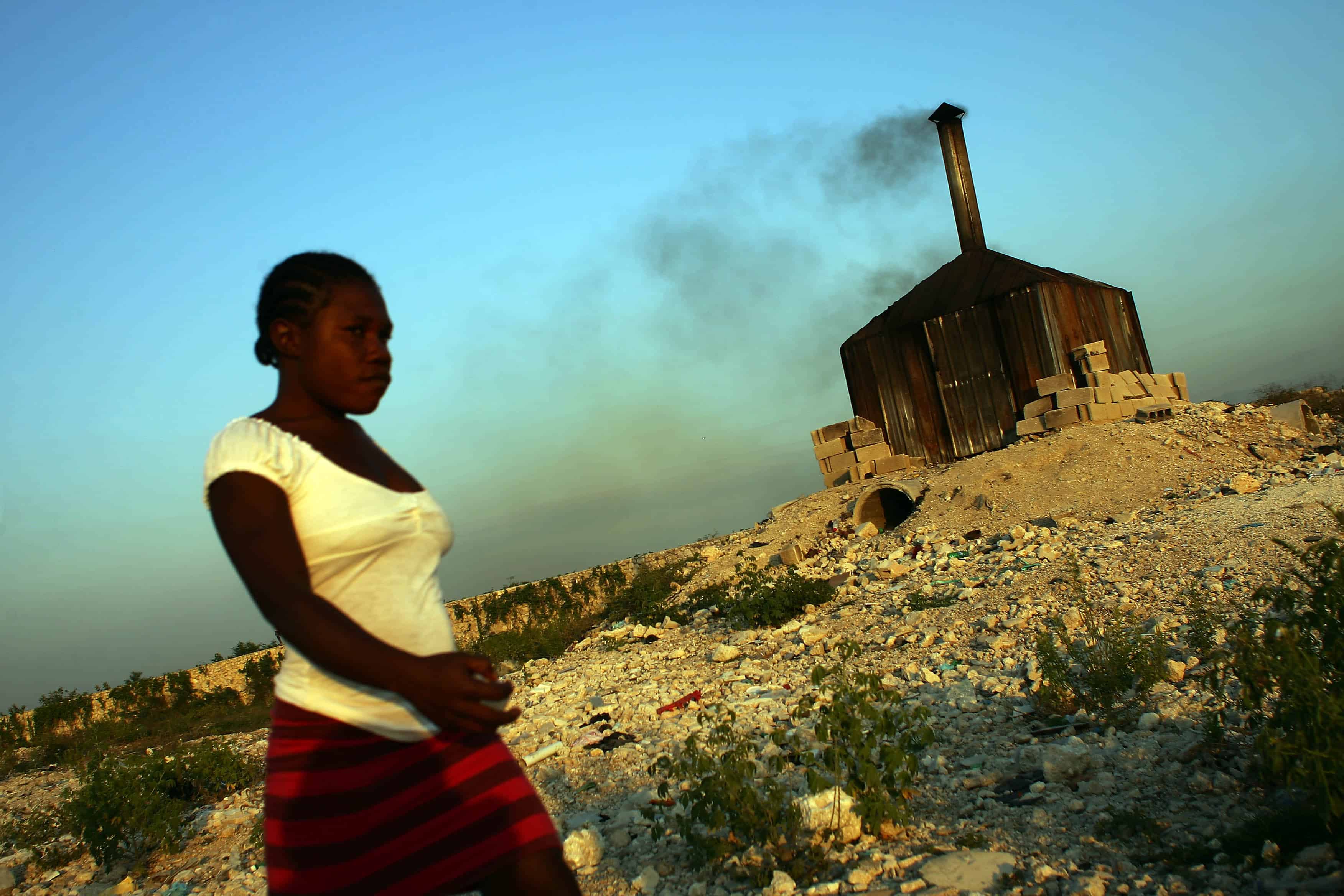
During a recent visit to the rural community of Los Palmas, Haiti, I had the opportunity to talk with families directly affected by the cholera epidemic that has been afflicting the country since the 2010 earthquake. One man explained that not only had the disease killed his sister, but his mother-in-law had also perished as she undertook the hours-long walk to the nearest hospital. He and his wife are now caring for five orphaned nieces and nephews.
In Haiti today, stories like this are not uncommon. Indeed, thousands of people across the country have endured similar trials and tragedies.
But there are also signs of hope. Increased community engagement and changes in hygiene practices have freed the women, men and children of Los Palmas and the neighboring village of Jacob of cholera – a dramatic reversal from the last few years – and reduced their risk of contracting other water-borne diseases. One family I met, for example, proudly showed me a new water filter.
This community-led approach will be critical to the success of the “total sanitation campaign,” which Haitian Prime Minister Laurent Lamothe and I launched in Los Palmas during my visit. By encouraging household investment in durable, hygienic latrines, providing improved sanitation products and services at affordable prices, and ensuring that schools and health centers have adequate water and sanitation infrastructures, the initiative will improve health conditions for three million people in high-risk areas over the next five years. Just before leaving the village, we laid the symbolic first stone of a new secure water source.
The campaign is the latest step in a comprehensive United Nations-supported operation to eliminate cholera from Haiti. The U.N. and the Haitian government recently created a high-level committee tasked with implementing a comprehensive strategy that covers all aspects of cholera prevention and response, including scaled-up assistance for families and communities.
Moreover, Haiti’s Ministry of Health and the Pan-American Health Organization/World Health Organization are beginning the second phase of a U.N.-financed vaccination initiative that is targeting 600,000 people in areas where cholera persists; 200,000 people are set to be vaccinated in the next couple of months, with another 300,000 to follow by the end of this year. During the first phase last year, 100,000 people were vaccinated.
Residents of Los Palmas, Haiti, during Secretary-General's Visit http://t.co/XFBO3ozdnY #UN
— United Nations Photo (@UN_Photo) July 15, 2014
These efforts have already reduced the toll of the epidemic significantly. During the first few months of this year, the number of cholera cases and deaths declined by some 75 percent compared to the same period of 2013, reaching the lowest level since the outbreak began.
To be sure, Haiti still hosts the largest number of suspected cholera cases in the Western Hemisphere – unacceptable in a world of such vast knowledge and wealth. But the country is on a trajectory toward success. Just as cholera has been eliminated from other difficult environments worldwide, it can be eliminated from Haiti.
Haiti’s prospects are improving in other areas as well, owing partly to the U.N.’s commitment to the country. Since 2004, the U.N.’s Stabilization Mission in Haiti (MINUSTAH) has been working to improve the security environment, support the political process, strengthen government institutions, and protect human rights. It also played a major role in stabilizing and rebuilding the country after the 2010 earthquake.
As a result of MINUSTAH’s efforts – and those of other U.N. agencies – the security situation has improved considerably, underpinned by a stronger judiciary and a more effective national police force. Meanwhile, primary school enrollment rates have soared, from 47 percent in 1993 to nearly 90 percent today.
Given enduring political and social fragility, a weak economy, and severely constrained finances, Haiti’s continued progress remains far from certain. In order to improve its chances of achieving its development goals, Haiti must follow through on its plans to hold long-overdue legislative and local elections later this year, followed by a presidential election next year. Haitian leaders across the political spectrum must rise above their differences to ensure that the electoral process is conducted fairly, thereby advancing the rule of law, safeguarding human rights, and consolidating the country’s democratic foundations.
The international community’s continued support also will remain essential. Most urgent, Haiti needs help funding its $2.2 billion, 10-year National Cholera Elimination Plan. So far, just 40 percent of the $448 million that will be needed in the first two years for investments in early warning, rapid response, water, sanitation and vaccines has been mobilized, and only 10 percent of the total has been pledged.
The Haitian people possess all of the compassion and determination needed to overcome the cholera epidemic and achieve inclusive economic development. But the international community – in particular, international financial institutions working in the region – must step up and support them.
I was profoundly moved by the hospitality and compassion that I saw in Los Palmas. But I also understand that Haitians expect their government and the U.N. to deliver on the promises made that day. If everyone does their part, we can give Haitians the healthier, more prosperous future that they deserve.
Ban Ki-moon is secretary-general of the United Nations.
© 2014, Project Syndicate: www.project-syndicate.org





