

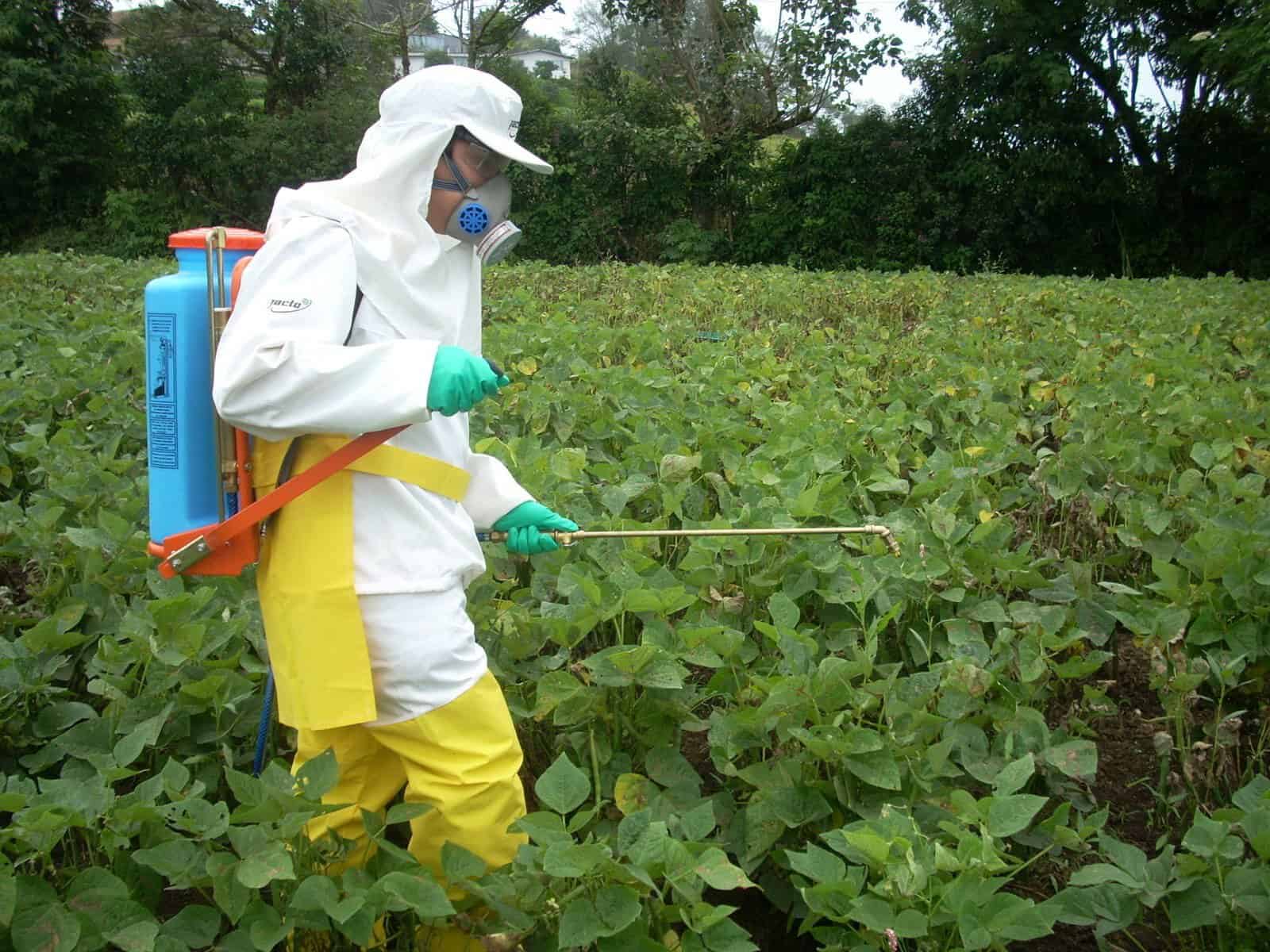
Costa Rica uses pesticides on its farmland at a rate more than ten times the global average, according to a scientific study that raises new concerns about the potential effects of agricultural chemicals on human health and the environment. The research, published in the September 2026 issue of the scientific journal Environment International, found that pesticide use on Costa Rican cropland averaged 21.91 kilograms of active ingredients per hectare annually.
That compares with a global average of 2.18 kilograms and a Central American average of 7.16 kilograms. The findings highlight our heavy dependence on pesticides, particularly in large-scale banana and pineapple production, two of Costa Rica’s most important agricultural exports.
The study, titled Grounding Pesticide Use Intensity and Hazards with Real-World Data: Toward Correcting Global Models in Tropical Agriculture, was conducted by researchers Soledad Castro-Vargas of the University of Zurich, Santiago Alvarez-Fernandez, an independent researcher in Spain, and Ryan E. Galt of the University of California, Davis.
To determine how much pesticide is used, the researchers examined government import and export records, agricultural production statistics, and information about chemicals approved for use in Costa Rica. They then estimated how those pesticides were distributed across different crops and regions.
Banana plantations recorded the highest estimated use, averaging 78.88 kilograms of pesticide ingredients per hectare annually. Pineapple production followed at 34.07 kilograms, rice at 33.88 kilograms, tomatoes at 32.04 kilograms, and potatoes at 30.42 kilograms. The differences were also apparent across Costa Rica.
Limón, home to extensive banana and pineapple plantations along the Caribbean coast, recorded the highest provincial average at 35.77 kilograms per hectare when farmland and managed pastures were included. Heredia and Cartago followed, while Guanacaste had the lowest estimated levels.
One important distinction involves how pesticide use is calculated. Costa Rica’s Ministry of Agriculture and Livestock has reported a national average of approximately 11 kilograms per hectare, but that figure includes pastures, where pesticide use is much lower. When the researchers included both cropland and managed pastures, their estimate was also approximately 11 kilograms per hectare. The higher figure of 21.91 kilograms applies specifically to cultivated crops.
The research also identified the chemicals most commonly used in Costa Rican agriculture. Mancozeb, a fungicide frequently applied to banana plantations to control fungal diseases, accounted for approximately 36% of the estimated pesticide ingredients used nationally. Other widely used chemicals included glyphosate, diazinon, and ethoprophos.
Beyond the amount of pesticide used, the researchers examined the potential dangers associated with the chemicals. Their findings showed that several health-related concerns, including cancer-causing potential and interference with the body’s hormone systems, did not show statistically significant improvements during the years examined.
The results were particularly troubling for aquatic life. Several measures of potential harm to organisms living in rivers, streams, and other waterways worsened over time, even as some other environmental indicators showed modest improvements. However, the researchers stressed an important limitation. Their study examined the hazardous properties of pesticides, not the actual exposure of individual people or the number of illnesses caused by agricultural chemicals.
The figures were also estimates based on official records and agricultural models, rather than measurements of every pesticide application on individual farms. Nevertheless, the findings challenge the idea that newer agricultural products have consistently made pesticide use less hazardous.
For Costa Rica, the research adds another dimension to a longstanding debate over the environmental costs of intensive agriculture. Costa Rica is internationally recognized for its biodiversity and conservation efforts, but its major agricultural industries continue to rely heavily on chemical treatments to protect crops from pests and disease.
The researchers argue that better reporting of pesticide applications, more detailed information about their use in individual regions, and continued environmental monitoring would help authorities better understand the possible consequences. They also call attention to gaps in scientific knowledge about how agricultural chemicals affect tropical ecosystems, where wildlife and environmental conditions can differ substantially from those in countries where much of the existing research has been conducted.
The study provides a clearer picture of where pesticides are being used most heavily and which chemicals deserve closer examination. It also raises questions about whether current agricultural practices are reducing the potential dangers to people and the environment.





