
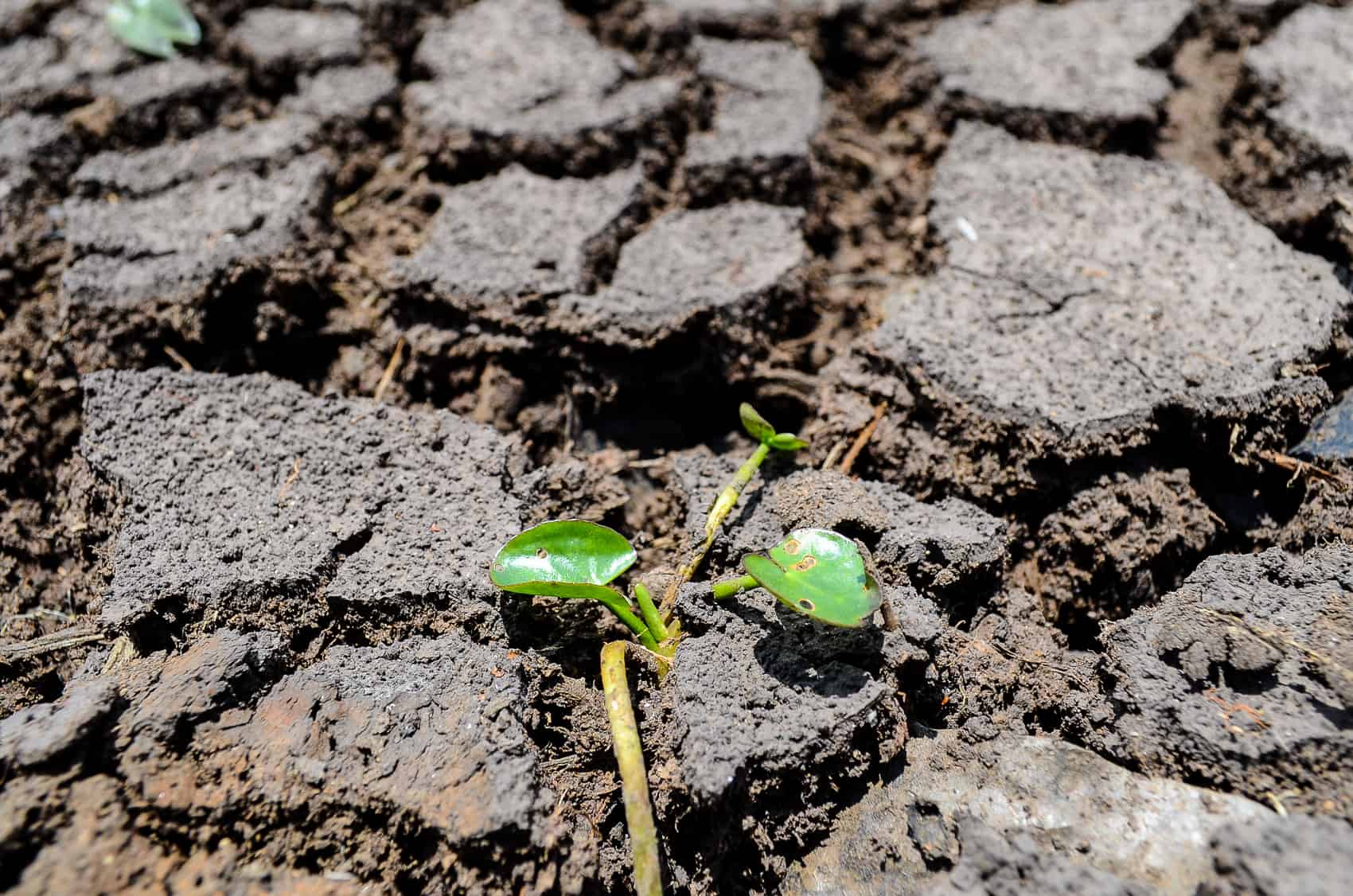
Rainy season hasn’t been so rainy. This year Costa Rica has been affected by an unusually strong El Niño. How it has impacted the country depends on where you live. The news tells me some parts of the country, like northern parts and the Caribbean, are being inundated with heavy rains. I can tell you that the exact opposite is happening here in Guanacaste.
Though thunderstorms woke me in the middle of the night last night, in general, this has been the least rainy rainy season in my 14 years living in Guanacaste. The impacts are being strongly felt both in my work and my personal life.
El Niño Affects Wildlife
Driving through the mountains, heading to a camera trap project last week, I turned a corner on a steep dusty road and gazed out over an overlook depicting huge, forested mountains butting up against the ocean. While undoubtedly beautiful, the view was all wrong. Instead of lush, green forest, I saw the light greens and browns of dry season. This was the view of a forest hugely lacking in rain.
I can see the effects on all of the properties I work on. Some are completely dry. Where there should be a flowing river, there’s only gravel and rocks. Where there should be a cattle pond full of fish and crocodiles, teeming with waterbirds, there’s a bowl of mud dried into thick cakes.
The water that remains is exceedingly important to wildlife, and to be honest, it makes my job much easier than it should be at this time of the year. All I have to do is find whatever water remains on a property and stick a camera trap on a nearby tree and I’m bound to record a wide variety of creatures looking to quench their thirst. The trouble will really begin next year, when the next dry season hits and the current rainy season never did its job filling all of the water reservoirs.
El Niño Affects My Family
No water for wildlife means no water for people. Without the proper amount of rain falling over the last few months, the little coastal town I live in has been rationing water. What’s the schedule of water availability? Who knows? Our rental house is hooked up to the town’s water system, and we happen to not have a backup water storage tank, so when the town’s water is off, our water is off. As you can imagine, this impacts our daily lives. For a little window into how this plays out, I’ll describe our morning.
We woke up with water, not a strong flow, but something. I concluded that the state of the flow indicated that it wouldn’t last long, so laundry was out of the question, the water would be off before the machine could get halfway through its cycle. Instead, I focused on the dishes that couldn’t be washed the day before and refilling backup water jugs and ice cube trays.
My wife helped my younger, earlier rising son to a quick low-flow, cold shower. When the flow isn’t high enough, we can’t use the hot water heater/showerhead because it gets too hot and pops the breaker, so a cold shower is the best we could do. By the time he was done, the water slowed to a dribble and the toilet started doing this weird whistling it does when the water’s off. I believe it’s because of air in the pipes.
That meant my wife and older, sleepier son were out of luck as far as showers go. Sleepy boy had to settle for a pool-shower. While he was out, soaping up on the deck of our tiny pool, my wife filled a pot of water and put it on the stove to heat it up for a splash-yourself-with-a-cup shower. Just to add a little spice to the morning, the stove wouldn’t light because we just happened to have run out of gas. This left her less than pleased.
Being the hero that I am, I found the biggest plastic bowl we have and filled it with the backup jug water and microwaved it for her. I brought a few bowls worth of water to the bathroom for her with only a small amount of teasing about how fancy she is that she can’t take a pool-shower and needs hot (lukewarm) water.
After all was said and done, my wife and kids made it to work and school all spick and span. I’m destined for a pool-shower later today. Like the local wildlife, we’re adapting our patterns to get by in a not so rainy rainy season. The real trouble for all of us is the sort of adapting we may have to do when dry season rolls around again.
About the Author
Vincent Losasso, founder of Guanacaste Wildlife Monitoring, is a biologist who works with camera traps throughout Costa Rica